


Rosemary Shampoo for Hair Growth


Rosemary Shampoo for Hair Growth: Benefits, Research, How to Use & What to Expect
Hair growth and hair fall are two sides of the same coin. Most people... Read More
Rosemary Shampoo for Hair Growth: Benefits, Research, How to Use & What to Expect
Hair growth and hair fall are two sides of the same coin. Most people who are concerned about losing hair are equally interested in accelerating regrowth. The challenge is that many products claiming to promote hair growth have limited evidence behind them. Rosemary shampoo is an exception.
The evidence for rosemary as a hair growth-promoting botanical is more substantial and more specific than for most plant-based hair care actives. It is not a folk remedy that happens to be popular. It is a plant-derived active with documented mechanisms, clinical trial data, and a growing body of dermatological research supporting its use.
This guide covers the complete picture: the science of how rosemary promotes hair growth, how that science is (and is not) translated into shampoo formulation, how to use rosemary shampoo for hair growth correctly, what to combine it with, and what realistic expectations look like.
The Hair Growth Cycle: Why It Matters for Understanding Rosemary
To understand how rosemary shampoo promotes hair growth, you first need to understand how hair growth works.
Every hair follicle independently cycles through three phases:
Anagen (growth phase): The hair is actively growing, fed by the dermal papilla at the follicle's base. This phase lasts two to seven years, depending on genetics, and determines how long your hair can grow before it naturally sheds. Scalp hair typically spends 85-90% of its time in anagen.
Catagen (transition phase): A brief two-to-three-week phase in which the follicle shrinks and the hair separates from the dermal papilla. Growth stops.
Telogen (resting phase): The hair is held in the follicle for two to three months without growing. At the end of telogen, the hair sheds naturally, and a new anagen hair begins to grow in its place.
Losing 50-100 hairs per day is normal: these are telogen hairs completing their cycle. Hair fall becomes problematic when the anagen phase is shortened (less time growing, so hair reaches shorter lengths), when too many follicles enter telogen simultaneously (producing sudden mass shedding), or when follicle miniaturisation occurs (the follicle produces progressively thinner, shorter hairs until it ceases production altogether).
Rosemary shampoo for hair growth works by influencing this cycle at several specific points.
The Rosemary-Minoxidil Study: What the Research Actually Says
The most significant piece of clinical evidence for rosemary's hair growth efficacy is a 2015 randomised clinical trial published in SkinMed Journal, conducted by Panahi and colleagues.
The trial enrolled 100 patients with androgenetic alopecia (the most common type of hair fall, driven by DHT-related follicle miniaturisation). Participants were randomised to apply either rosemary oil (2%) or minoxidil (2%) to their scalps twice daily for six months.
Both groups received regular scalp massages during application. Hair counts were taken at baseline, three months, and six months.
Results: At six months, both groups showed significant and comparable increases in hair count compared to baseline. The difference between the two groups was not statistically significant, meaning rosemary performed as well as minoxidil for hair count improvement over six months.
Secondary finding: Scalp itching, a common and uncomfortable side effect of minoxidil, was significantly more frequent in the minoxidil group than in the rosemary group.
This is a meaningful finding. Minoxidil is an FDA-approved pharmaceutical with decades of evidence behind it. A botanical at a 2% concentration producing comparable results in a randomised trial is not a typical outcome. It is the reason dermatologists and trichologists have been paying increasing attention to rosemary.
How Rosemary Promotes Hair Growth: The Four Mechanisms
The clinical trial demonstrates that rosemary promotes hair growth. The question is: how? The answer involves four distinct mechanisms that work through different biological pathways.
Mechanism 1: Scalp Microcirculation Enhancement
The hair follicle is one of the most metabolically active structures in the body. It requires a constant supply of oxygen, glucose, and micronutrients delivered by the scalp's capillary network. When this capillary supply is compromised by poor circulation, inflammation, or follicle miniaturisation, the follicle receives insufficient nutrition, and the anagen phase shortens.
Rosemary's active compounds, particularly rosmarinic acid and 1,8-cineole, dilate the scalp's capillaries and improve microcirculation. This is the same mechanism through which minoxidil promotes hair growth: improved blood flow to the follicle extends the anagen phase and supports thicker, longer hair growth.
Mechanism 2: DHT Inhibition
Dihydrotestosterone (DHT) is the primary cause of androgenetic alopecia in both men and women. DHT binds to androgen receptors in the hair follicle, progressively miniaturising it until it stops producing visible hair.
Rosemary's ursolic acid has been shown to inhibit 5-alpha reductase, the enzyme that converts testosterone to DHT, in laboratory studies. The inhibitory activity is weaker than pharmaceutical 5-alpha reductase inhibitors (finasteride, dutasteride), but when combined with other botanical DHT inhibitors (saw palmetto, amla, methi dana), it contributes to a meaningful multi-pathway approach to DHT management.
Mechanism 3: Anti-Inflammatory Activity
Scalp inflammation is a contributing factor in several types of hair fall. Chronic scalp inflammation shortens the anagen phase, disrupts the follicle's normal cycling, and creates an environment that favours hair loss over growth.
Rosmarinic acid, one of rosemary's primary polyphenols, is a potent COX-2 inhibitor. COX-2 is the enzyme responsible for producing prostaglandins, the mediators of inflammation. By inhibiting COX-2 at the scalp level, rosemary reduces the inflammatory signalling that contributes to hair fall.
Mechanism 4: Antioxidant Protection of the Follicle
Oxidative stress, caused by free radical damage from UV exposure, pollution, and metabolic processes, accelerates follicle ageing. Follicles that are under sustained oxidative stress produce progressively weaker hair and enter telogen earlier.
Rosemary contains carnosic acid, carnosol, and rosmarinic acid, which are among the most potent antioxidants in the plant kingdom. Applied to the scalp, these antioxidants protect follicle cells from oxidative damage and support the longevity of the anagen phase.
Translating the Research to Shampoo: What You Need to Know
Here is the critical caveat. The Skinmed trial used rosemary oil applied directly to the scalp twice daily and left on. This is not what happens when you use a rosemary shampoo for hair growth.
Shampoo is a rinse-off product with a typical contact time of two to five minutes. The concentration of rosemary extract that reaches the follicle during a two-minute shampoo application is significantly lower than the 2% pure rosemary oil applied and left on in the trial.
This does not mean rosemary shampoo is ineffective. It means it has a more limited mechanism than the trial suggests, and that it works best when used as part of a complete system that includes leave-on products.
What a rosemary shampoo genuinely delivers:
-
Meaningful anti-inflammatory activity at the scalp during contact time
-
Some transient absorption of rosmarinic acid and other actives with demonstrated skin penetration
-
Removal of sebum, product build-up, and environmental pollutants that create a hostile follicle environment
-
Improved scalp condition that supports the effectiveness of leave-on treatments applied afterwards
What a rosemary shampoo needs to be combined with for maximum hair growth effect:
-
A rosemary-based leave-in serum that maintains active contact with the follicle between washes
-
A pre-wash rosemary or herbal scalp oil that delivers concentrated botanical actives with extended contact time before washing
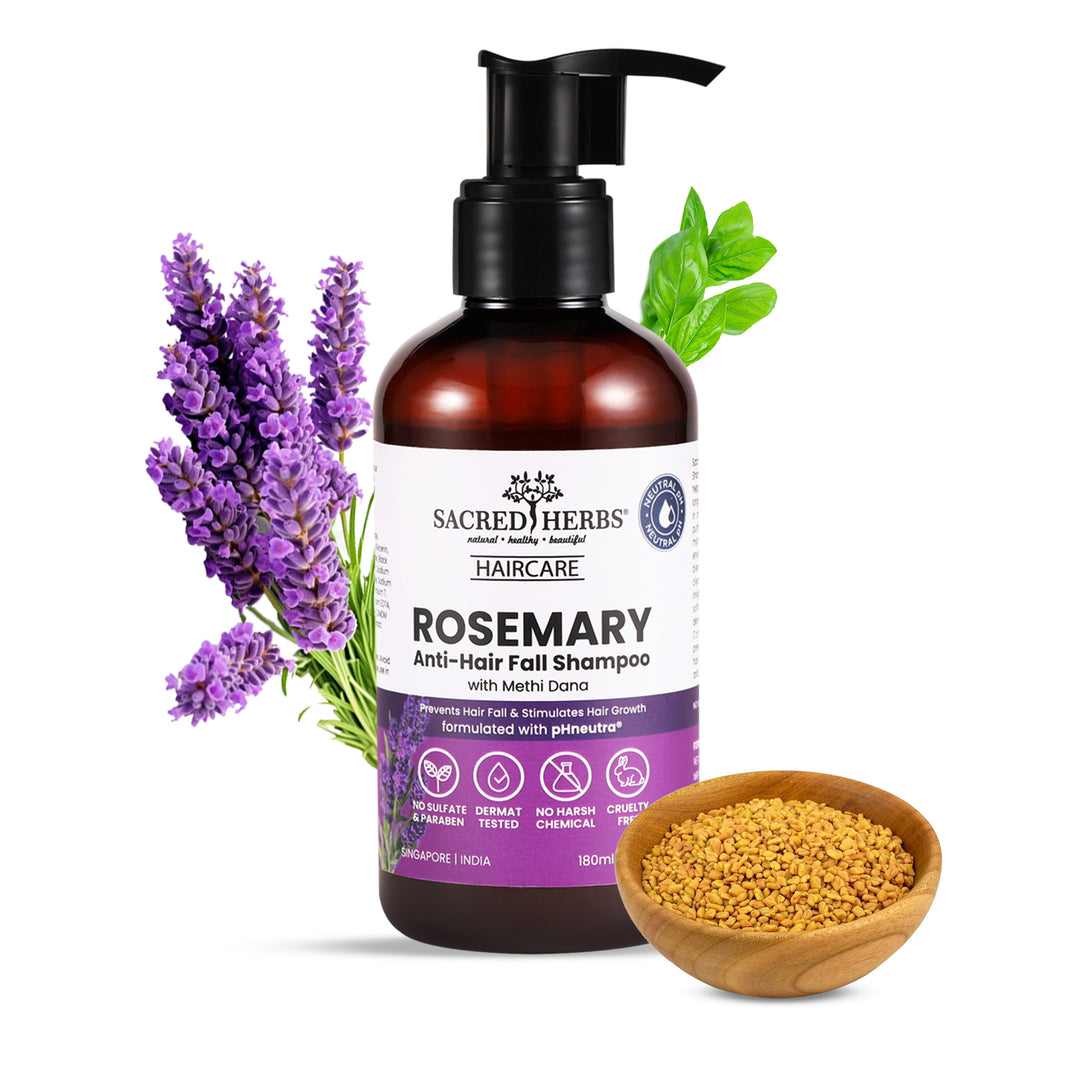
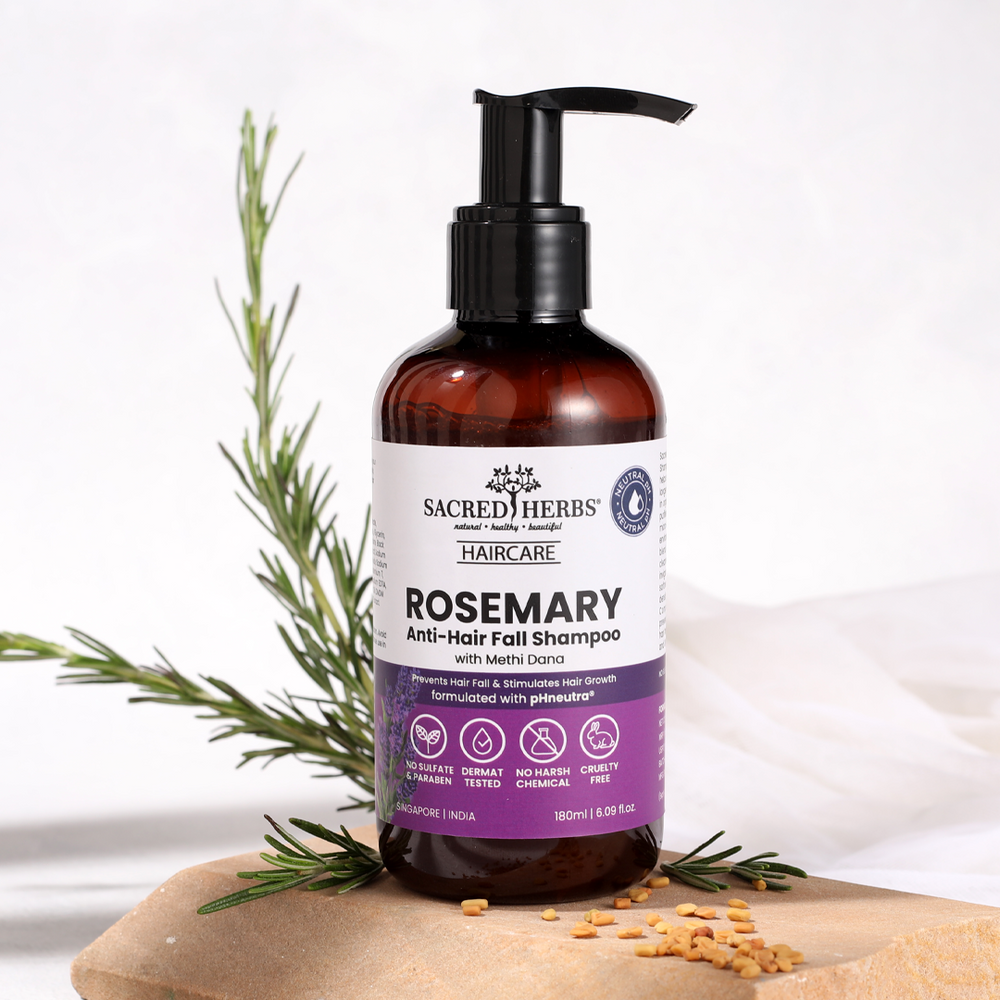
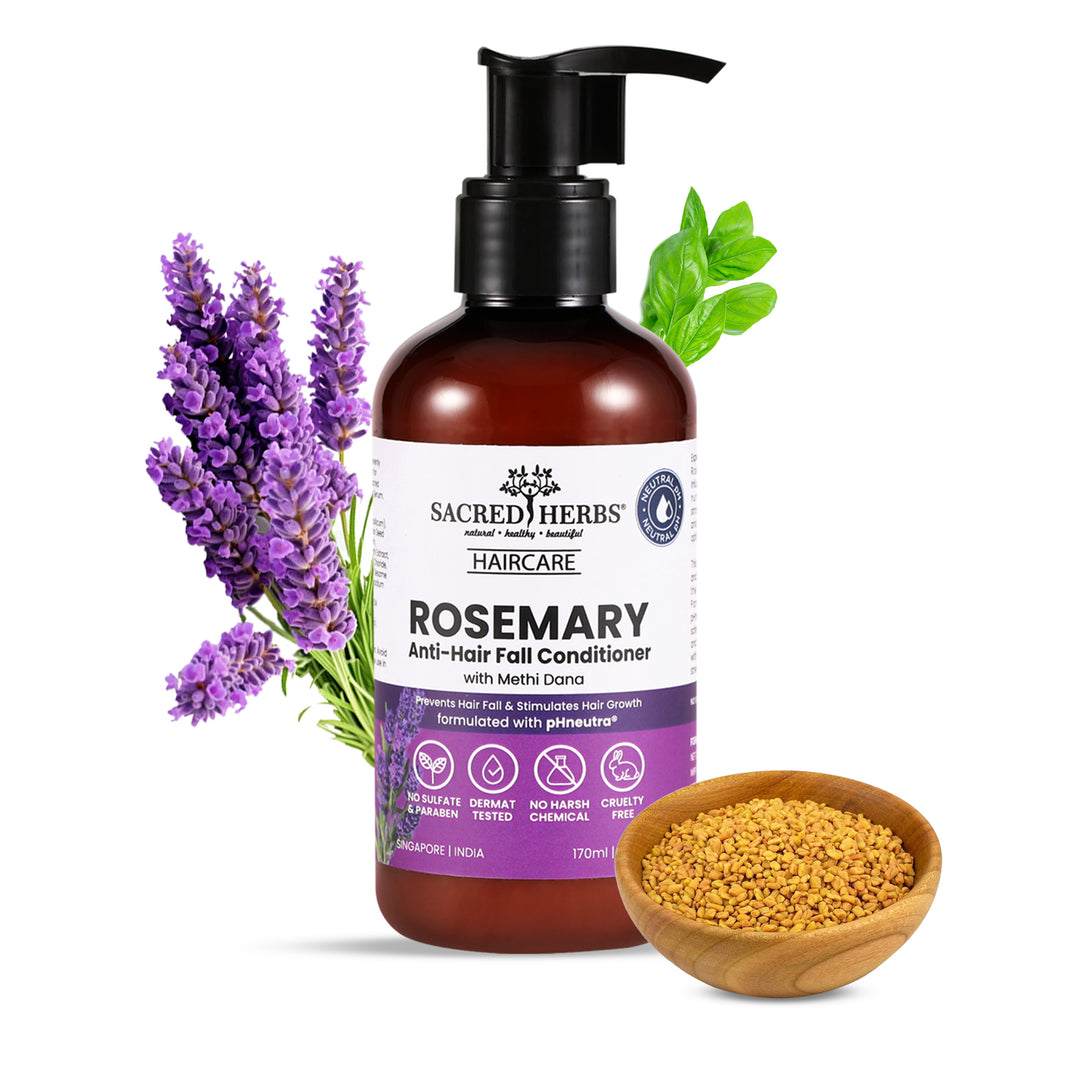
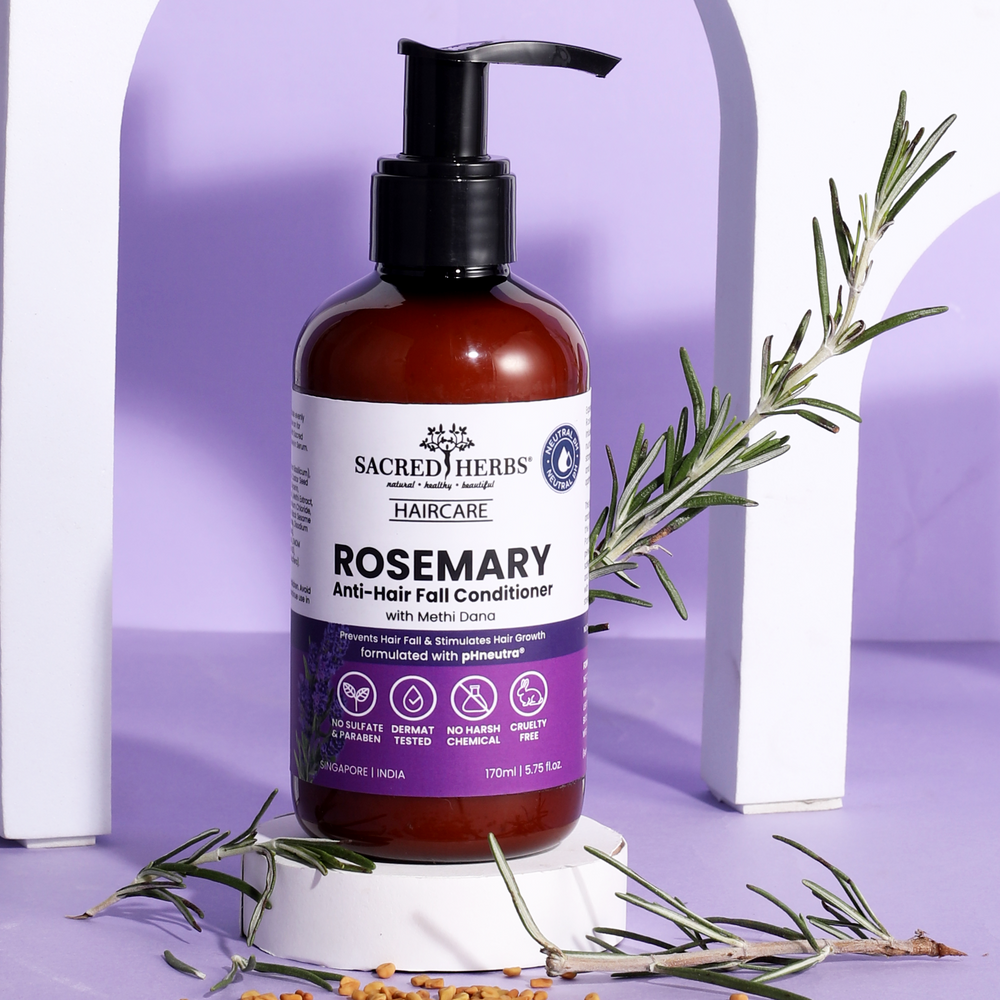
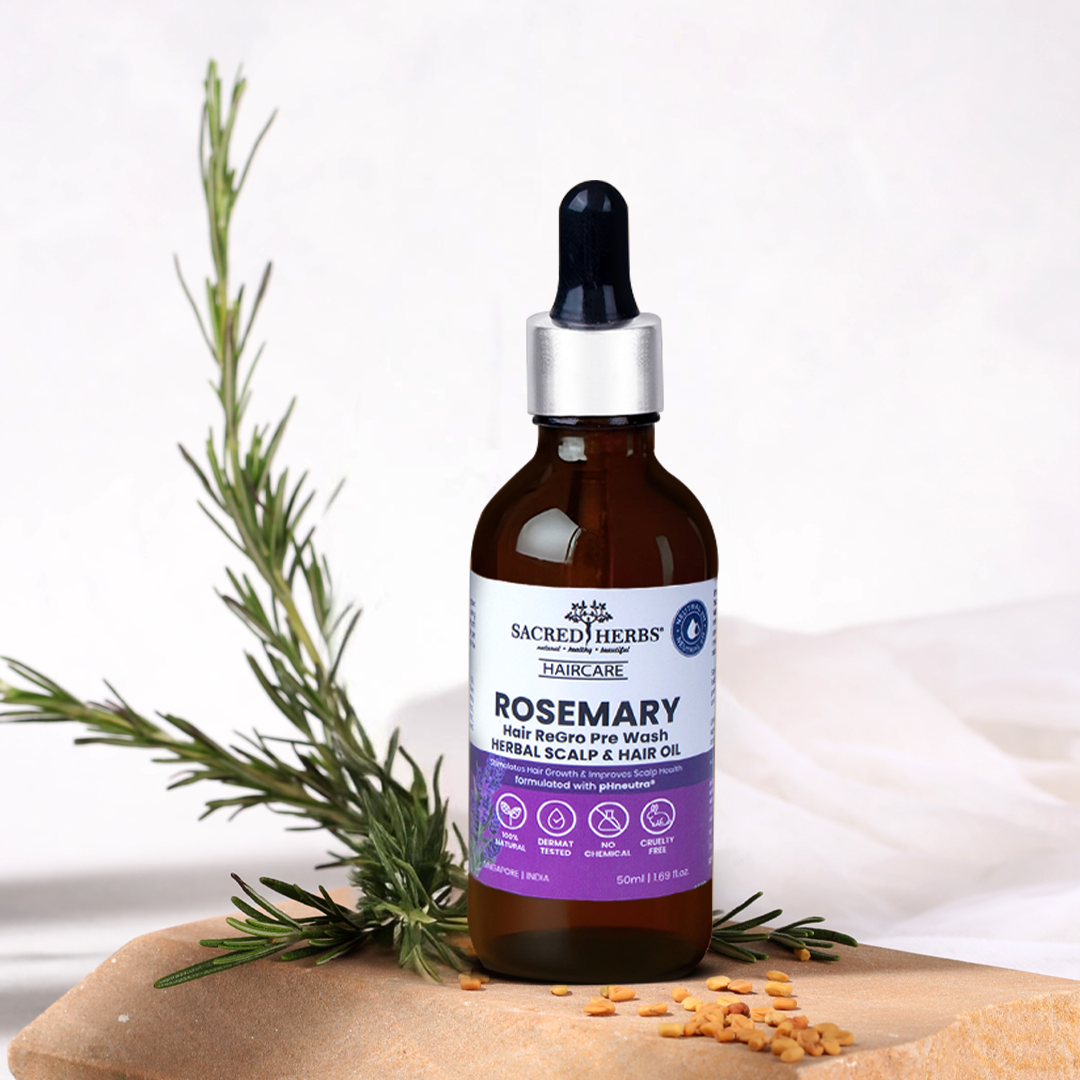
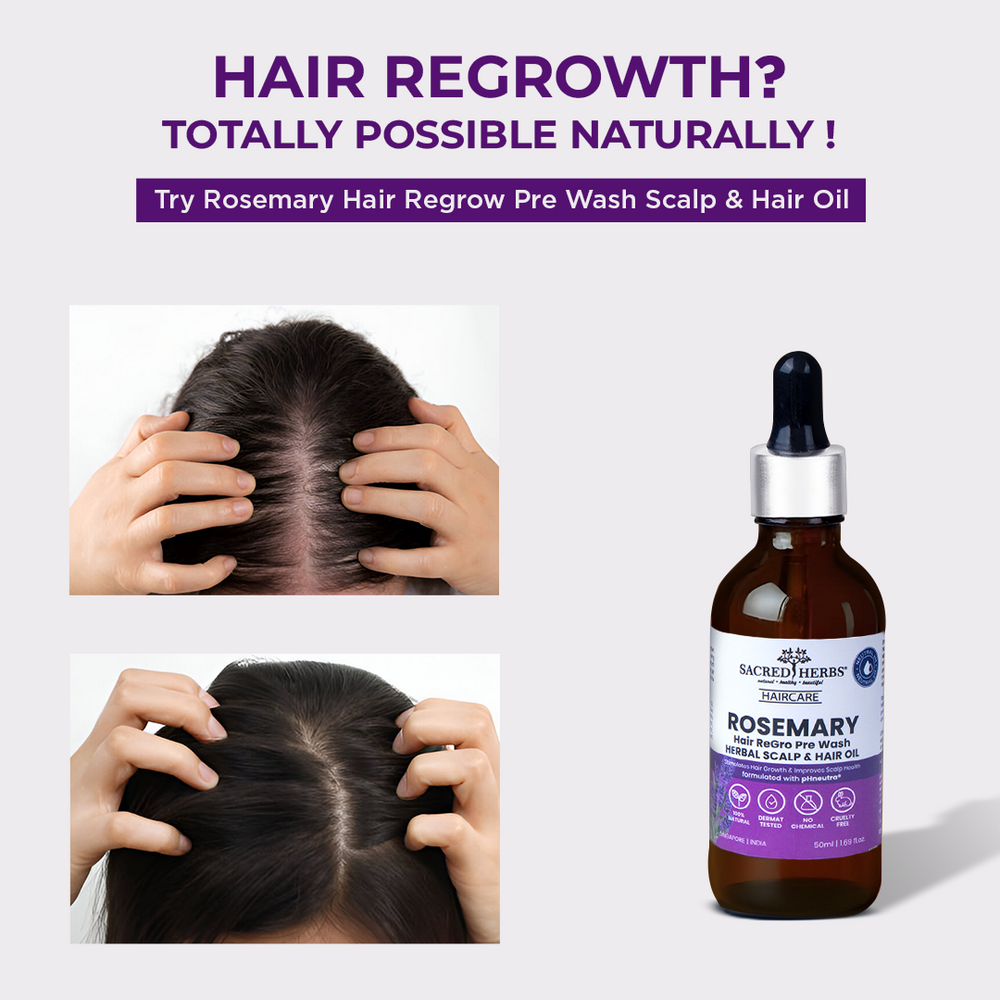
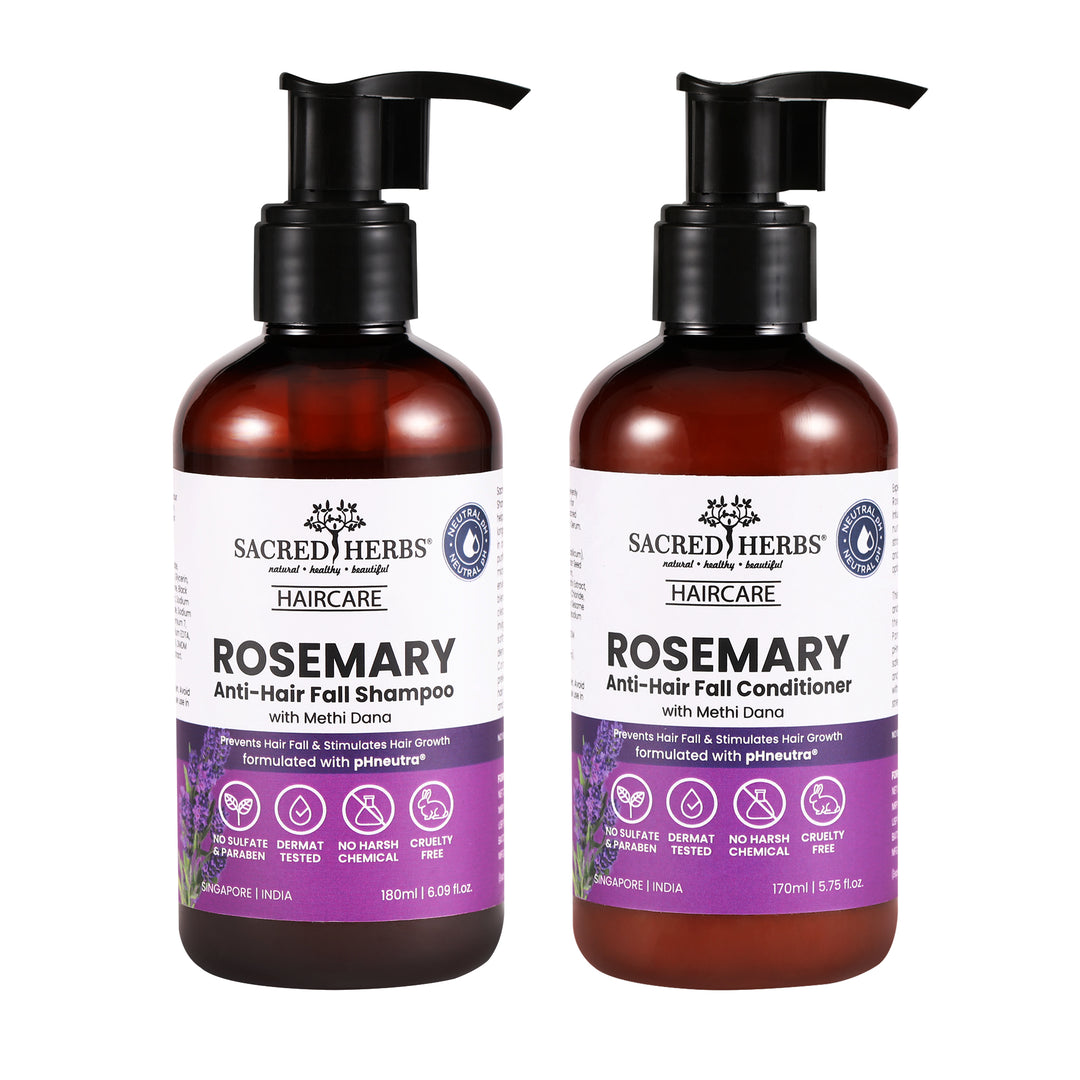
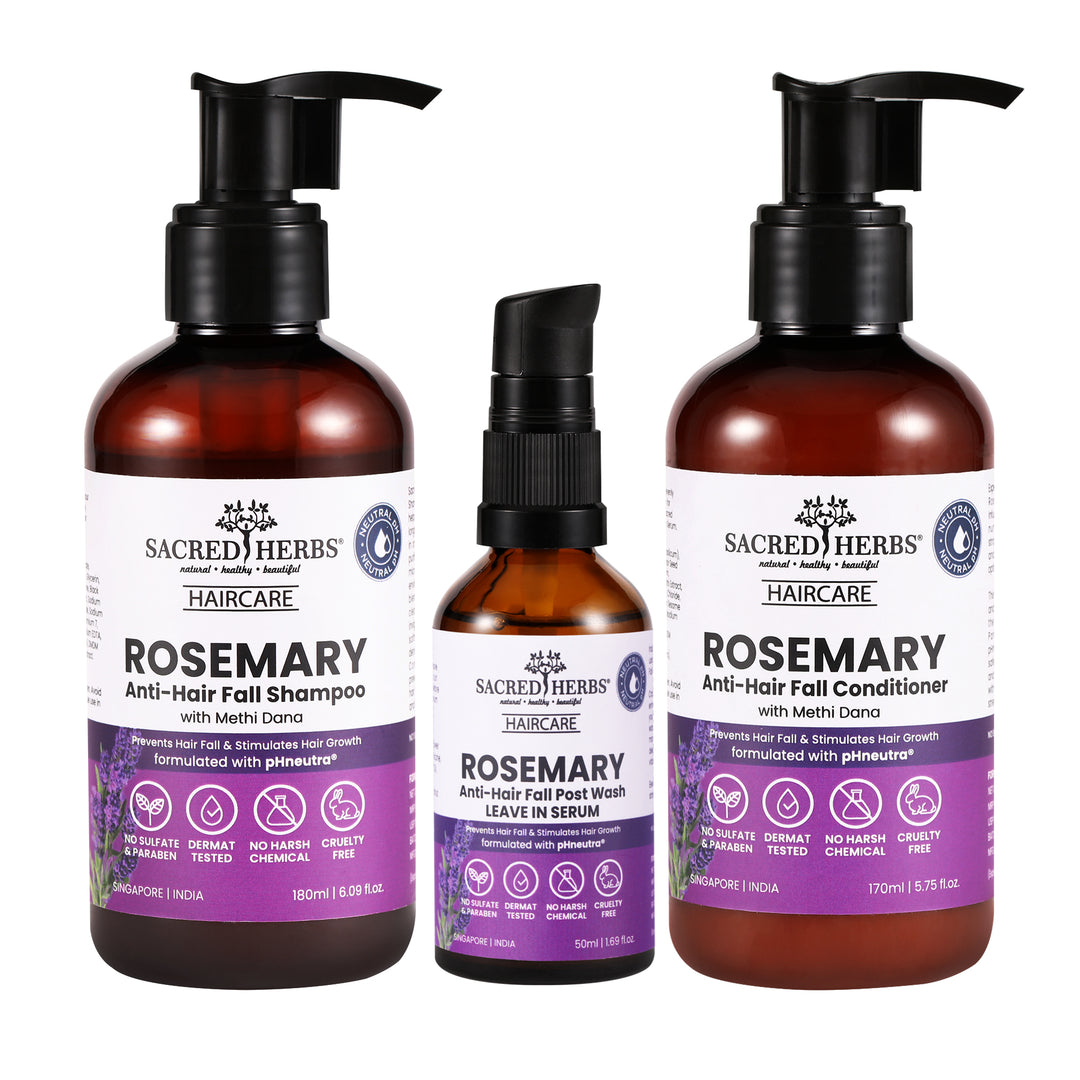
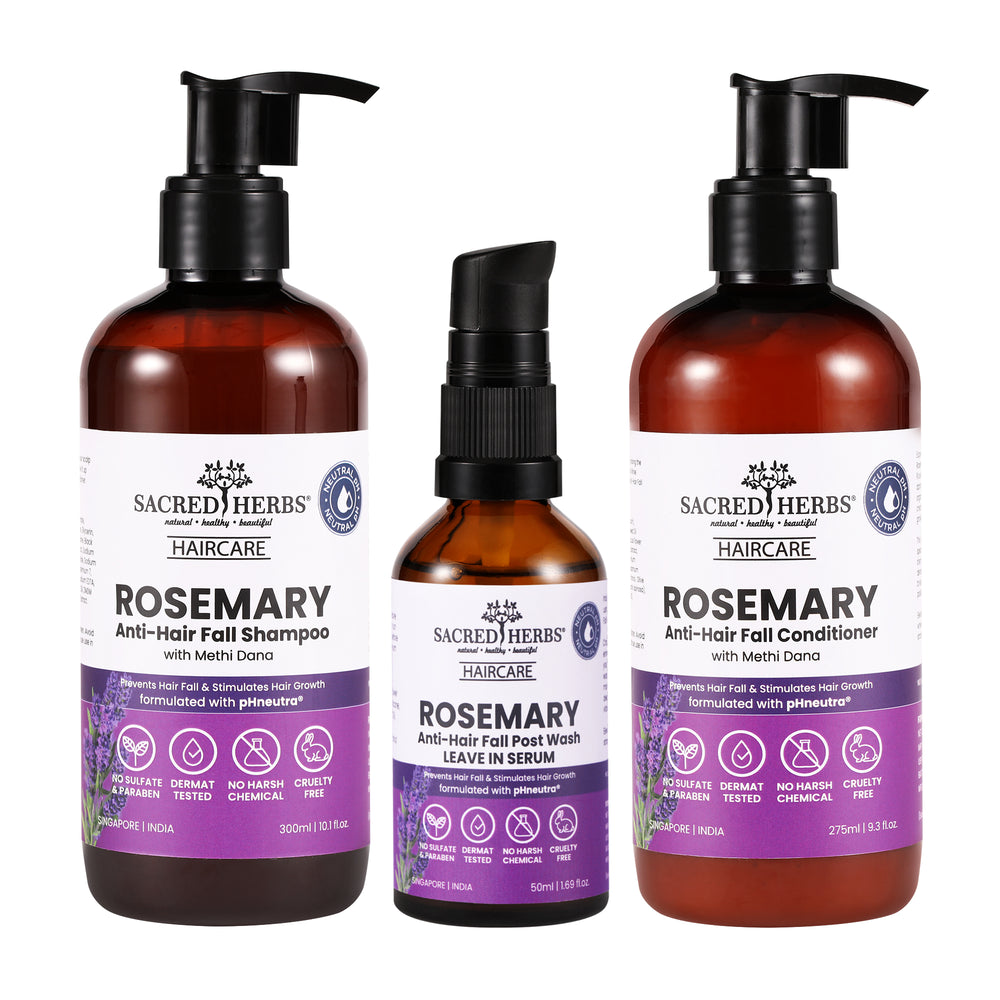
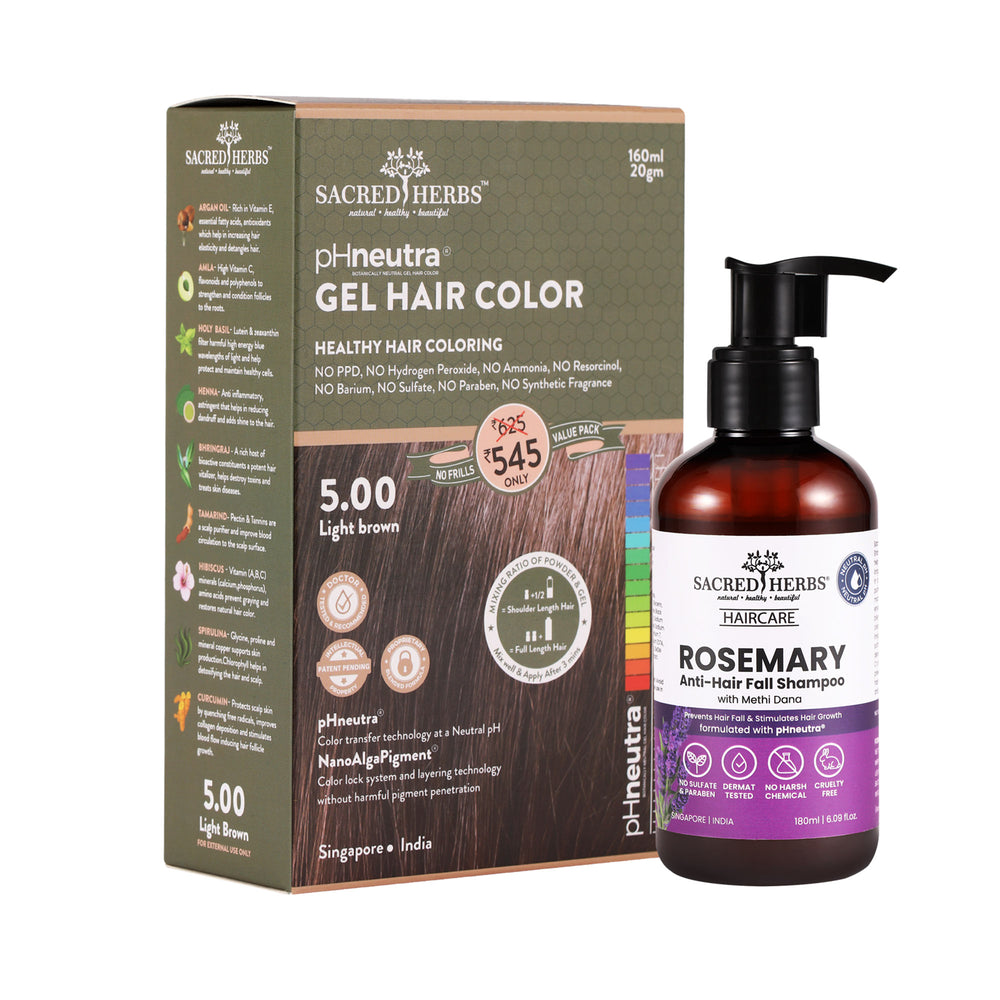
For people who want a more complete rosemary-focused hair-care routine, Sacred Herbs® offers a Rosemary Anti Hair Fall Series with shampoo, conditioner, pre-wash scalp oil and leave-in serum. Using complementary products can provide more opportunities for botanical ingredients to remain in contact with the scalp and hair.
What a Good Rosemary Shampoo for Hair Growth Contains Beyond Rosemary
The best rosemary shampoo for hair growth uses rosemary as a lead ingredient and combines it with complementary botanicals that address different aspects of hair fall and hair growth problems.
Methi Dana (Fenugreek): Adds DHT-blocking activity through diosgenin, strengthens the hair shaft with lecithin, and provides nicotinic acid for scalp circulation support.
Bhringraj: Stimulates dermal papilla cell proliferation (the cells directly responsible for initiating hair growth), extends the anagen phase, and provides antifungal support for dandruff-related hair fall.
Amla: Delivers antioxidant protection through high-dose vitamin C and gallic acid, supports collagen synthesis in the scalp dermis, and contributes mild DHT inhibition.
Biotin (Vitamin B7): Supports keratin production and follicle metabolism, particularly relevant for biotin-deficient individuals.
Caffeine: Rapid scalp penetration, anagen extension, and DHT counteraction. One of the most well-studied topical actives for hair growth alongside rosemary.
Sulphate-free surfactant system: A rosemary shampoo using SLS or SLES to cleanse is a contradiction. Harsh sulphates create the scalp inflammation that rosemary is trying to reduce. The best rosemary shampoos use gentler surfactants (coco glucoside, sodium cocoyl isethionate) that cleanse without disruption.
How to Use Rosemary Shampoo for Hair Growth Correctly
The application protocol matters as much as the product itself. Most people using rosemary shampoo for hair growth underuse it in three specific ways.
Apply to the scalp first. Hair growth actives work at the follicle. The shampoo needs to reach the scalp, not just the hair. Apply to wet scalp directly, then work through the lengths.
Massage for two to three minutes. The scalp massage that accompanied rosemary oil application in the Skinmed trial was not incidental. Scalp massage improves microcirculation independently of the rosemary. It also increases the contact time of the shampoo with the scalp. Use fingertip (not nail) circular motions across the entire scalp.
Leave on for five minutes before rinsing. Two minutes of contact time delivers some active absorption. Five minutes delivers significantly more. Set a timer. Rinse with cool to lukewarm water.
Use consistently. Hair growth cycle changes are measured in months, not weeks. The anagen phase, once shortened by DHT or inflammation, takes time to extend. Expect meaningful improvement at three months, fuller results at six months. Do not switch products at eight weeks.
Building a Complete Rosemary Hair Growth System
Rosemary shampoo is the foundation. The system that maximises results includes:
Pre-wash: Apply a rosemary and herbal scalp oil to the scalp 30-60 minutes before washing. Massage in. This delivers concentrated botanical actives with extended contact time and loosens scalp build-up that might otherwise block follicles and reduce shampoo efficacy.
Wash: Use the rosemary shampoo as described above. Scalp massage, five-minute contact time, lukewarm rinse.
Condition: Use a complementary conditioner (mid-lengths and ends only) that does not contain silicones or conditioning agents on the scalp.
Post-wash: Apply the leave-in rosemary serum to the scalp. This is the highest-impact step for hair growth because leave-in products maintain active contact with the follicle for hours rather than minutes.
Realistic Expectations: What Rosemary Shampoo Will and Will Not Do
Will do:
-
Reduce scalp inflammation significantly within two to four weeks
-
Reduce hair fall caused by inflammation, poor circulation, or mild DHT sensitivity within six to twelve weeks
-
Contribute meaningfully to hair growth improvement as part of a complete system over three to six months
May or may not do (depends on cause of hair fall):
-
Reverse moderate androgenetic alopecia (some effect, less dramatic than minoxidil or finasteride)
-
Address hair fall caused by nutritional deficiency without internal supplementation
Will not do:
-
Reverse hair fall caused by severe nutritional deficiency without addressing the deficiency internally
-
Reverse hair fall caused by hormonal conditions (PCOS, thyroid disorders) without addressing the underlying condition
-
Produce visible regrowth in follicles that have permanently closed (a follicle that has been miniaturised for many years without any hair growth may not respond to topical treatment)
Frequently Asked Questions
How long should I use rosemary shampoo before deciding if it is working?
Give it a minimum of 12 weeks of consistent use before evaluating. Hair growth cycle changes are slow. The anagen phase, once extended, produces visible hair count improvement over several months.
Can I use rosemary shampoo daily?
Three to four times per week is optimal. Daily washing is generally more than most scalps need and may over-strip natural oils even with a gentle formula.
Is rosemary shampoo safe during pregnancy?
The topical use of rosemary extract in cosmetic concentrations is generally considered safe during pregnancy. However, avoid direct inhalation of strong rosemary essential oil during pregnancy, and discuss any new product with your doctor.
My rosemary shampoo has a strong smell. Is this normal?
Rosemary has a characteristic strong, camphor-like herbal scent. A shampoo with a high concentration of genuine rosemary extract will have a noticeable herbal smell. Shampoos with very faint rosemary scent may have only trace amounts of the active.
Can I combine rosemary shampoo with minoxidil?
Yes. Rosemary shampoo and minoxidil work through overlapping but not identical mechanisms and are safe to use concurrently. The combination may be more effective than either alone.
Does rosemary shampoo work for postpartum hair fall?
Yes. Postpartum telogen effluvium, while primarily hormonally driven, benefits from the anti-inflammatory and circulation-improving properties of rosemary. The hair fall will resolve on its own as hormones stabilise, but rosemary shampoo can support a healthier environment for regrowth.