From the Ground Up: Why Organic Hair Colour Is the Smarter Choice for Long-Term Hair Health
Picture this. You are standing in a pharmacy in front of the hair colour section. You have been colouring your hair for years. The grey is spreading and so is your concern about what you are putting on your scalp every six weeks. You pick up the box you always buy. You read the back. Ammonia. PPD. Resorcinol. Hydrogen peroxide.
You put it down. You pick up the one next to it with "natural" on the label. You read the back. Ammonia. PPD. A tiny amount of argan oil. You put that one down too.
You are not imagining the problem. Most of what is sold as "natural" or "organic" hair colour is not. The word is used freely because it sells, not because it is regulated. Finding genuinely organic hair colour requires knowing what you are looking for. That is what this article is for.
The Starting Point: What Is Happening Inside Your Hair When You Colour It
Before understanding why organic hair colour is better, it helps to understand what conventional hair colour is actually doing to your hair.
Your hair is made primarily of keratin, a structural protein arranged in overlapping scales called the cuticle. These scales protect the inner cortex, which is where your hair's natural colour pigment (melanin) lives. Healthy hair has flat, smooth cuticle scales that reflect light evenly, which is why healthy hair looks shiny.
When you apply conventional hair colour, ammonia creates a highly alkaline environment (pH 9-10) that forces these cuticle scales open. Hydrogen peroxide then oxidises and destroys the melanin in the cortex. Synthetic colour molecules (PPD and related compounds) enter through the now-open cuticle and polymerise into larger molecules that become trapped in the cortex.
The cuticle then attempts to close. But it never closes back to its original state. Each time this process is repeated, the cuticle becomes more damaged, more porous, more fragile. Hair that has been chemically coloured many times is structurally different from virgin hair. It breaks more easily. It loses moisture faster. It is less responsive to conditioning treatments. The cumulative effect of years of chemical colouring is visibly and measurably worse hair.
The Organic Alternative: A Completely Different Mechanism
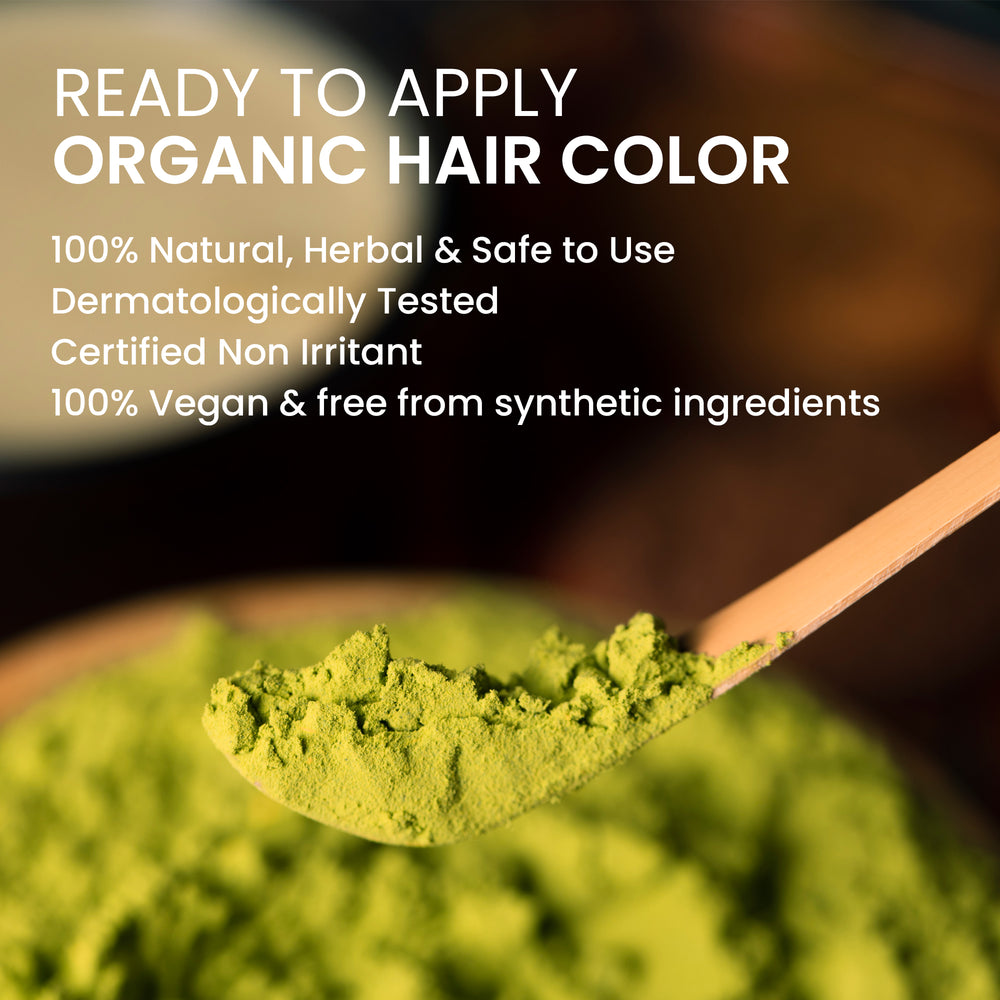
Organic hair colour does not work by opening the cuticle. It does not use ammonia to create an alkaline environment. It does not use hydrogen peroxide to destroy natural pigment. It works instead through direct substantive colouring: botanical pigments that have a natural affinity for keratin bond to the hair's protein structure without requiring any disruption of the cuticle.
The mechanism is elegant in its simplicity. Henna's active colouring compound, lawsone, is small enough to migrate between the cuticle scales through the intercellular channels that exist naturally in the hair shaft. Once inside, it forms a stable covalent bond with the hair's keratin. No force. No chemical disruption. No structural damage.
The result is colour that is genuinely permanent (it only grows out, it does not wash out) and hair that is in equal or better structural condition after colouring than before. This is not theoretical. It is chemically verifiable and reported consistently by people who switch from chemical to organic colour.
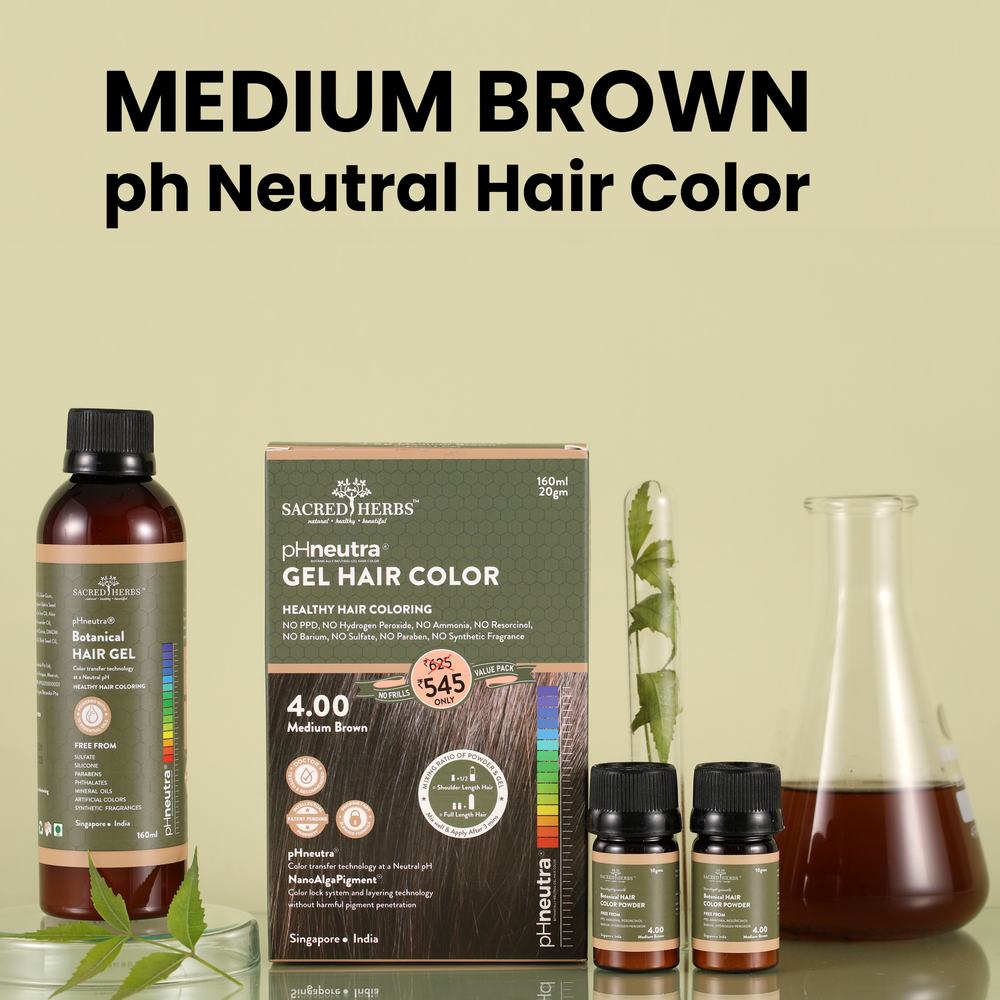
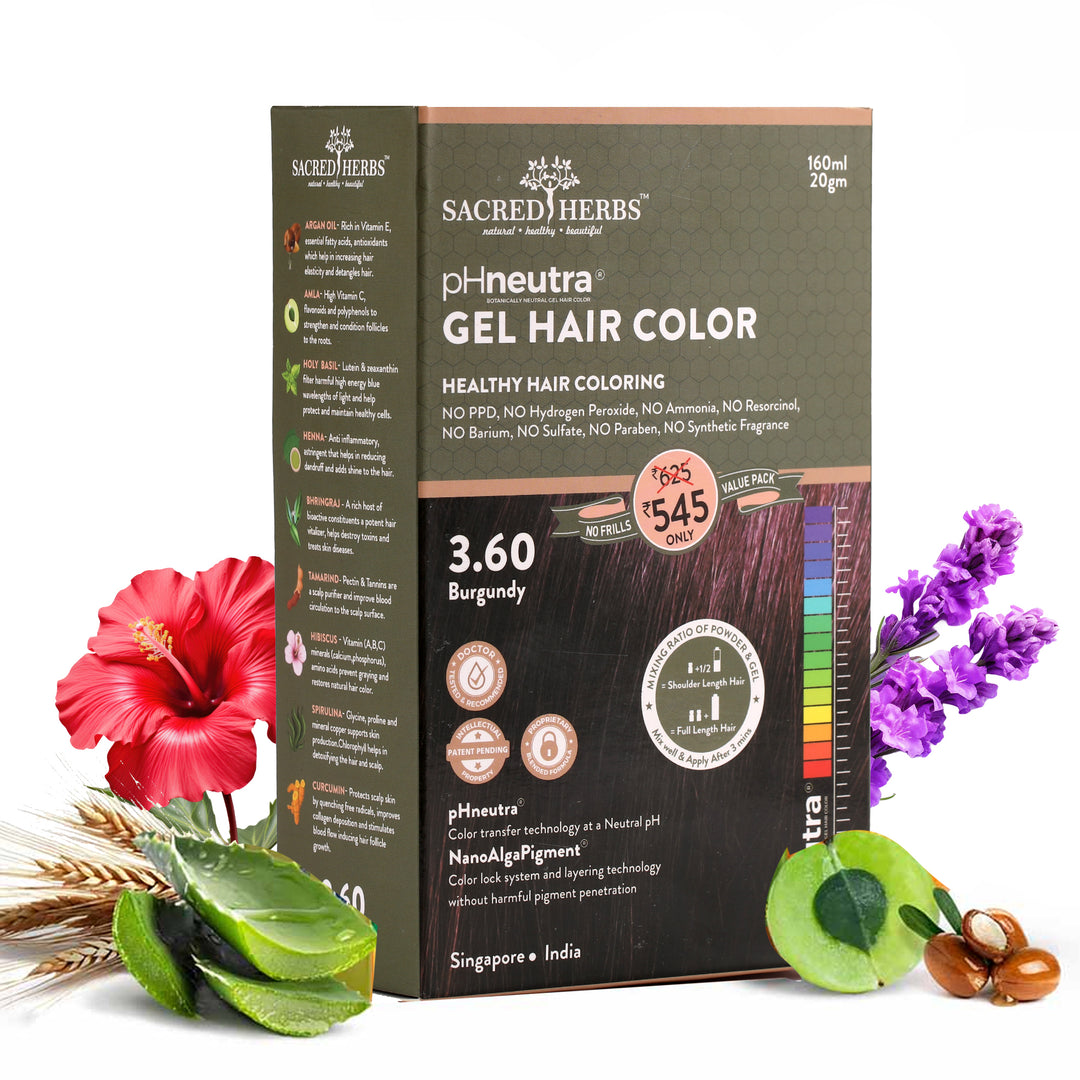
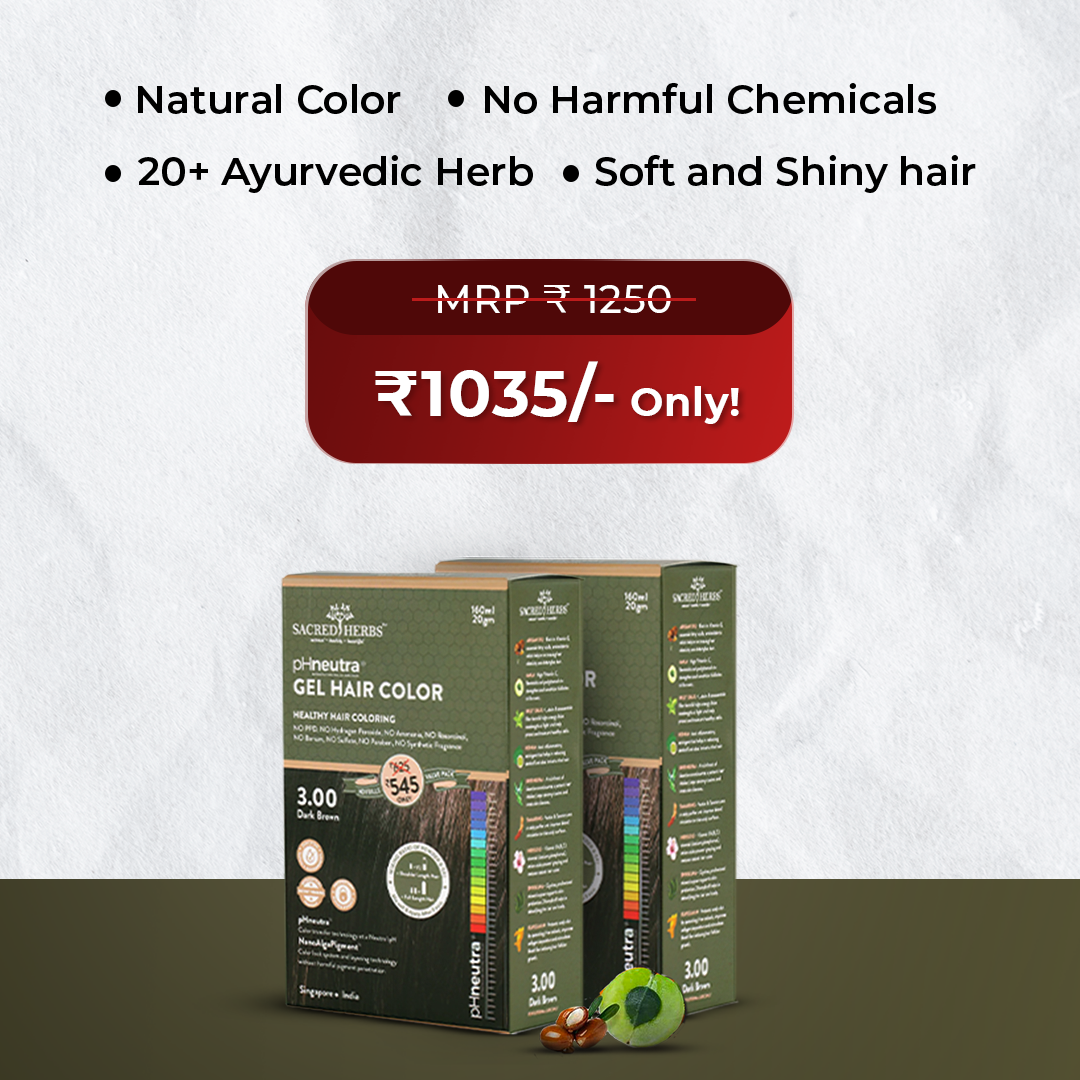
The Hair Color Collection at Sacred Herbs uses this mechanism, enhanced by pHneutra gel technology that delivers colour at a near-neutral pH, preserving the hair's acid mantle throughout the process.
Breaking Down the Ingredients: What Good Organic Hair Colour Contains
Let us go ingredient by ingredient through what a genuinely organic hair colour formula should contain and what each component does.
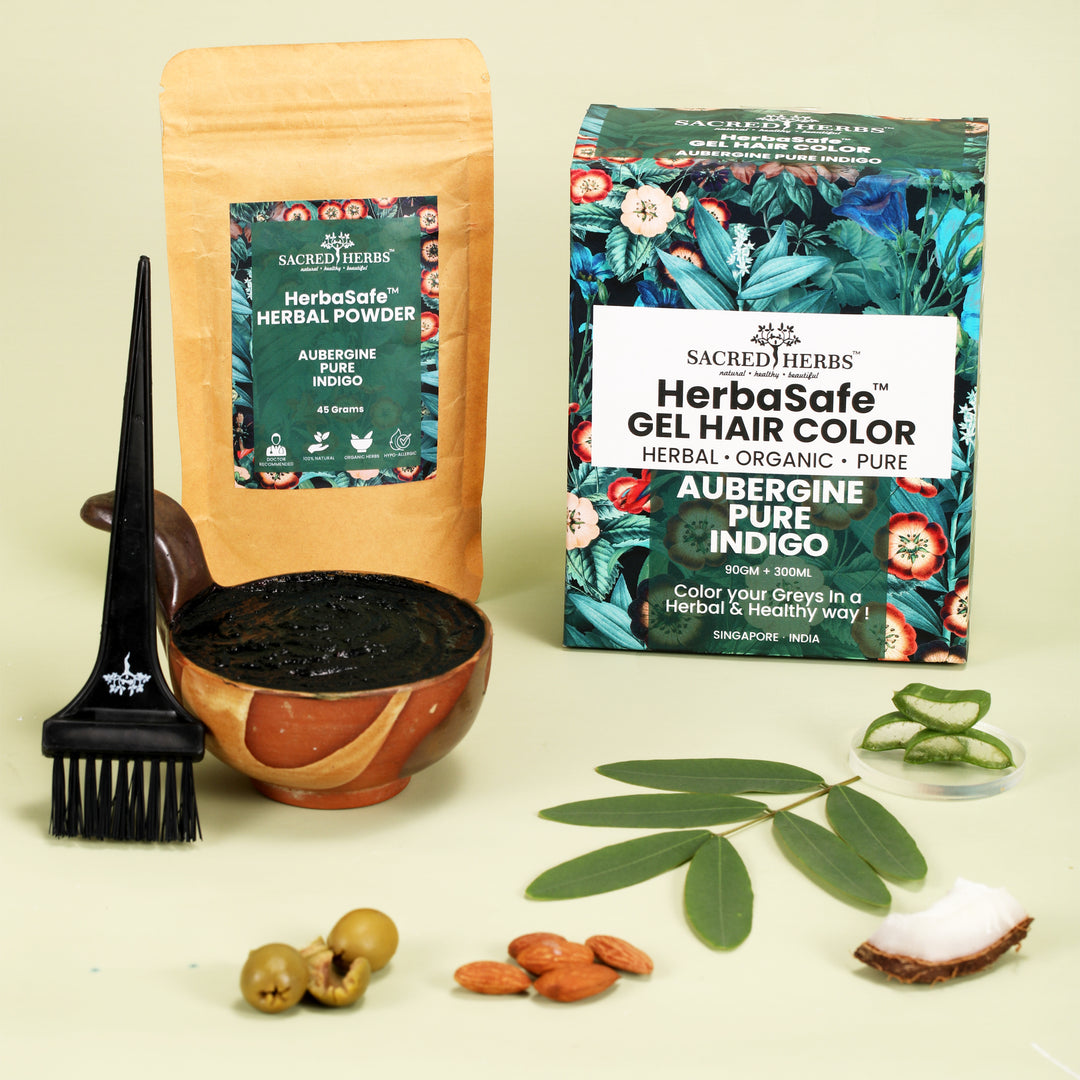
Lawsonia inermis (Henna) The primary colouring agent. Produces warm tones from auburn to chestnut on its own. The base for all dark shades when combined with indigo. Also conditions and strengthens the hair shaft by coating it with a layer of lawsone-keratin bonds.
Indigofera tinctoria (Indigo) The secondary botanical colourant. Produces deep blue-black tones. Combined with henna in varying ratios to create brown to black shades. Has its own conditioning properties and a long documented history of use in hair care.
Emblica officinalis (Amla/Indian Gooseberry) Rich in vitamin C and gallic acid. Used in Ayurvedic hair care for millennia. In organic hair colour, amla deepens and cools tones, adds conditioning benefits, and provides antioxidant protection to the hair during the colouring process.
Eclipta prostrata (Bhringraj) Traditionally used for scalp health and hair growth support. In organic hair colour, it contributes to the darkening effect on natural shades and provides follicle-supporting phytonutrients.
Cold-Pressed Carrier Oils Organic hair colour formulas typically use cold-pressed oils (such as coconut, argan, or castor) as part of the delivery base. These oils coat the hair during processing, reduce friction, and leave the hair soft and manageable after rinsing.
NanoAlgaPigment The most advanced organic colouring technology currently available. Microbial pigments derived from algae, reduced to nano-particle size, penetrate the hair shaft more efficiently than larger botanical molecules. This technology is what allows modern organic hair colour to achieve grey coverage that rivals conventional dye.
What good organic hair colour should not contain: PPD (paraphenylenediamine), ammonia or ammonium hydroxide, resorcinol, hydrogen peroxide, parabens, synthetic fragrance, phthalates, formaldehyde-releasing preservatives, or heavy silicones.
The Grey Coverage Question: Answered Honestly
Every conversation about organic hair colour eventually arrives here. Does it cover grey? The honest answer is: yes, completely, when the formula is right and the application is done correctly.
Grey hair, contrary to what some people assume, is not more resistant to organic colour than pigmented hair. It actually absorbs botanical pigments quite well because the absence of melanin leaves the hair's keratin protein fully accessible to lawsone and indigo molecules.
What grey hair does require is adequate processing time. Conventional dye can deliver full grey coverage in 25-30 minutes because its aggressive chemistry forces rapid penetration. Organic hair colour needs 35 minutes for the same result because penetration happens through natural diffusion rather than chemical force. Adding gentle warmth (a shower cap with a warm towel or brief hairdryer on low) during the last 10-15 minutes of processing significantly accelerates this.
The shade available for grey coverage ranges from natural black through dark brown, medium brown, light brown, and burgundy. These shades cover grey completely and uniformly when applied with the correct technique.
Scalp Health: The Most Overlooked Argument for Organic Hair Colour
Hair colour discussions typically focus on the hair. The scalp, which is arguably more important, gets less attention.
Your scalp is skin. It has an acid mantle (a slightly acidic protective layer with pH 4.5-5.5), a microbiome of beneficial bacteria, sebaceous glands that produce protective oils, and hair follicles that are sensitive to chemical disruption. When you apply conventional hair dye, all of this is disrupted simultaneously.
Ammonia destroys the acid mantle. Synthetic chemicals penetrate the follicle and reach the blood supply. The inflammatory response triggered by PPD can persist for days. In people with any underlying scalp condition, conventional dye can trigger flares that take weeks to resolve.
Organic hair colour, applied at neutral pH without PPD or ammonia, leaves the scalp's protective systems intact. The acid mantle is preserved. The follicle environment is undisturbed. The colouring process does not trigger inflammation. For anyone who has ever finished colouring their hair and felt the familiar scalp burn and irritation, this difference is immediately and completely noticeable.
The Hair Care Collection at Sacred Herbs is formulated with this scalp-health philosophy, using botanical actives that support rather than disrupt the scalp's natural environment.
Making the Transition: What to Expect When Switching from Chemical to Organic Colour
Switching from chemical to organic hair colour is a one-way journey for most people. Once they experience the difference in scalp comfort, hair condition, and overall health, very few return. But the transition has a few things worth knowing.
First application colour result: Your first application of organic hair colour on hair that has been chemically coloured may look slightly different from what you expect. Chemically coloured hair is more porous and may absorb pigment unevenly. By the second or third application, the hair's porosity becomes more even and the colour result is consistent and rich.
The in-between phase: If you were using conventional dye for lighter shades (e.g., medium brown on naturally dark hair), organic colour cannot replicate this because organic colour cannot lighten. If you want to transition while growing out the lightened portions, be prepared for a few months of different tones as the natural colour and the organic colour grow in together.
Hair condition improvement: Most people notice that their hair feels softer, more manageable, and less prone to breakage within two or three applications of organic colour. The coating effect of botanical pigments on the cuticle is cumulative.
Scalp comfort: The difference in scalp comfort is usually noticed from the very first application. No burn, no sting, no lingering irritation.
Frequently Asked Questions
Is all henna-based hair colour the same as organic hair colour?
No. Traditional henna powder mixed at home is very different from a modern organic hair colour gel. Organic hair colour gel combines botanical colourants with engineered delivery systems, conditioning actives, and precise shade ratios that are not possible with raw powder.
How do I maintain my organic hair colour?
Use a sulphate-free shampoo, wash in cool water, deep condition every two weeks, and avoid prolonged sun exposure.
Does organic hair colour work on all hair textures?
Yes. Curly, straight, wavy, fine, coarse, thick, thin. All hair textures respond to organic colourants. Processing time and saturation requirements vary with texture and density.
Is organic hair colour more expensive than conventional dye?
It varies by brand. Some organic hair colour products are priced comparably to premium conventional dye. When you factor in the reduced need for intensive post-colour conditioning treatments (because the hair is not damaged), the overall cost is often similar or lower.