




Natural Shampoo for Hair Fall




Natural Shampoo for Hair Fall: Ingredients, Benefits & How to Choose
Walk into any pharmacy in India and count the shampoos claiming to stop... Read More
Natural Shampoo for Hair Fall: Ingredients, Benefits & How to Choose
Walk into any pharmacy in India and count the shampoos claiming to stop hair fall. You will lose count before you reach the end of the shelf. Every brand has one. Every brand promises results. Most deliver nothing beyond a pleasant lather and a temporarily clean scalp.
The problem is not that natural shampoos for hair fall cannot work. The problem is that most of what is sold under that label is not genuinely natural, not formulated at a concentration where the active ingredients can do anything meaningful, and not used in a way that gives even a good formula a real chance.
This guide is built around ingredients first. Understanding what specific botanicals do, how they interact with the scalp and follicle, and why they need to be present at meaningful concentrations gives you the tools to choose genuinely effective natural shampoo for hair fall and to use it in a way that produces the results it is capable of delivering.
The Scalp as an Ecosystem: Why Natural Matters More Than You Think
Your scalp is not just skin. It is a complex ecosystem with its own microbiome, acid mantle, sebaceous glands, and follicle infrastructure. When this ecosystem is healthy, hair grows well, sheds normally, and responds positively to supportive treatments. When it is disrupted, hair fall accelerates, scalp conditions develop, and the follicle environment becomes hostile to growth.
Conventional shampoos disrupt this ecosystem in several specific ways. Sodium lauryl sulphate and sodium laureth sulphate, the most common surfactants in mass-market shampoos, strip the scalp's protective lipid barrier and destroy the acid mantle. The resulting disruption triggers compensatory sebum overproduction, scalp inflammation, microbiome imbalance, and increased sensitivity. Each wash creates a cycle of disruption and recovery that, over months and years, results in a chronically compromised scalp environment.
Natural shampoo for hair fall works differently. Using gentler surfactant systems derived from plant sources (coco glucoside, sodium cocoyl isethionate, decyl glucoside), it cleanses the scalp without stripping the protective lipid layer. The botanical activities it delivers during contact time work with the scalp's natural biology rather than against it. The result is a cleaner scalp at the end of each wash and a healthier cumulative scalp environment over months of consistent use.
This matters for hair fall because most of the hair fall mechanisms that respond to topical treatment are scalp-level mechanisms: inflammation, poor microcirculation, clogged follicles, scalp infections, and DHT sensitivity at the follicle. A shampoo that creates scalp disruption while delivering anti-hair-fall activities is working against itself.
The Botanical Actives That Make Natural Shampoo for Hair Fall Work
This section examines each key botanical activity in depth: what the plant contains, what the research says, and what mechanism it uses to address hair fall.
Rosemary (Rosmarinus officinalis)
Rosemary is the single most researched botanical for hair fall, with clinical evidence that puts it on par with pharmaceutical treatments. The landmark Panahi et al. (2015) study published in Skinmed compared 2% rosemary oil to 2% minoxidil over six months in 100 patients with androgenetic alopecia. Hair count improvement was comparable in both groups. Scalp itching was significantly lower in the rosemary group.
Rosemary works through four distinct mechanisms simultaneously: it improves scalp microcirculation through vasodilation; it inhibits 5-alpha reductase (the enzyme that converts testosterone to DHT); it reduces scalp inflammation through COX-2 inhibition; and it protects follicle cells from oxidative stress through high-concentration antioxidants (carnosic acid, rosmarinic acid, carnosol).
No other single botanical addresses as many hair fall mechanisms with as robust an evidence base. It is the ingredient that a genuinely effective natural shampoo for hair fall must include at meaningful concentration.
Methi Dana (Trigonella foenum-graecum)
Fenugreek seed is a cornerstone of Indian hair care with both traditional authority and modern scientific backing. Its key active compounds for hair fall include:
Diosgenin, a steroidal saponin with documented DHT-blocking and mild oestrogenic activity. This is particularly relevant for women experiencing hair fall associated with hormonal transitions, including postpartum, perimenopausal, and PCOS-related hair fall.
Lecithin, a phospholipid that coats and strengthens the hair shaft, reducing mechanical breakage. In the context of natural shampoo for hair fall, lecithin from methi dana reduces the contribution of breakage to perceived hair fall.
Nicotinic acid, which improves scalp circulation independently of rosemary's vasodilatory mechanism, providing additive circulatory benefit.
Bhringraj (Eclipta prostrata)
Bhringraj's clinical evidence is compelling. A 2008 study in the Journal of Ethnopharmacology compared bhringraj root extract to 2% minoxidil in animal models. Bhringraj produced comparable anagen-extension results, with a higher proportion of follicles in the growth phase compared to control.
Its primary mechanism is stimulation of dermal papilla cell proliferation. The dermal papilla is the cluster of cells at the base of the follicle responsible for initiating and sustaining hair growth. Bhringraj's wedelolactone and ecliptine compounds directly support these cells, extending the anagen phase. It also has documented antifungal properties relevant for hair fall caused by dandruff and seborrheic dermatitis.
Amla (Phyllanthus emblica)
Amla's contribution to natural shampoo for hair fall is multi-dimensional. Its exceptional vitamin C concentration (among the highest of any plant) supports collagen synthesis in the scalp dermis, which forms the structural matrix anchoring the follicle. Collagen degradation is an underappreciated factor in follicle miniaturisation, and amla's vitamin C support for collagen production addresses this.
Its gallic acid and tannin content provide astringent properties that reduce follicle-clogging sebum excess and have mild DHT-inhibiting activity. Its antioxidant potency protects follicle cells from the oxidative stress that accelerates follicle ageing.
Brahmi (Bacopa monnieri)
Stress-related hair fall, medically termed telogen effluvium, is one of the most common types of hair fall in urban India. Elevated cortisol from chronic psychological stress shortens the anagen phase and triggers mass synchronised shedding. Brahmi's adaptogenic and cortisol-modulating properties make it a valuable addition to natural shampoo for hair fall specifically for stress-related shedding.
Applied topically, brahmi's bacosides provide local anti-inflammatory and neuroprotective effects at the follicle level. While the evidence for topical brahmi is less robust than for rosemary, it is rational and synergistic in a multi-botanical formula.
Tulsi (Ocimum sanctum)
Tulsi's eugenol is a potent COX-2 inhibitor: it blocks the enzyme that produces inflammatory prostaglandins in the scalp. Scalp inflammation, whether from pollution, product build-up, dandruff, or autoimmune activity, is a common and often overlooked driver of hair fall. Tulsi addresses this specifically and synergistically with rosemary's anti-inflammatory activity.
The Surfactant Question: Why "Natural" Means Nothing if the Cleansing Agents Are Harsh
A shampoo that includes rosemary, bhringraj, and amla but uses SLS as its primary surfactant is not genuinely natural and will not work well. Here is why.
SLS is derived from lauryl alcohol and sulphuric acid. It is one of the most aggressive surfactants used in personal care. Its primary action is to dissolve lipids: it strips the scalp's protective sebum layer completely with each wash. This creates inflammation, disrupts the microbiome, and triggers the very scalp conditions that worsen hair fall. Any anti-inflammatory benefit from the botanical activities is largely negated by the SLS-driven inflammation happening simultaneously.
Genuinely natural shampoo for hair fall uses plant-derived surfactants:
Coco glucoside and decyl glucoside: derived from coconut and corn. Gentle, effective, biodegradable.
Sodium cocoyl isethionate: derived from coconut fatty acids. Creates a rich lather comparable to SLS without the scalp disruption.
Cocamidopropyl betaine: derived from coconut oil. A mild amphoteric surfactant that works synergistically with the above.
These surfactants cleanse the scalp effectively while preserving the lipid barrier. A shampoo formulated with these will leave the scalp clean, not stripped.
Concentration: The Most Ignored Factor in Natural Shampoo Efficacy
A shampoo listing rosemary as the 20th ingredient provides essentially no therapeutic rosemary benefit. The concentration of botanical activities in natural shampoo for hair fall determines whether the product works or whether it is simply botanical-themed conventional shampoo.
When evaluating a natural shampoo for hair fall, look for:
Botanical actives listed in the first half of the ingredient list (ingredients are listed in descending order of concentration).
Specific plant names rather than generic "botanical extracts" (Rosmarinus officinalis extract rather than "botanical extract").
Absence of the masking effect: some brands add botanical actives in trace concentrations alongside a SLS surfactant base, creating the appearance of a botanical product while delivering no meaningful botanical benefit. If SLS or SLES appears in the first five ingredients and rosemary is listed near the end, the product is not a natural shampoo in any meaningful sense.
How to Use Natural Shampoo for Hair Fall Correctly
The most effective natural shampoo for hair fall is one used correctly. The following protocol maximises the contact time and absorption of botanical actives:
Apply to the wet scalp directly, not to the palm first. Product that pools in the palm and is applied to the lengths reaches the scalp last and in the lowest concentration.
Massage with fingertip pads for two to three minutes. Circular motions across the entire scalp. The massage improves microcirculation independently of the botanical actives, and it keeps the shampoo in active contact with the scalp.
Leave for five minutes. Set a timer. Five minutes of contact time versus 30 seconds makes a meaningful difference in how much active absorption occurs.
Rinse with lukewarm water. Not hot. Hot water opens the cuticle aggressively and triggers scalp inflammation.
Follow with a sulphate-free conditioner applied only to the mid-lengths and ends. Conditioner on the scalp creates build-up that clogs follicles and interferes with next-wash active absorption.
Frequency: two to four times per week depending on scalp type. Daily washing, even with a gentle natural shampoo, is rarely beneficial and may contribute to over-cleansing.
Building a Complete Natural Hair Fall System
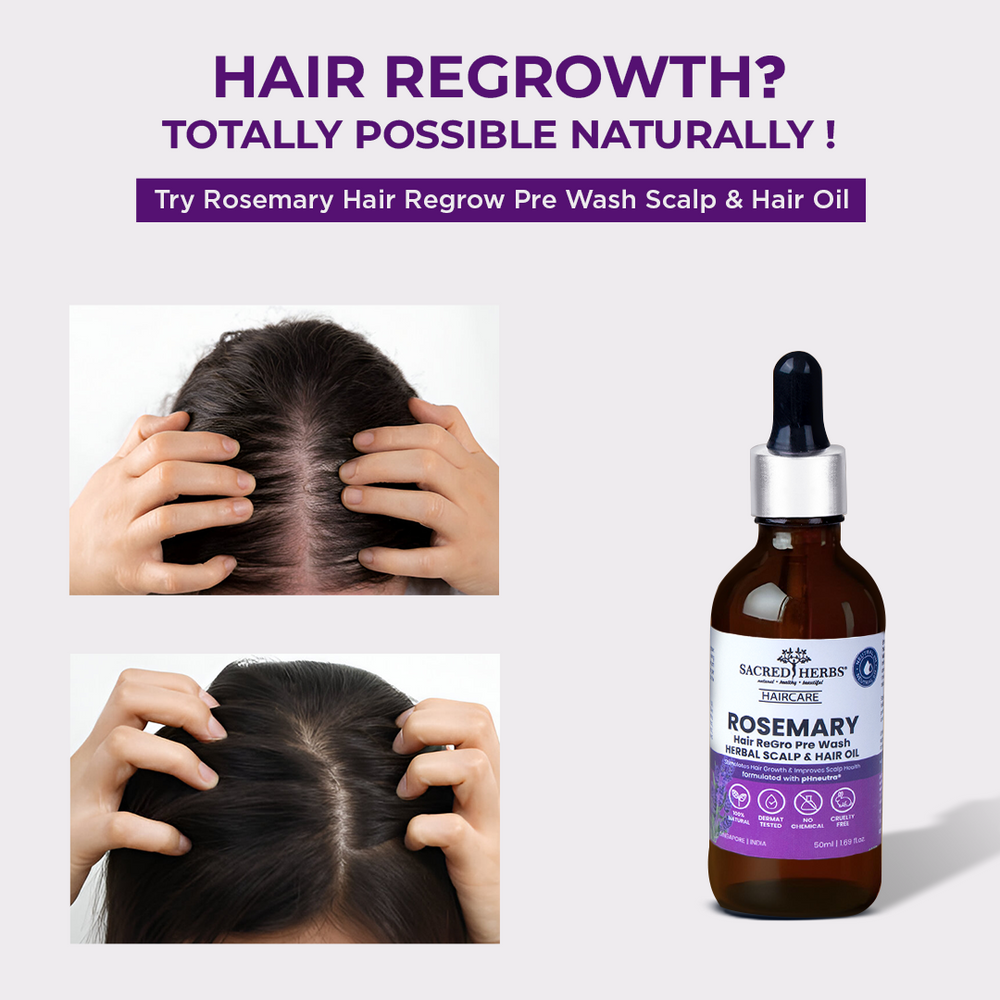
Natural shampoo for hair fall works best within a complete botanical system. The shampoo handles cleansing and short-contact-time active delivery. A complementary leave-in rosemary serum maintains active contact between washes for hours rather than minutes. A pre-wash herbal scalp oil loosens build-up, nourishes the follicle directly, and prepares the scalp for maximum shampoo absorption.
Explore the Rosemary Anti Hair Fall Series and the complete Hair Care Collection at Sacred Herbs, which brings together all the components of this system: shampoo, conditioner, pre-wash scalp oil, and leave-in post-wash serum, each formulated to complement the others.
What to Expect: A Realistic Timeline
Week 1-2: Scalp feels calmer. Less post-wash irritation. Some people notice reduced scalp oiliness as the sebaceous glands recalibrate after switching from harsh sulphates.
Week 3-6: Reduction in hair fall becomes noticeable. Less hair on the brush and in the shower drain. This is the beginning of the scalp's inflammatory and microcirculatory response to the botanical actives.
Week 8-12: Meaningful reduction in shedding for most hair fall types. Some people notice early regrowth at the hairline and crown.
Month 3-6: Visible improvement in hair density for those whose hair fall was scalp-driven. Regrowth becomes progressively visible.
If hair fall is severe, progressive, or accompanied by visible patches, see a dermatologist. Natural shampoo is a supportive tool for scalp-level hair fall; it is not a replacement for medical evaluation of underlying conditions.
Frequently Asked Questions
Can natural shampoo for hair fall be used on colour-treated hair?
Yes, provided the formula is sulphate-free. Botanical natural shampoos without sulphates are colour-safe by default. If you use botanical hair colour, the Hair Color Collection at Sacred Herbs offers pH-neutral gel colour specifically formulated to be safe for hair already experiencing hair fall.
Is natural shampoo for hair fall suitable for oily scalps?
Yes. Gentle surfactants cleanse effectively without triggering the compensatory sebum overproduction that harsh surfactants cause. Many people with oily scalps find that switching to a natural shampoo actually reduces oiliness over two to four weeks as the sebaceous glands recalibrate.
How do I know the natural shampoo is working?
Track your daily hair fall numerically. Count hairs on the brush, on the shower floor, on the pillow. A meaningful reduction by week six is the primary indicator. Secondary indicators: reduced scalp irritation, reduced post-wash scalp tightness, gradual improvement in hair texture.
Can I use natural shampoo for hair fall on a baby or child?
Adult hair fall shampoos are formulated for adult scalp conditions. They should not be used on children under 12 without a dermatologist's guidance. Children's scalps have different pH levels, permeability, and microbiome composition.
Does natural shampoo for hair fall work for postpartum hair fall?
It supports recovery but does not stop postpartum telogen effluvium, which is hormonally driven and will resolve naturally as oestrogen stabilises. Natural shampoo creates a healthy scalp environment for optimal regrowth during recovery.
Is there a difference between natural shampoo for hair fall and medicated anti-dandruff shampoo for hair fall caused by dandruff?
Yes. Dandruff-driven hair fall (caused by Malassezia yeast overgrowth) may respond better to a shampoo with antifungal actives (ketoconazole, zinc pyrithione) for initial treatment. However, botanical shampoos with bhringraj and tulsi have documented antifungal properties and can maintain a healthy scalp environment once the primary antifungal treatment has controlled the infection. For a complete personal care routine that extends the botanical philosophy beyond hair, the Body Collection and the Super Premium Pack from Sacred Herbs round out a comprehensive clean-beauty approach.