




Natural Hair Growth Products

Natural Hair Growth Products: A Category-by-Category Guide to What Actually Deserves a Place in Your Routine
Stand in front of any bathroom shelf belonging to someone worried about... Read More
Natural Hair Growth Products: A Category-by-Category Guide to What Actually Deserves a Place in Your Routine
Stand in front of any bathroom shelf belonging to someone worried about thinning hair and you will usually find the same thing: half-used bottles, each bought on a promise, none used long enough to tell whether it worked. The problem is rarely a lack of effort. It is a lack of a system.
Natural hair growth products work best when each one has a defined job. A cleanser keeps the scalp clear. A serum delivers actives to the follicle. A conditioner protects the length you have already grown. When products overlap or cancel each other out, results stall and money is wasted.
This guide sorts natural hair growth products into clear categories, explains what each one should do, and shows you how to combine them into a routine you can stick with for the three months that real change takes.
Why the Scalp Environment Comes Before Everything Else
Hair growth happens below the surface, inside the follicle. Products cannot change your genetics, but they can change the conditions the follicle works in. A scalp that is inflamed, congested with buildup, or stripped of its natural oils is a poor place for healthy hair to grow.
Natural ingredients earn their place here because many botanicals are gentle enough for daily contact while still offering anti-inflammatory, antioxidant, and antimicrobial benefits. The aim is not a dramatic overnight change. It is a scalp that stays calm, clean, and nourished week after week, so that each new strand grows out stronger than the last.
Keep this principle in mind as you read through the categories. Every product you choose should either support the scalp or protect the hair shaft. If it does neither, it does not belong in your routine.
The 7 Categories of Natural Hair Growth Products
1. Gentle Scalp Cleansers
Your shampoo sets the tone for everything that follows. Look for sulphate-free formulas that remove oil and residue without leaving the scalp tight or itchy. Botanicals like reetha and shikakai have been used for generations as mild natural cleansers, and modern sulphate-free surfactants offer similar gentleness with better consistency.
Wash two to three times a week for most scalp types. Over-washing triggers dryness and irritation; under-washing lets buildup block follicles.
2. Lightweight Conditioners
Conditioner does not grow hair, but it protects what grows. Apply it from mid-length to ends only, so you do not weigh down the roots. Plant oils, aloe vera, and plant proteins help the cuticle lie flat, which reduces friction and breakage during combing.
3. Scalp Serums and Tonics
This is the category most directly linked to growth. A good scalp serum is a leave-in product applied to the roots and massaged in. Look for ingredients such as bhringraj, amla, rosemary, and fenugreek, which support circulation and help maintain a calm scalp.
Apply to a clean, slightly damp scalp and give it at least eight to twelve weeks before judging results.
4. Hair Oils
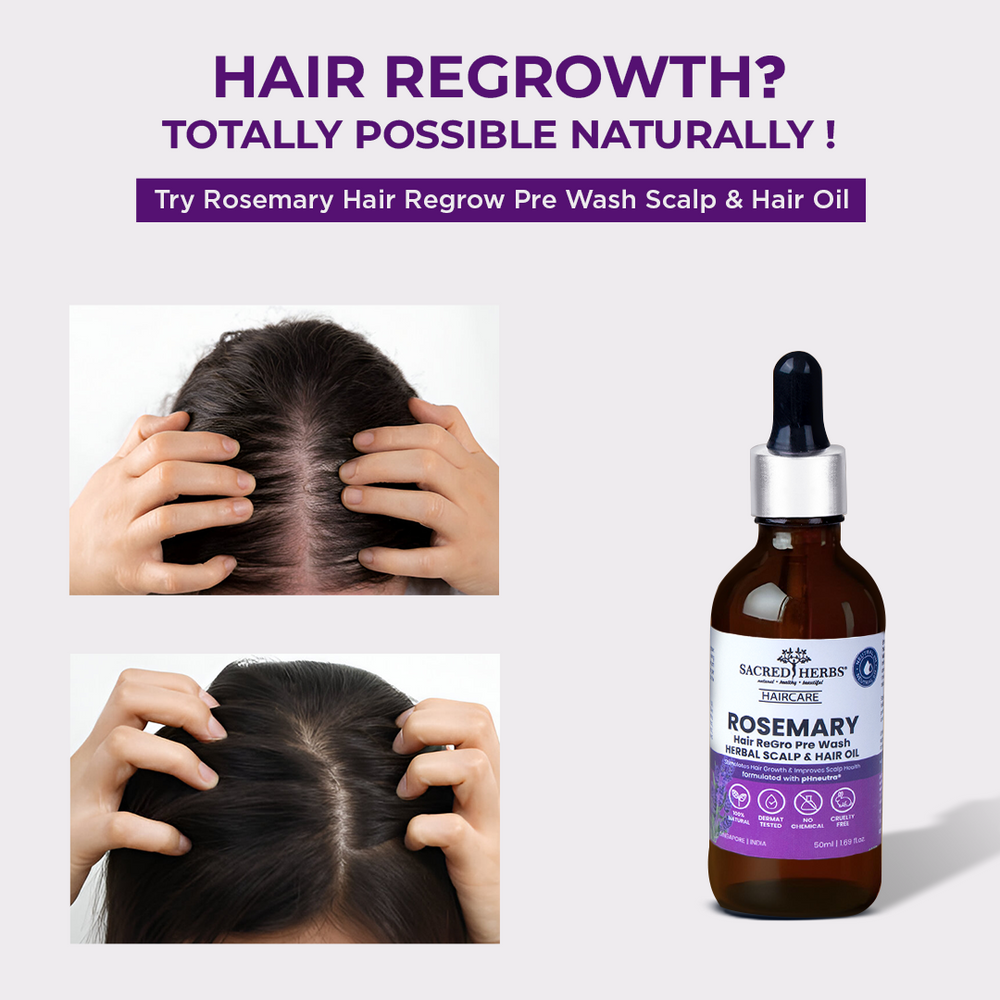
Pre-wash oiling remains one of the most loved rituals in Indian hair care. Coconut, sesame, and herb-infused oils soften the scalp and reduce protein loss during washing. Use oil as a pre-wash treatment for an hour or overnight, then cleanse thoroughly.
One important exception: if you color your hair, avoid oil for at least a week after each color session, as it can interfere with how well the color settles.
5. Hair Masks
A weekly mask provides deeper conditioning than a daily rinse-out product. Masks with hibiscus, aloe, or yoghurt-based formulas restore softness and elasticity, reducing the split ends that make hair look thin.
6. Nutrition and Supplements
What you eat shows up in your hair. Adequate protein, iron, zinc, and vitamin D all matter. Supplements should fill a confirmed gap, not replace a balanced diet. If you suspect a deficiency, a simple blood test is more useful than guessing.
7. Supporting Tools
The right tools reduce mechanical damage:
-
A soft silicone scalp massager for serum application
-
A wide-tooth comb for detangling wet hair
-
A silk or satin pillowcase to reduce overnight friction
-
A microfiber towel that absorbs water without rough rubbing
How to Read a Label Before You Buy
"Natural" on the front of a bottle tells you very little. Turn it around and check the following:
-
Ingredient order: Ingredients are listed by concentration. If the herbal extracts appear at the very end, after fragrance and preservatives, they are present in trace amounts.
-
Cleansing agents: Avoid sodium lauryl sulphate in shampoos if your scalp is sensitive or dry.
-
Fragrance load: Heavy synthetic fragrance is a common irritant on sensitive scalps.
-
Claims versus timelines: Any product promising visible growth in a week is overpromising. Hair grows roughly one centimetre a month.
-
Testing: Dermatologically tested products have been checked for skin compatibility, which matters for leave-in scalp treatments.
Where Hair Color Fits Into a Growth Routine
Many people working on hair growth also color their hair, and the two goals can quietly work against each other. Conventional dyes rely on ammonia and harsh chemicals that irritate the scalp and weaken the hair shaft, undoing much of what a growth routine builds.
A gentler approach is to choose color designed with scalp health in mind. Sacred Herbs is India's first pH-neutral hair color, built with pHneutra technology and powered by 20+ herbal extracts. It contains no PPD, no ammonia, no bleach, and no resorcinol, and it is dermatologically tested. NanoAlgaPigment technology delivers 100% grey coverage, with color that lasts up to 4 weeks. You can explore the shades in the Sacred Herbs hair color range.
Application is simple: leave the color on for 35 minutes in summer and 45 minutes in winter, then rinse. Afterwards, wash with a sulphate-free shampoo to keep both scalp and color in good condition. Between sessions, Sacred Herbs Root Sure Root Touch-up Powder manages regrowth without a full reapplication, which means less frequent processing overall.
Building a Simple Weekly Routine
Here is a routine that uses each category without overloading your scalp:
-
Twice or three times a week: Sulphate-free shampoo followed by conditioner on the lengths
-
Daily or every other day: Scalp serum massaged into the roots for two to three minutes
-
Once a week: Pre-wash oil treatment (skip in the week after coloring) and a nourishing mask
-
Every night: Loose hairstyle and a silk pillowcase
-
Every month: A progress photo in the same light and angle
For the cleansing and conditioning steps, the Sacred Herbs hair care collection offers formulas designed to sit alongside herbal color without stripping the scalp. If you prefer a complete set, the Super Premium Pack includes sulphate-free shampoo and conditioner with the color, so your aftercare is sorted from day one.
The same thinking applies beyond your hair. If you are moving toward gentler, plant-led care overall, the Sacred Herbs body collection extends that approach to your skin.
Conclusion
Strip the routine down to its essentials and three ideas remain. First, every product should have a clear job: clean, nourish, or protect. Second, the scalp comes first, so anything that irritates it, from harsh shampoo to chemical-heavy dye, works against your growth goals. Third, give it time. Pick your products, follow the weekly plan for a full three months, and let the monthly photos tell you what is working.
Frequently Asked Questions
How long do natural hair growth products take to work?
Most people notice reduced shedding within six to eight weeks and visible new growth after about three months. Consistency matters more than the number of products you use.
Can I use a hair serum and hair oil together?
Yes, but at different times. Use oil as a pre-wash treatment and apply serum to a clean scalp after washing so it can absorb properly.
Are natural hair growth products safe for daily use?
Most leave-in scalp serums are designed for daily use. If you notice itching or redness, reduce frequency and check the ingredient list for possible irritants.
Do natural products work for men and women equally?
The scalp care principles are the same for everyone. Hormonal or genetic hair loss, however, may need medical evaluation alongside a good routine.
Should I oil my hair after coloring it?
Avoid oil for at least one week after coloring. Oil applied too soon can affect how well the color settles and how long it lasts.
What is the single most important product for hair growth?
A gentle sulphate-free cleanser, because no serum or oil can work well on a congested or irritated scalp.