Natural Hair Dye: Answers to Every Question You Have Been Searching For
Natural hair dye has been having a moment. Search volumes for it have grown steadily as more people become aware of what goes into conventional hair dye and decide they want something different. But with that growing interest comes a flood of questions, half-truths, and contradictory advice.
This article is structured differently. Instead of walking through categories of information traditionally, it addresses the actual questions that people ask, in plain language, with complete and honest answers.
Does Natural Hair Dye Cover Grey Hair?
Yes, some natural and botanical-based hair color formulas can provide excellent grey coverage when the formula, shade selection, application and processing time are appropriate.
Grey hair can sometimes be more resistant to color, so thorough saturation and following the manufacturer's recommended processing time are especially important.
Which Natural Hair Dye Shades Are Available?
The available shade range depends on which botanical colourants are in the formula:
-
Henna alone: warm red to auburn on light hair; reddish-brown tones on dark hair
-
Henna + indigo: dark brown to natural black
-
Indigo alone (post-henna): deep blue-black
-
Cassia alone: subtle gold on blonde hair; glossing effect on dark hair without changing colour
-
Amla: deepens and conditions; adds cool tones
-
Beetroot: temporary pink-red on light hair
-
Coffee or black tea: subtle darkening of brown hair
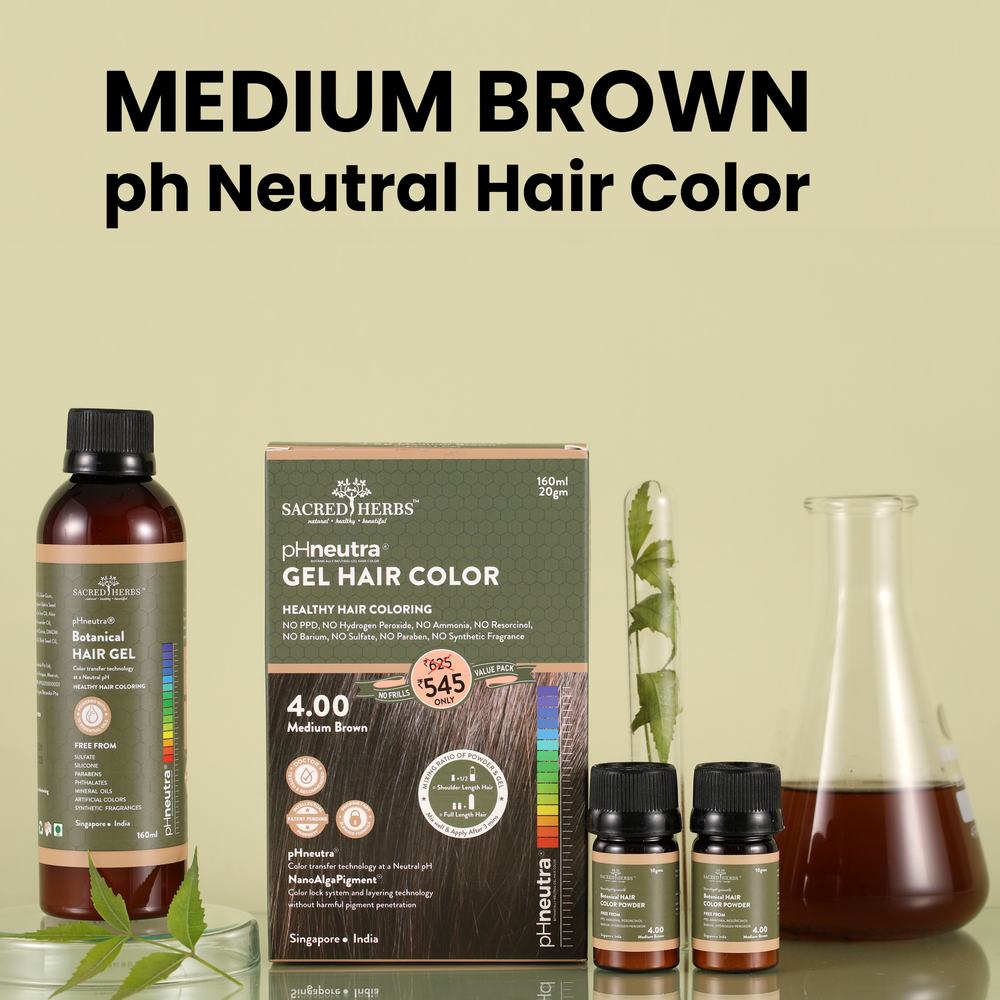
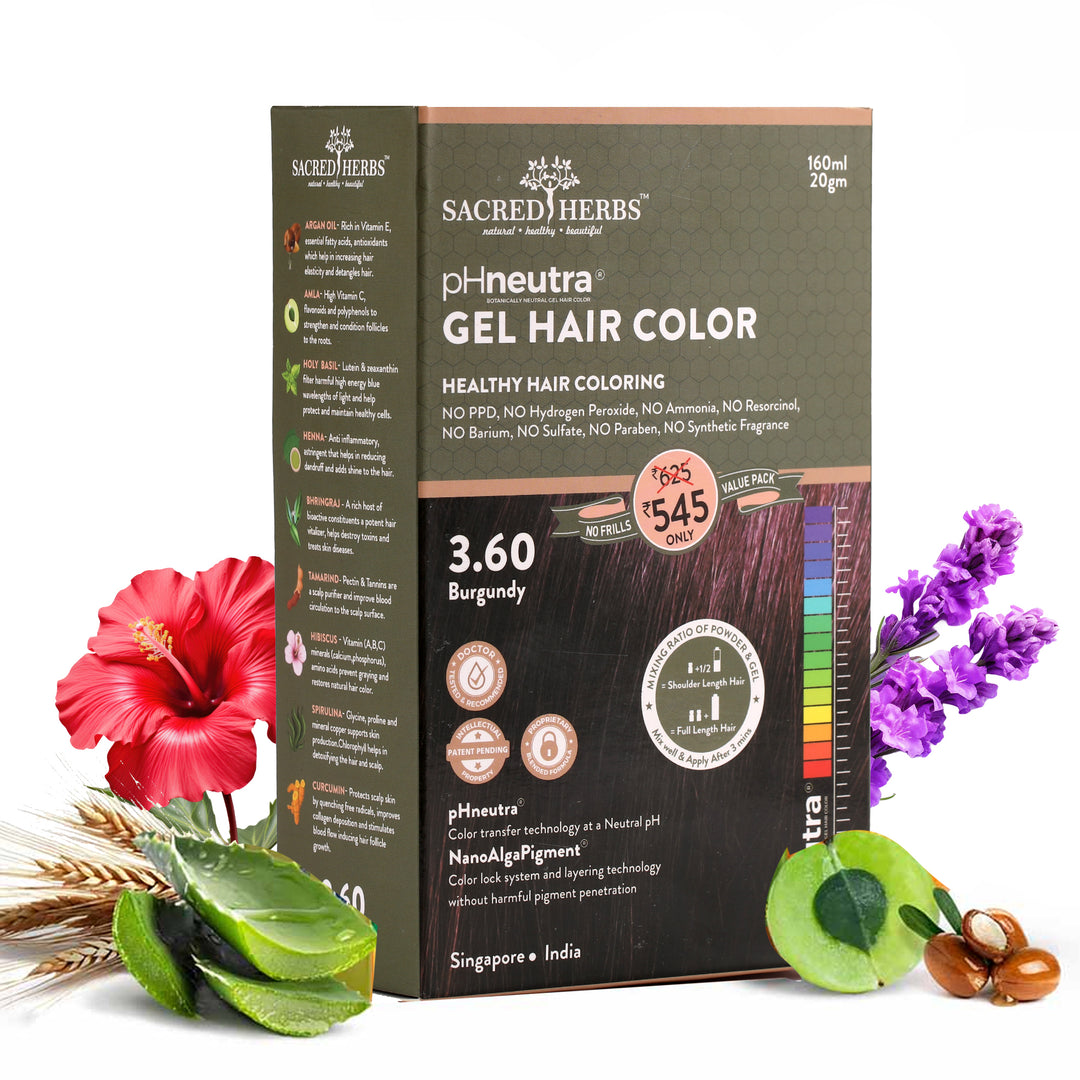
Modern natural hair dye formulations, particularly gel-based ones using algae pigments and NanoAlgaPigment technology, extend this range to include precise shades of medium brown, dark brown, light brown, burgundy, and natural black. These are not just traditional henna-powder mixes; they are engineered botanical colour products.
The Sacred Herbs Hair Colour range includes these precise shade options with full grey coverage across all five shades.
Is Natural Hair Dye Safe for Sensitive Scalps?
Significantly safer than conventional dye, but not unconditionally safe.
The primary irritant in conventional hair dye is PPD, which is responsible for the majority of allergic reactions. PPD is classified as a strong sensitiser, meaning repeated exposure increases the risk of severe reactions. Switching to a PPD-free natural dye eliminates this risk.
However, natural dye components can also trigger sensitivities. Some people react to henna (particularly 'black henna ', which often contains synthetic PPD despite the name). Others react to botanical extracts like cassia or certain carrier oils. Patch testing remains essential regardless of how natural a product is.
The general rule: natural hair dye is safer for sensitive scalps, but always patch test 48 hours before full application.
Can I Use Natural Hair Dye If I Am Pregnant?
This is one of the most common questions, and it deserves a careful answer. Conventional hair dye, particularly those containing ammonia and PPD, involves chemicals that can be absorbed through the scalp. The research on teratogenicity (harm to the developing foetus) is not conclusive, but caution is understandable.
Natural hair dye using botanical colourants (henna, indigo, botanical actives) presents a much lower risk profile. There are no aromatic amines or high-pH chemicals involved. That said, any topical product should be discussed with your doctor during pregnancy. The general guidance from most dermatologists is that botanical-based colour is a safer option than conventional dye, but the final decision should involve your healthcare provider.
How Long Does Natural Hair Dye Last?
For about four weeks for most botanical formulas. Several factors affect this:
-
How often you wash: frequent washing accelerates fading
-
Water quality: hard water fades colour faster
-
Sun exposure: UV light degrades pigment
-
Product use: sulphate shampoos strip colour significantly faster than sulphate-free alternatives
-
Porosity: highly porous (damaged) hair absorbs colour easily but releases it quickly; low-porosity hair takes longer to absorb but retains colour better
Using a colour-protective shampoo and conditioner extends natural dye longevity considerably. Washing in cool rather than hot water is one of the single most effective things you can do to make your colour last.
Does Natural Hair Dye Damage Hair?
The effect depends on the formulation and coloring process. A pH-neutral, bleach-free hair-color system can offer a gentler alternative to conventional high-pH coloring processes. However, no hair-color product should be assumed to be completely risk-free for every hair type.
What Is the Best Way to Apply Natural Hair Dye at Home?
The key difference between a good result and a disappointing one usually comes down to three things: saturation, timing, and heat.
Saturation: apply enough product to fully coat each section of hair. Natural dye works by contact and absorption. Thin or uneven application leads to patchy coverage.
Timing: do not rush the process. Give the dye adequate time to penetrate. Thirty-five minutes is typically the minimum for full grey coverage.
Heat: warmth accelerates pigment absorption. Sit under a hooded dryer, wrap your head in a warm towel, or use a hairdryer on low heat for the last 10 minutes.
Will Natural Hair Dye Change the Feel of My Hair?
Yes, but generally for the better. Henna-based dyes in particular coat the hair shaft and add body, thickness, and a slight reduction in frizz. Hair that has been coloured with a good botanical dye formula often feels softer and more manageable than before.
The only negative texture change typically occurs when pure powder henna is left on too long, which can make hair feel slightly dry. This is easily addressed with a deep conditioning treatment or a protein-free hair mask after colouring.
How Do I Choose Between Different Natural Hair Dye Products?
Look for products that:
-
Clearly disclose their colouring ingredients (not just 'botanical extracts' without specification)
-
Are PPD-free, ammonia-free, and resorcinol-free
-
Include conditioning actives alongside the colourants
-
Have a powder or gel base (easier application, more even coverage)
-
Have been tested for pH neutrality (colour applied at a neutral pH is far less damaging than colour applied at high pH)
FAQs
Can I use natural hair dye on chemically treated (permed or relaxed) hair?
Yes, generally. Since natural dye doesn't involve ammonia or peroxide, it's gentler on hair that's already been chemically processed. Just patch test first, since previously treated hair can sometimes absorb colour unevenly.
Does natural hair dye smell?
Traditional henna has an earthy, grassy smell that fades within a day or two of washing. Modern gel-based formulas with essential oils tend to smell far milder, closer to a herbal shampoo than raw henna powder.
Can I dye my hair natural colour right after a haircut or chemical treatment?
It's best to wait at least a week after a relaxer, perm, or keratin treatment. Freshly treated hair is more porous and can absorb colour unevenly. A haircut itself doesn't require any waiting period.
Will natural hair dye wash out completely, or does it fade unevenly?
It fades gradually rather than washing out in patches, since the pigment sits in and around the cuticle rather than bonding chemically. Most people see a soft, even fade over four weeks rather than an abrupt colour change.
Can I mix two different natural hair dye shades to create a custom colour?
Yes, within the same brand or formulation type. Mixing, say, a natural black with a burgundy can create deeper, richer tones. Avoid mixing pure powder henna with gel-based formulas, since their bases don't blend predictably.