Natural Hair Color for Grey Hair: Ingredients, Benefits & How It Works
There is a moment that many people describe the same way. You finish rinsing out a conventional hair dye, and you notice it: the stinging on your scalp has not quite faded, your hair feels thinner than before you coloured it, and there is a faint chemical smell that lingers into the next day. You get a great colour, but something feels off.
That feeling is not imaginary. It is the result of ammonia, peroxide, and PPD (para-phenylenediamine) doing exactly what they were formulated to do: break open the hair cuticle, strip existing pigment, and deposit synthetic colour. The process works, but it comes at a cost to your hair's structural integrity and your scalp's health.
Natural hair colour is the alternative. Not the compromise. Not the less-effective option. When formulated correctly, it delivers rich, lasting colour while keeping the hair cuticle closed, the scalp's pH balanced, and the follicle environment healthy. This guide tells you everything you need to know.
What Makes a Hair Colour Truly 'Natural'?
The word 'natural' is used loosely in the beauty industry. A product can claim to be natural while still containing ammonia, PPD, or resorcinol. Natural or Botanical hair colour is defined by three things:
-
It does not use ammonia or ammonium derivatives to open the cuticle
-
It avoids PPD and other aromatic amines that are common allergens and classified as potentially carcinogenic
-
It derives its colouring action primarily from botanical pigments, plant-based actives, and low-irritation mineral colourants rather than synthetic dyes
A truly natural hair colour also maintains or improves the hair's condition during and after colouring. If your hair feels weaker, more porous, or drier after colouring, the product is not doing its job as a natural formula, regardless of what the label claims.
The Science Behind Ammonia-Free Natural Colouring
Conventional hair colour uses ammonia to raise the hair's pH, which causes the cuticle to swell and open. Once open, peroxide bleaches the natural pigment and synthetic colour molecules enter the cortex. The problem is that once the cuticle is forcibly opened, it does not close back to its original state. Each colour treatment leaves the cuticle slightly more damaged.
The best modern formulas use a pH-neutral gel base that interacts with the cuticle rather than forcing it open. Color pigments are small enough to layer between the cuticle scales without requiring them to be pried apart. This preserves the hair's natural protein structure and keeps moisture locked in.
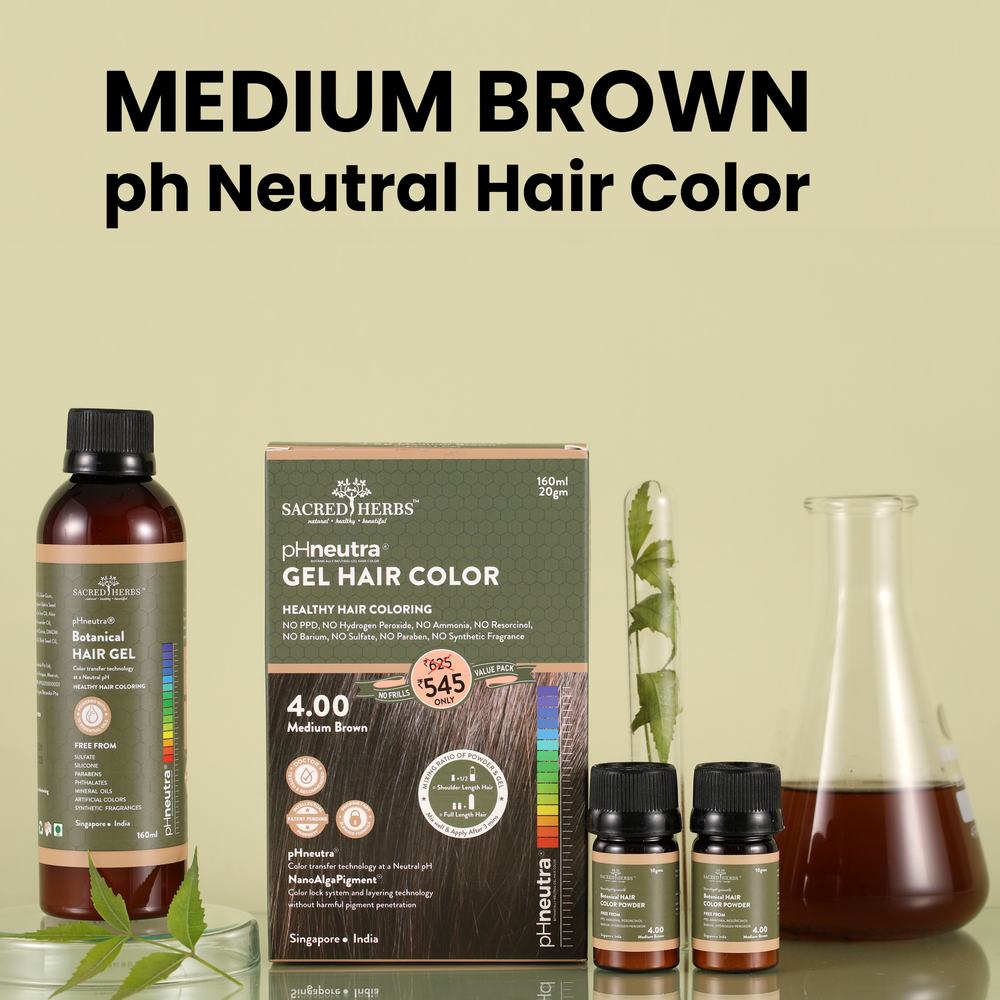
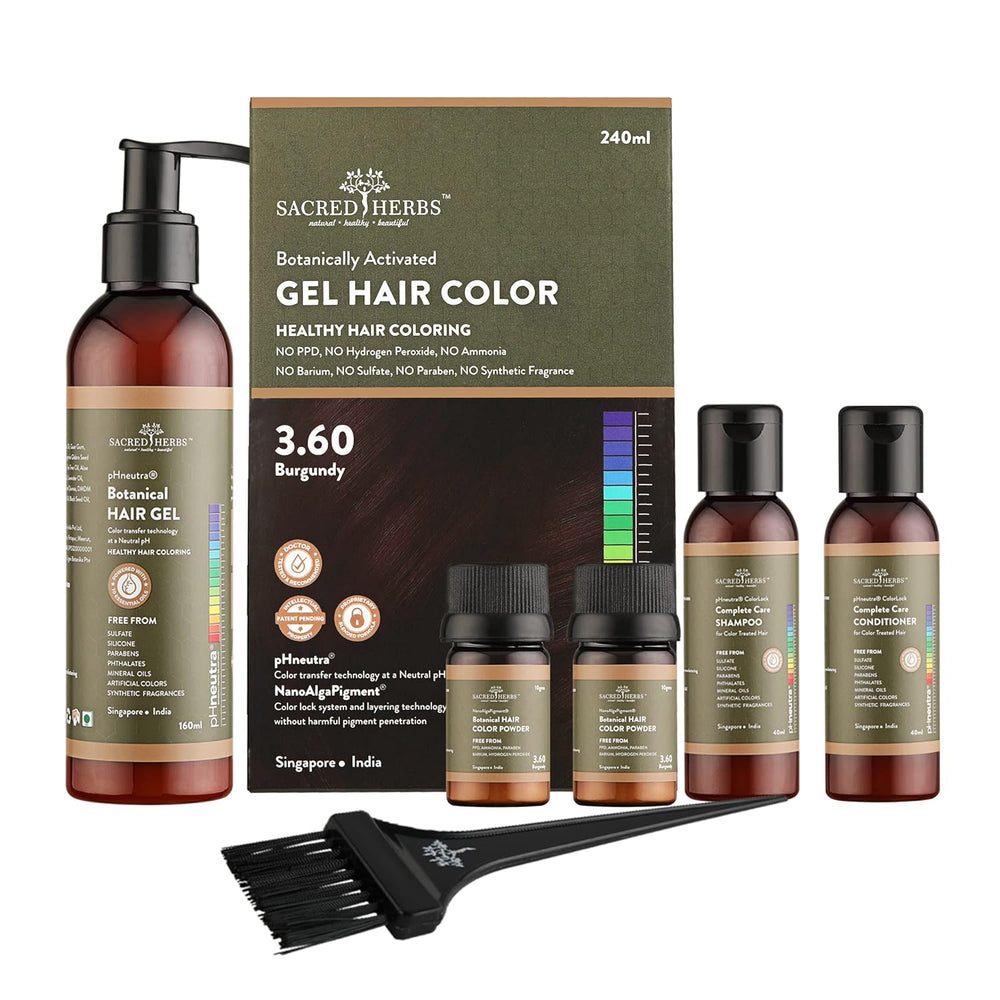
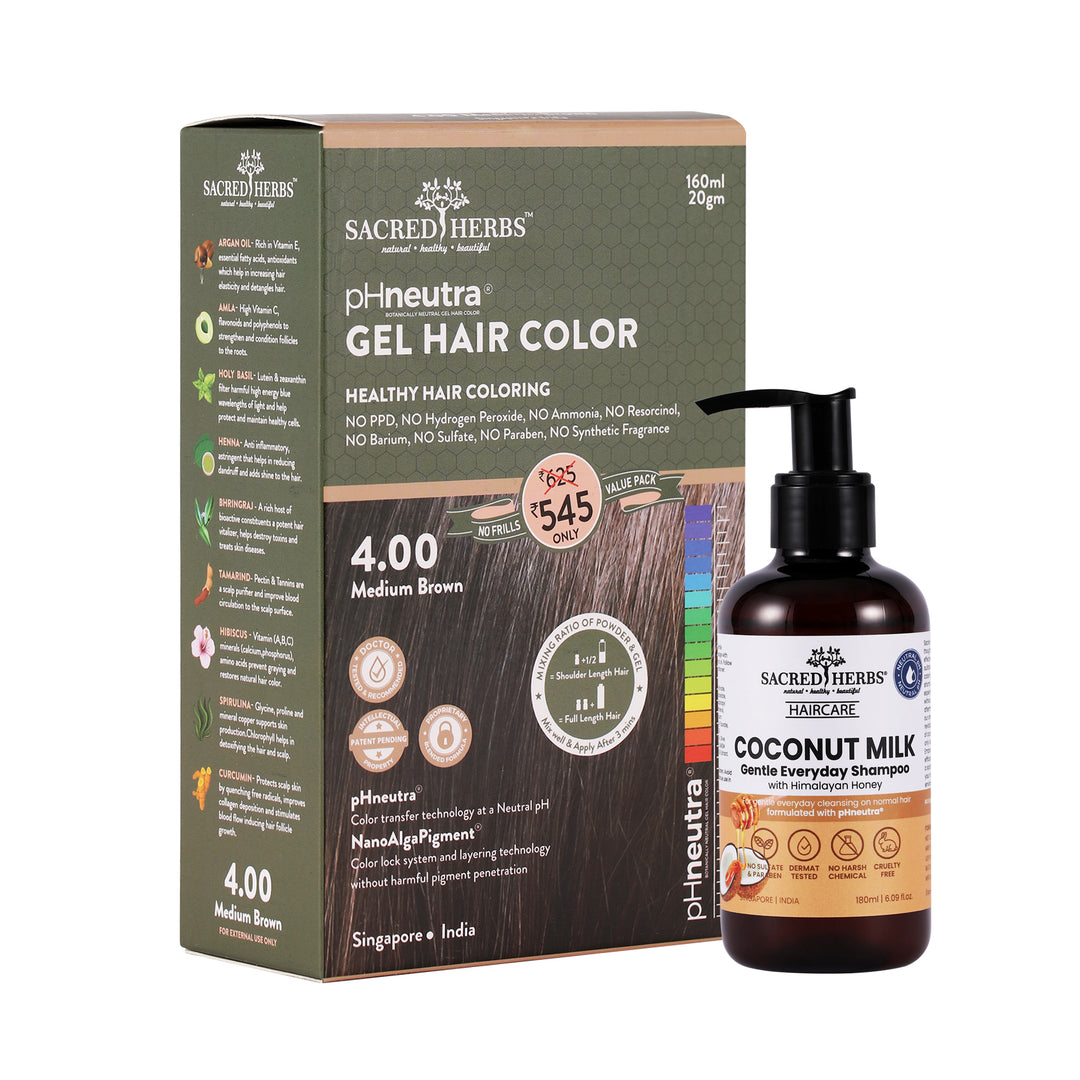
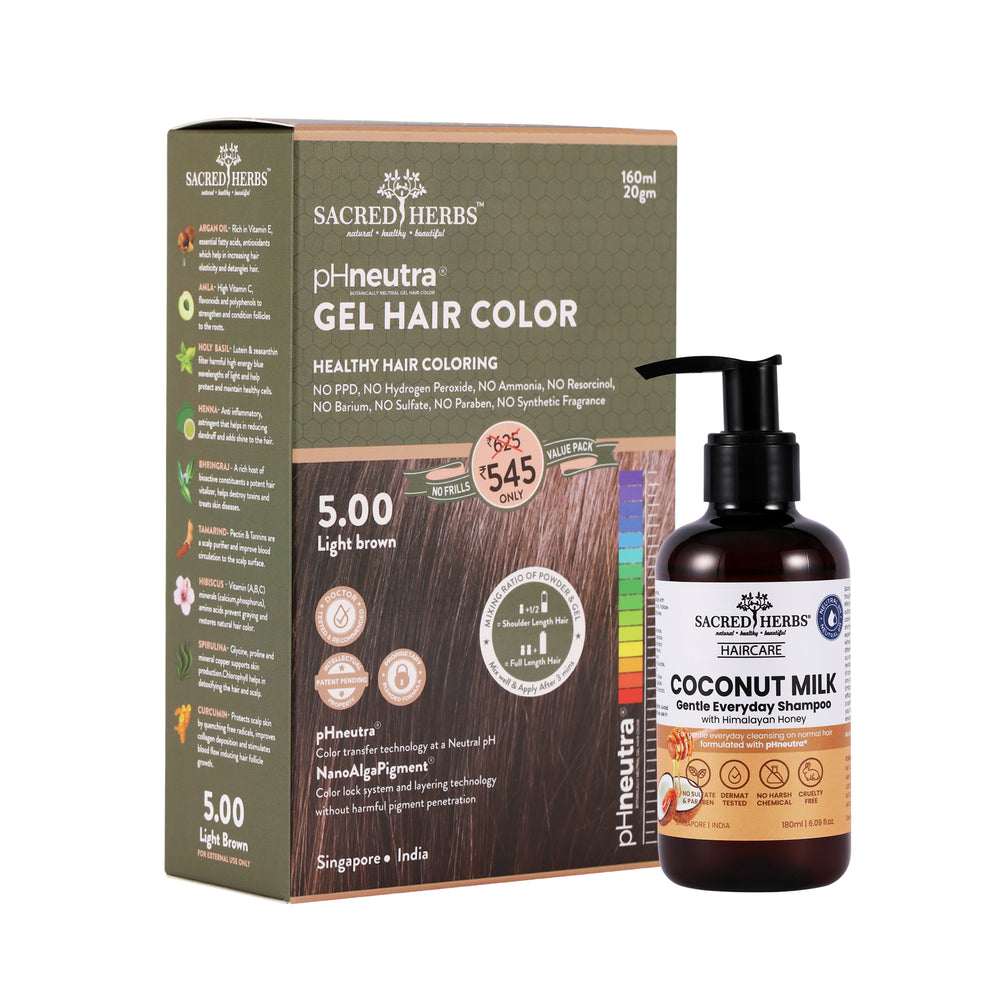
Sacred Herbs' pHneutra technology, for example, delivers colour at a near-neutral pH using an oil base that softens the cuticle rather than attacking it. The result is colour that lasts without the structural compromise. You can explore the full Hair Colour Collection to see how this technology is applied across shades.
Key Ingredients in Natural Hair Colour and What They Do
Botanical Actives and Phytonutrients
Beyond colouring agents, high-quality natural hair colour formulas include plant actives that condition, protect, and strengthen the hair during the colouring process. These include amino acids (which bond to damaged cuticle sites), flavonoids (which provide antioxidant protection), and polyphenols (which help preserve colour longevity).
NanoAlgaPigment Technology
Some of the most advanced natural hair colour formulas now use microbial pigments derived from algae. NanoAlgaPigment uses nano-particle technology to accelerate how pigments layer onto the hair follicle. This means deeper, more even colour saturation without the heat or chemical activation that conventional dyes require.
Natural Hair Colour Shades: What to Expect
One of the most common misconceptions about natural hair colour is that it only comes in one or two shades. Modern natural colour ranges cover a wide spectrum:
-
Natural Black: Deep, cool-toned black that covers grey fully and adds a subtle shine
-
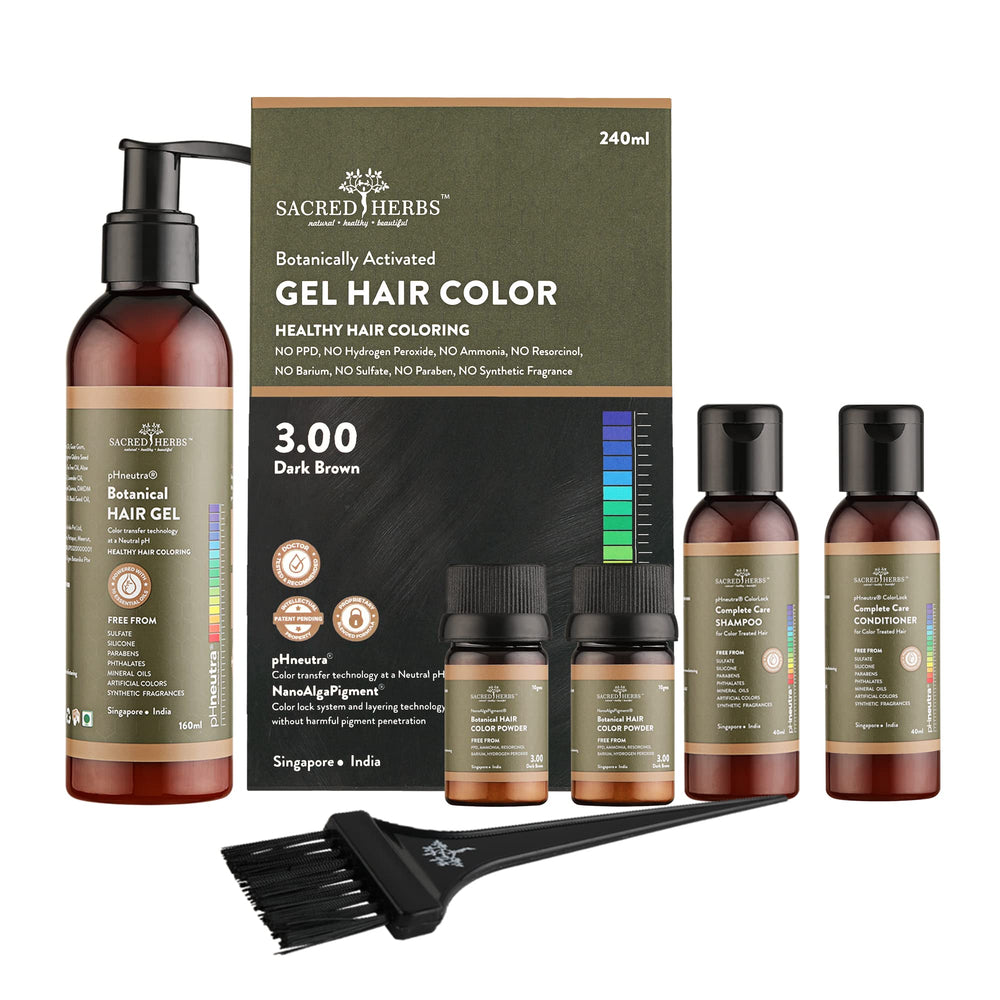
Dark Brown: Rich chocolate tones that work beautifully on Indian skin tones
-
Medium Brown: A versatile chestnut shade that lightens slightly in sunlight
-
Light Brown: Warm and soft, ideal for those looking for a lighter look without bleaching
-
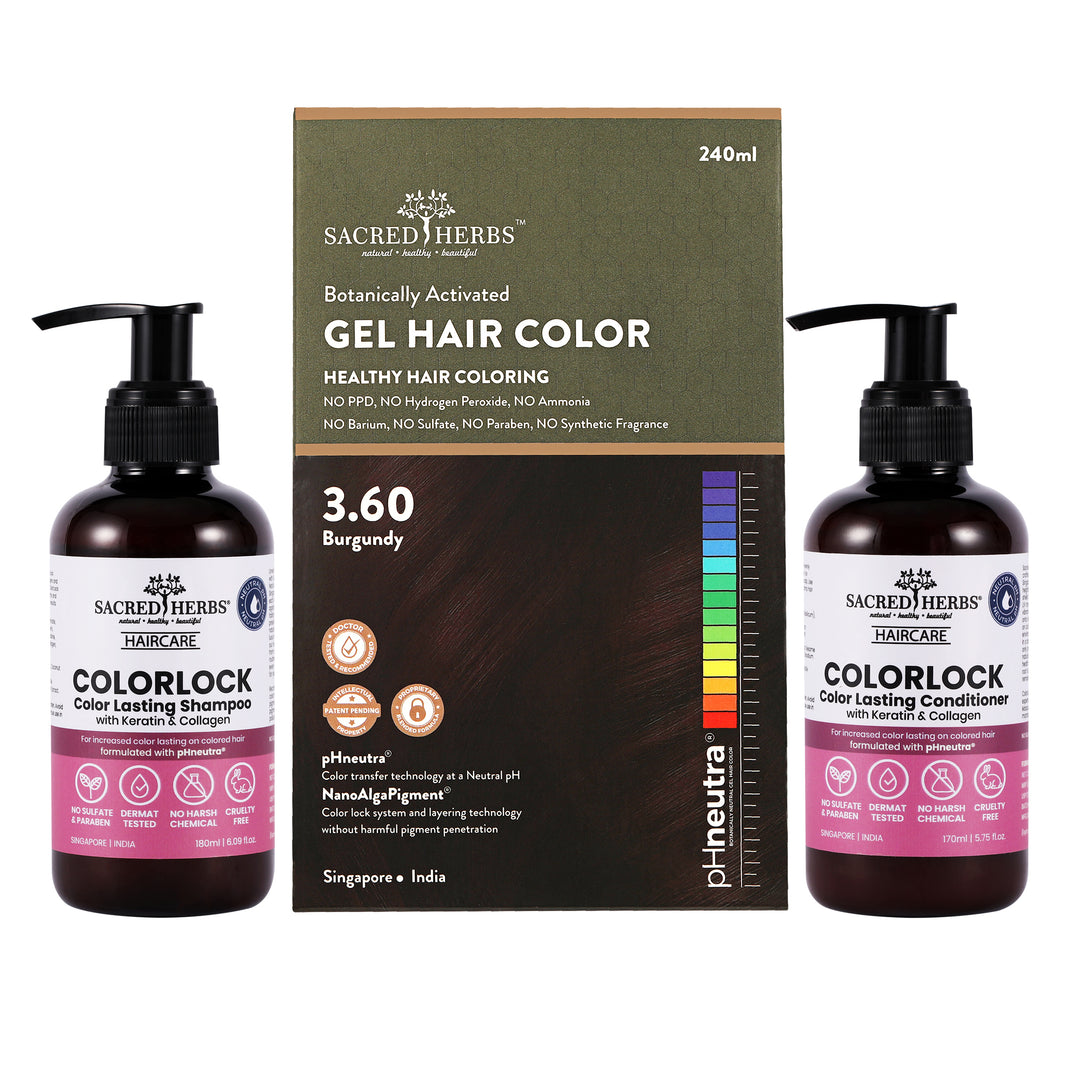
Burgundy: A deep wine-red that adds dimension to dark hair without needing bleach
These shades deposit colour on top of and within the existing hair colour. They do not lighten. If you want to go lighter than your natural colour, you will need a process that involves lightening first. But for covering grey, refreshing your natural colour, or going a shade or two darker, natural colour delivers excellent results.
How to Apply Natural Hair Colour at Home
The application process for natural hair colour differs slightly from conventional dye. Here is a step-by-step approach that maximises coverage and longevity.
Preparation
Start with clean, damp hair. Natural colour tends to absorb more evenly on freshly washed hair. Do not apply conditioner before colouring. Wear an old shirt or drape a towel around your shoulders. We can also wear a cape, and it is available on Sacred Herbs.
Mixing
If using a two-component system (developer and colour gel), mix in the ratio specified by the manufacturer. Natural colour gels often have a thicker consistency than conventional creams, which means they cling to the hair better and are less likely to drip.
Application
Apply to grey or resistant areas first, as these need the longest processing time. Work section by section from the roots to the ends. Use a tinting brush for precision. Saturate each section fully before moving on.
Processing Time
Natural colour generally needs 30 to 45 minutes of processing time. Some formulas designed for resistant grey may need up to 50 minutes. Cover with a shower cap.
Rinsing
Rinse with lukewarm water until the water runs clear. Follow with a colour-protecting conditioner or mask.
Who Should Choose Natural Hair Colour?
Natural hair colour is the right choice for anyone who:
-
Has a sensitive or reactive scalp that burns or itches with conventional dyes
-
Has experienced allergic reactions to PPD or resorcinol
-
Wants to colour their hair regularly without cumulative damage
-
Is dealing with hair fall and does not want colouring to make it worse
-
Prefers products that are cruelty-free, sustainable, and free from harsh synthetic chemicals
Frequently Asked Questions
Does natural hair colour last as long as chemical hair colour?
Good natural hair colour lasts for about four weeks before visible fading. Ammonia-based colour can last slightly longer because it alters the hair's structure permanently. However, natural colour can be applied more frequently without damage, so the trade-off is entirely manageable.
Will natural hair colour cover 100% grey?
Yes, when the formula includes strong botanical pigments and is applied correctly with adequate processing time. Resistant grey may need a slightly longer contact time or a second application.
Can I use natural hair colour after using chemical dye?
Yes. Natural colour can be applied over previously chemically coloured hair. The result will depend on your existing colour and the shade you are applying. In general, going darker is seamless; going lighter is not possible without lightening first.
Does natural hair colour damage hair?
The effect depends on the formulation and coloring process. A pH-neutral, bleach-free formula can offer a gentler alternative to conventional high-pH coloring systems with ammonia and hydrogen peroxide.
How do I make natural hair colour last longer?
Use a sulphate-free, colour-safe shampoo, wash hair in cooler water, avoid prolonged sun exposure on coloured hair, and use a colour-protecting leave-in treatment.