Natural Grey Hair Dye: 8 Questions to Answer Before You Make the Switch
"Natural dyes cannot cover grey properly." It is one of the most repeated beliefs in hair care, and for a long time it had some truth to it. Early herbal formulas often left grey strands looking orange, patchy, or barely tinted. Many people tried them once, were disappointed, and went back to chemical dye.
Formulation has moved on considerably since then. Today, a well-made natural grey hair dye can deliver full, even coverage while leaving out the harshest chemicals found in conventional products. But not every product labelled "natural" meets that standard.
This article works through the questions people ask most before switching, so you can make an informed choice rather than another trial-and-error purchase.
Why Does Grey Hair Resist Color in the First Place?
Grey hair is not simply hair without color. As follicles produce less melanin, the strands that grow often change in texture too. Many people find their grey hair is coarser, wirier, and more resistant than their pigmented hair.
The cuticle on grey strands tends to be tighter and more compact, which makes it harder for color to settle evenly. This is why grey frequently shows through at the temples and hairline first, the areas where grey is usually densest and most resistant.
Conventional dyes overcome this resistance with force, using ammonia to swell the hair shaft open. A natural grey hair dye has to solve the same problem with a gentler mechanism, and the quality of that mechanism is what separates effective products from disappointing ones.
What Actually Counts as a "Natural" Grey Hair Dye?
There is no legal definition of "natural" for hair color, so the word is used loosely. Some products add a few plant extracts to an otherwise standard chemical formula and market it as herbal.
Ingredients worth avoiding
When reading a label, check for the absence of:
-
PPD (paraphenylenediamine): A common cause of allergic reactions to hair dye
-
Ammonia: Swells the hair shaft and can irritate the scalp
-
Bleach: Strips pigment and weakens the strand
-
Resorcinol: A coupling agent many people prefer to avoid
Features worth looking for
-
A meaningful number of herbal extracts, not just one or two at trace levels
-
Dermatological testing
-
A clear coverage claim specifically for grey hair
-
Simple, transparent application instructions
Can a Natural Dye Really Give Full Grey Coverage?
Yes, provided the pigment can reach and settle into the hair shaft evenly. This is where delivery technology matters more than the ingredient list alone.
Sacred Herbs uses NanoAlgaPigment technology, which delivers pigment in extremely fine particles so color distributes evenly across resistant grey strands. The brand backs this with a 100% grey coverage guarantee, which is a strong statement in a category where partial coverage has long been the norm.
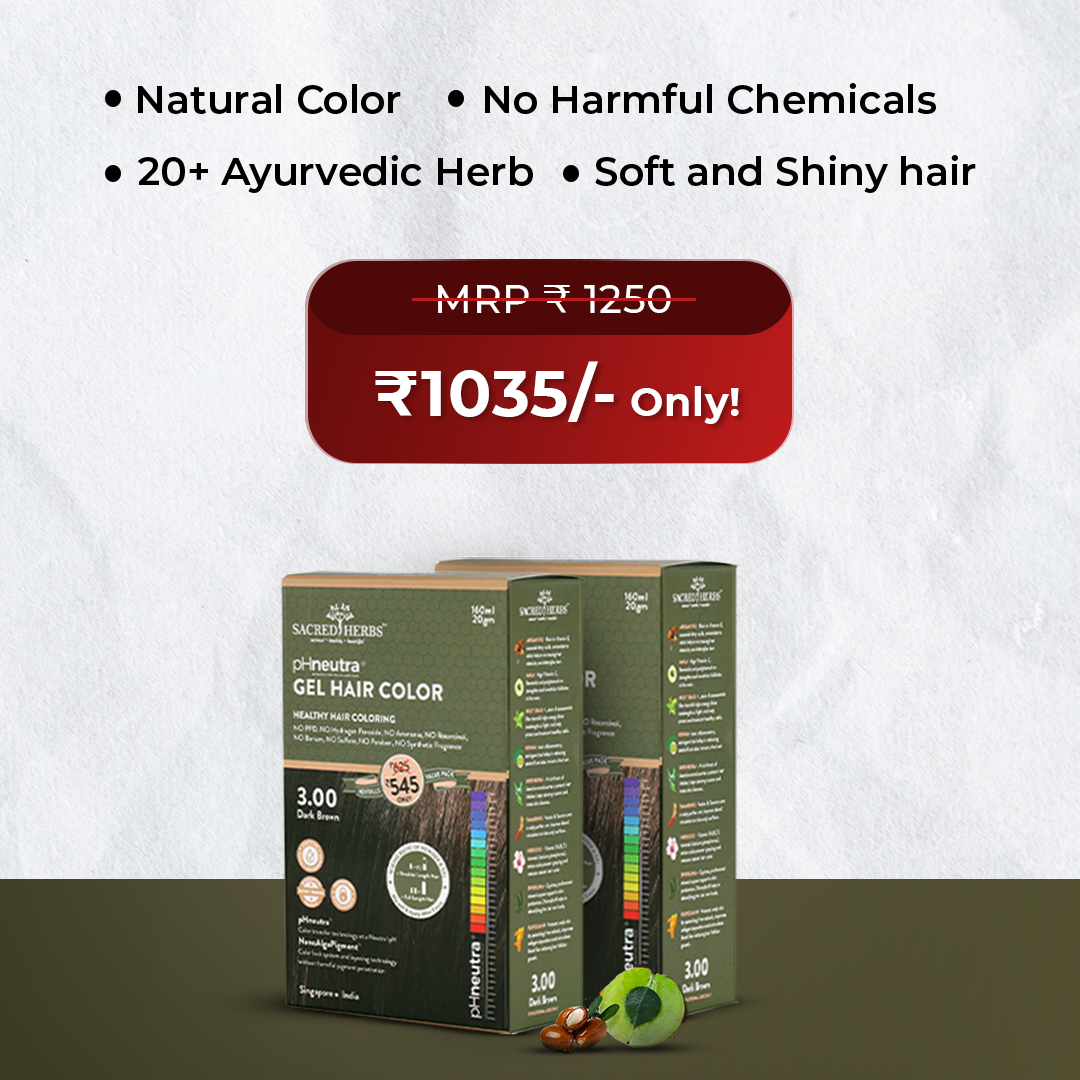
For the darker shades, the color is built on Toluene-2,5-Diamine Sulfate, which provides the depth needed to conceal grey convincingly. The formula is also powered by 20+ herbal extracts that support the hair's condition with each application.
How Is pH Neutral Different From "Ammonia Free"?
This is one of the most misunderstood points in hair color. "Ammonia free" sounds gentle, but some ammonia-free dyes simply swap ammonia for another alkaline agent, such as monoethanolamine. The smell is milder, but the formula can still be alkaline enough to lift the cuticle and stress the scalp.
pH neutral is a different approach altogether. Sacred Herbs, India's first pH-neutral hair color, uses pHneutra technology to keep the formula balanced rather than alkaline. Instead of forcing the cuticle open, it colors in a way that is far more compatible with the hair's natural state.
The practical difference shows up over time. Repeated alkaline processing tends to leave hair dry, porous, and prone to breakage. A pH-neutral formula avoids that cumulative wear, which matters a great deal for anyone coloring grey every month.
Which Shade Should You Choose for Grey Hair?
Shade choice affects how natural the result looks as much as the formula does. Sacred Herbs offers five shades:
-
Natural Black (1.00): Best for very dark natural hair and full grey concealment
-
Dark Brown (3.00): Slightly softer than black and very forgiving as roots grow
-
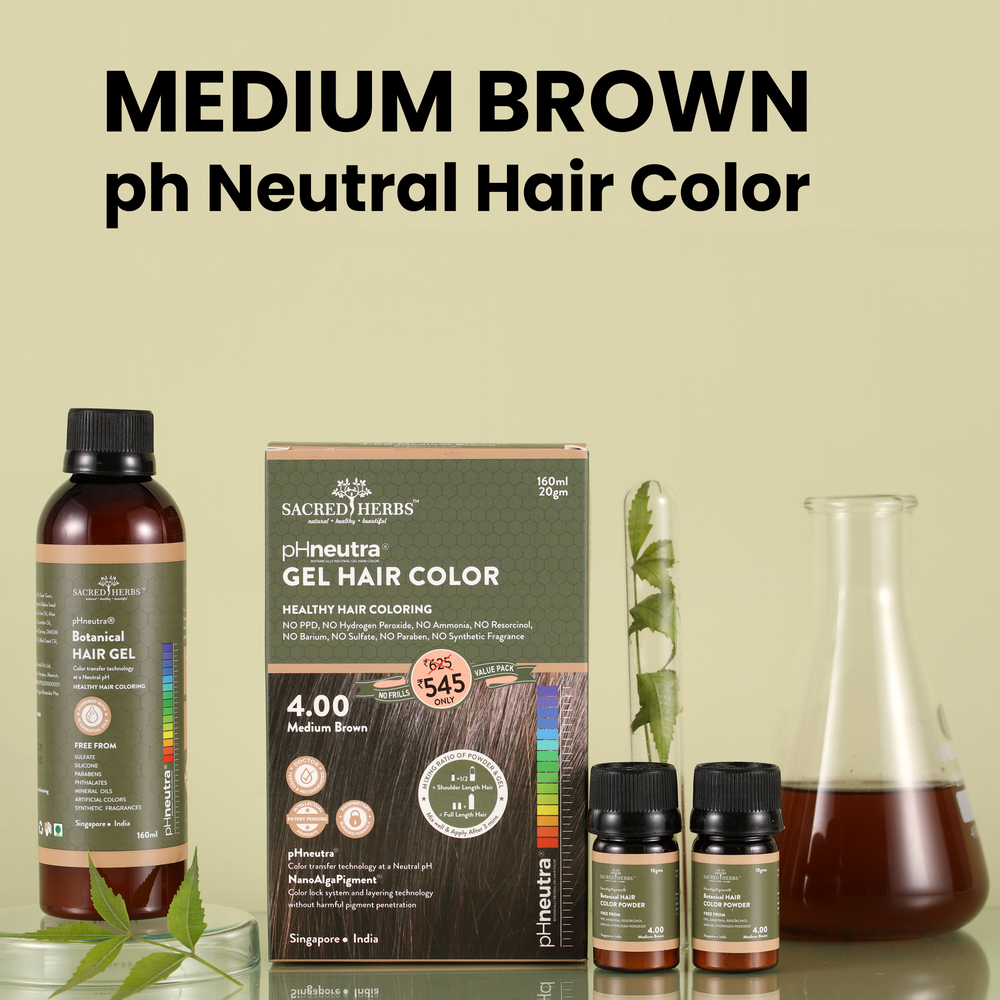
Medium Brown (4.00): A warmer, lighter result that suits many complexions
-
Light Brown (5.00): Gentle and soft, good for those with lighter natural tones
-
Burgundy (3.60): A rich wine tone for those who want warmth and a hint of fashion
A useful rule: if you are unsure between two shades, choose the lighter one. As grey grows in, regrowth is less noticeable against a softer shade than against a very dark one.
Browse the full range of Sacred Herbs hair color shades to compare them side by side.
How Do You Apply It for the Best Grey Coverage?
Follow these steps for even results:
-
Start with clean, dry hair that is free of oil.
-
Do a patch test 48 hours before your first application.
-
Section your hair into four parts.
-
Apply first to the most resistant areas: temples, hairline, and part line.
-
Work through the remaining grey sections evenly.
-
Leave the color on for 35 minutes in summer or 45 minutes in winter.
-
Rinse thoroughly with water until it runs clear.
Starting with the most stubborn areas gives them the longest contact time, which is the simplest way to improve coverage where grey usually shows first.
How Long Will the Coverage Last?
Sacred Herbs color lasts up to 4 weeks. Regrowth at the roots is the main reason grey becomes visible again, rather than the color fading from the lengths.
To bridge the gap between full applications, Sacred Herbs Root Sure Root Touch-up Powder is designed to conceal fresh regrowth quickly. This keeps the hairline looking neat and spaces out full color sessions.
What Aftercare Keeps Grey From Showing Through?
How you treat your hair after coloring has a direct effect on longevity:
-
Use sulphate-free shampoo. Sulphates strip color faster. The Super Premium Pack includes a sulphate-free shampoo and conditioner for this reason.
-
Skip oil for at least a week. Oil can interfere with how the color settles.
-
Wash with lukewarm water. Hot water opens the cuticle and speeds up fading.
-
Protect from sun and heat. Use a scarf or hat during long sun exposure and keep heat styling to a minimum.
For ongoing care between sessions, the Sacred Herbs hair care range is formulated to be gentle on color-treated hair.
Conclusion
If you tried herbal dye years ago and were let down by patchy coverage, the category deserves a second look. If your scalp reacts to conventional dye, a PPD-free, pH-neutral formula is the logical next step. And if you color grey every month, the long-term condition of your hair is reason enough to choose something that does not rely on ammonia. Pick your shade, follow the seasonal timing, protect the result with gentle aftercare, and judge the outcome on your own grey.
Frequently Asked Questions
Will natural grey hair dye turn my grey hair orange?
Pure henna can leave grey with an orange tone, but modern formulas like Sacred Herbs use dedicated pigment technology to give true black and brown shades.
Can I use natural grey hair dye over chemically colored hair?
Yes, you can switch from chemical dye. The first one or two applications may look slightly different as old color grows out, but results quickly become consistent.
How often should I apply natural grey hair dye?
Most people reapply every four weeks, using a root touch-up product in between if regrowth shows sooner.
Is a patch test necessary for natural dyes?
Yes. Even gentle, dermatologically tested formulas should be patch tested before first use, as individual skin sensitivities vary.
Does natural grey hair dye work on very coarse grey hair?
Yes. Applying to resistant areas first and following the full seasonal timing helps coarse grey absorb color evenly.
Can I wash my hair soon after coloring?
Yes, as long as you use a sulphate-free shampoo. The key is avoiding harsh cleansers, not avoiding washing altogether.