


Natural Body Cleanser
Natural Body Cleanser: What "Natural" Really Means and How to Choose One Honestly
The word "natural" on a body cleanser is doing a lot of work, and not... Read More
Natural Body Cleanser: What "Natural" Really Means and How to Choose One Honestly
The word "natural" on a body cleanser is doing a lot of work, and not all of it honest. It appears on products ranging from genuinely botanical formulations to conventional cleansers with a single plant extract added for marketing appeal. For a shopper who genuinely wants naturally derived body care, the word alone is nearly useless as a guide.
This article cuts through the ambiguity. It explains what "natural" actually means and does not mean in body care, what a genuinely natural body cleanser looks like, and how to choose one honestly rather than falling for a green-tinted label.
The Uncomfortable Truth About the Word "Natural"
Here is what most shoppers do not realize: in cosmetics, "natural" is not a strictly regulated term in most markets, including India. There is no universal legal definition that a product must meet to call itself natural.
This means "natural" can legitimately appear on:
-
A product genuinely built from plant-derived ingredients
-
A conventional product with one or two botanical extracts added
-
A product using ingredients that are technically derived from natural sources but heavily processed
The word tells you the brand wants you to associate the product with nature. It does not, by itself, tell you what is actually in the bottle. This is not necessarily deception, but it is ambiguity, and the informed shopper reads past it.
What a Genuinely Natural Body Cleanser Contains
Rather than trusting the word, look at what a genuinely botanical cleanser is built from.
Gentle Plant-Derived Surfactants
The cleansing agents in a genuine natural cleanser are derived from plant sources rather than harsh petrochemical sulfates. Look for:
-
Coco-glucoside (derived from coconut and fruit sugars)
-
Decyl glucoside
-
Sodium cocoyl isethionate
-
Soapnut (reetha) extract, a traditional Indian natural cleanser
Botanical Moisturizers and Extracts
Genuine natural cleansers include plant-derived conditioning and soothing ingredients:
-
Aloe vera for hydration and soothing
-
Coconut, jojoba, or almond oil for moisture
-
Neem for its traditional cleansing and skin-supporting properties
-
Botanical extracts like chamomile, hibiscus, or green tea
Traditional Indian Botanicals
India has a rich tradition of natural body cleansing ingredients:
-
Reetha (soapnut): a traditional natural surfactant
-
Multani mitti (fuller's earth): traditional cleansing clay
-
Besan (gram flour): traditional gentle cleanser
-
Turmeric: traditionally used for skin
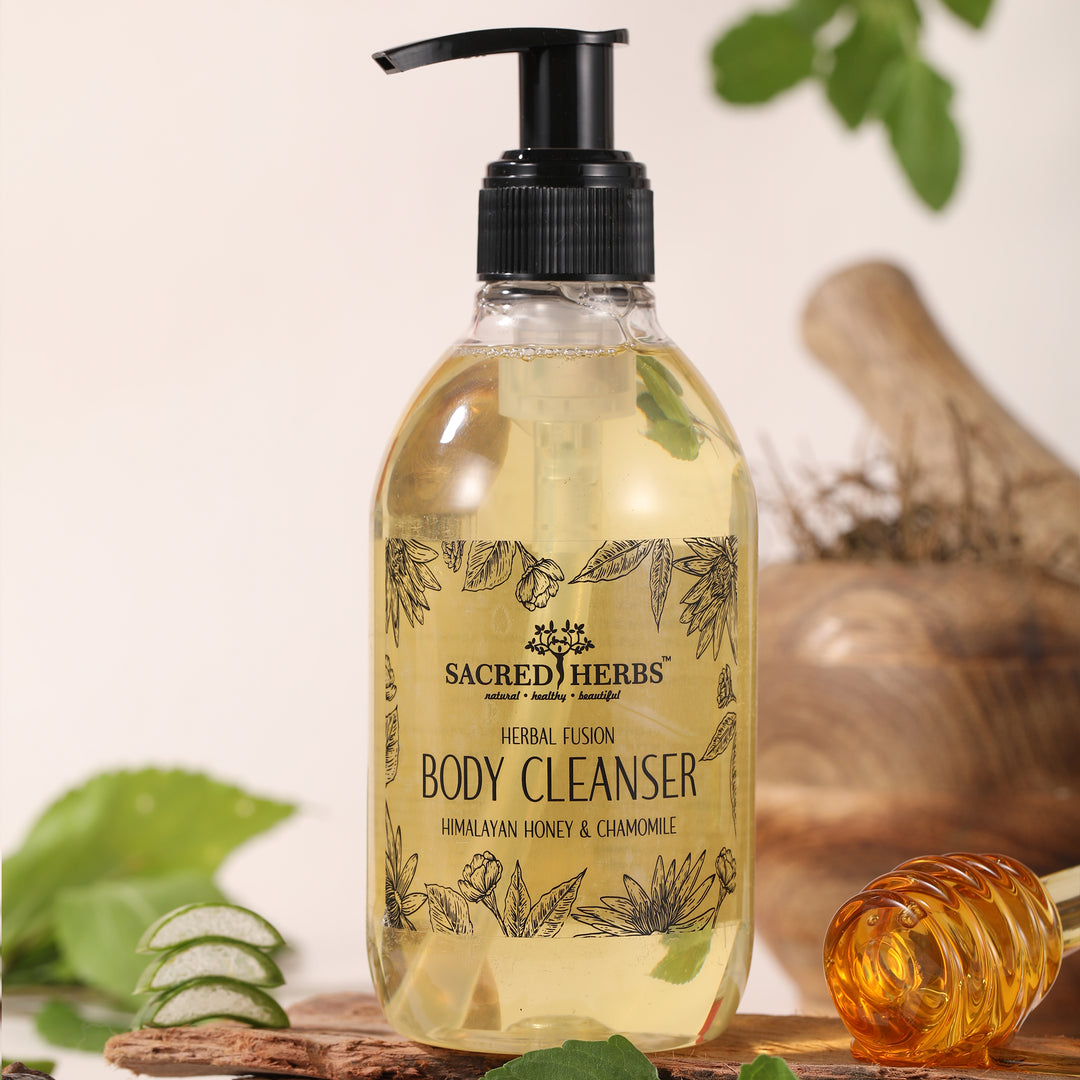
The Bokdy collection at Sacred Herbs draws on this botanical tradition, formulating body care around genuinely plant-derived ingredients.
What to Watch For Even in "Natural" Products
A product labelled natural can still contain ingredients that undermine the claim. Check the full ingredient list for:
-
Sulfates (SLS, SLES): These are harsh and petrochemical-derived. Their presence contradicts a genuinely natural positioning.
-
Parabens: Synthetic preservatives that many natural-preference shoppers avoid
-
Synthetic fragrance: Often listed simply as "fragrance" or "parfum," which can mask numerous synthetic compounds
-
Drying alcohols
If a cleanser calls itself natural but leads with sulfates, the label and the formula are telling different stories.
The Honest Limits of Natural Cleansers
Honesty about natural products cuts both ways, and a trustworthy discussion acknowledges the limits.
-
"Natural" does not automatically mean better for every person. Some people react to botanical ingredients just as they might to synthetic ones. A patch test remains important.
-
"Completely chemical-free" is a scientific impossibility. Everything, including water and every plant extract, is made of chemicals. A cleanser cannot honestly be chemical-free.
-
All cleansers need some form of preservation. A water-containing product without adequate preservation grows harmful microbes. Genuine natural cleansers use naturally derived or gentle preservatives, but they are not preservative-free.
-
Natural does not mean unlimited gentleness. Some natural ingredients, like certain essential oils, can irritate sensitive skin.
An honest natural cleanser brand acknowledges these realities rather than making impossible claims.
How to Choose a Natural Body Cleanser Honestly
Bring these habits to the shelf:
-
Read the full ingredient list, not just the front-label claim
-
Confirm the surfactants are plant-derived, not sulfate-based
-
Look for genuine botanical content high in the list, not a single token extract
-
Check what is absent: ideally sulfate-free and paraben-free
-
Be sceptical of impossible claims like chemical-free or preservative-free
-
Match the formula to your skin type, since natural does not override the need for suitability
Using a Natural Body Cleanser Well
-
Lukewarm water, never hot, to preserve the skin barrier
-
A modest amount, worked gently over the skin
-
Focus on areas that need it rather than aggressive full-body scrubbing
-
Thorough rinsing
-
Moisturize while skin is still slightly damp
For those building a consistent botanical routine across their whole personal care, the same natural ingredient philosophy applies to hair as well as body. The Hair Care collection at Sacred Herbs reflects this shared approach, and the Super Premium Pack brings coordinated botanical products together for a unified natural routine.
Sacred Herbs formulates its body and hair care around genuinely plant-derived ingredients while being honest about what natural formulations can and cannot claim.
Frequently Asked Questions
Q: Does "natural" on a body cleanser mean anything specific?
Not legally, in most markets including India. The word is loosely used, so read the ingredient list rather than trusting the label alone.
Q: Can a body cleanser be completely chemical-free?
No. Everything, including water and plant extracts, is made of chemicals. "Chemical-free" is a scientifically inaccurate claim.
Q: How do I know if a natural cleanser is genuine?
Check that its surfactants are plant-derived rather than sulfate-based, and that botanical ingredients feature high in the list rather than as a single token addition.
Q: Are natural body cleansers gentler on skin?
Often, yes, particularly sulfate-free botanical ones. But some natural ingredients can still irritate, so a patch test is wise.
Q: Can a natural cleanser be preservative-free?
Water-containing cleansers need some preservation to stay safe. Genuine natural cleansers use gentle or naturally derived preservatives rather than none.
Q: What traditional Indian ingredients are used in natural cleansers?
Reetha (soapnut), multani mitti, besan, neem, and turmeric all have long traditions in Indian natural body care.