


Herbal Shampoo for Hair Fall
Herbal Shampoo for Hair Fall: A Plant-by-Plant Guide to What Works and the Science Behind It
Why Plants? The Case for Herbal Hair Fall... Read More
Herbal Shampoo for Hair Fall: A Plant-by-Plant Guide to What Works and the Science Behind It
Why Plants? The Case for Herbal Hair Fall Treatment
Synthetic hair fall treatments exist. Minoxidil is FDA-approved and genuinely effective. Finasteride is highly effective for androgenetic alopecia in men. These are real options with real evidence.
But there are also real reasons to prefer herbal approaches, particularly in a daily-use product like shampoo. A shampoo is applied to the scalp eight to twelve times per month, every month, indefinitely. Over years, the cumulative chemical exposure from a conventional shampoo formulated with aggressive surfactants, synthetic preservatives, and petrochemical additives is not trivial. The scalp, as one of the most permeable surfaces on the body, absorbs a meaningful proportion of everything applied to it.
Herbal ingredients in a well-formulated shampoo offer efficacy that is well-documented in the scientific literature, combined with a safety profile that makes them appropriate for long-term, high-frequency use. They work with the scalp's natural biology rather than overriding it with pharmaceutical chemistry.
The following is a plant-by-plant examination of the key herbal ingredients in an effective herbal shampoo for hair fall and what the research says about each.
Rosemary (Rosmarinus officinalis): The Most Researched Botanical for Hair Fall
Rosemary is the closest thing the botanical world has to a clinically validated hair fall treatment. The evidence base for it is more substantial than for most other herbal hair fall ingredients, and the mechanisms are well-understood.
The clinical evidence: A 2015 study published in SkinMed Journal compared rosemary oil (2%) to minoxidil (2%) in a randomised, double-blind trial over six months. Hair count improvement was comparable in both groups. Crucially, scalp itching (a common side effect of minoxidil) was significantly lower in the rosemary group.
Mechanism 1: Microcirculation improvement. Rosmarinic acid and carnosic acid in rosemary stimulate blood flow to the scalp's capillary network. Improved microcirculation means more oxygen and nutrients reach the follicle, supporting healthy hair growth.
Mechanism 2: DHT inhibition. Rosemary has demonstrated 5-alpha reductase inhibitory activity in laboratory studies. This means it partially blocks the conversion of testosterone to dihydrotestosterone (DHT), the androgen responsible for follicle miniaturisation in androgenetic alopecia.
Mechanism 3: Anti-inflammatory activity. Scalp inflammation is a contributing factor in multiple types of hair fall. Rosemary's rosmarinic acid has potent anti-inflammatory properties that reduce scalp inflammation and create a healthier follicle environment.
Mechanism 4: Antioxidant protection. Rosemary contains high concentrations of carnosic acid and other antioxidants that protect follicle cells from oxidative stress, which accelerates follicle ageing.
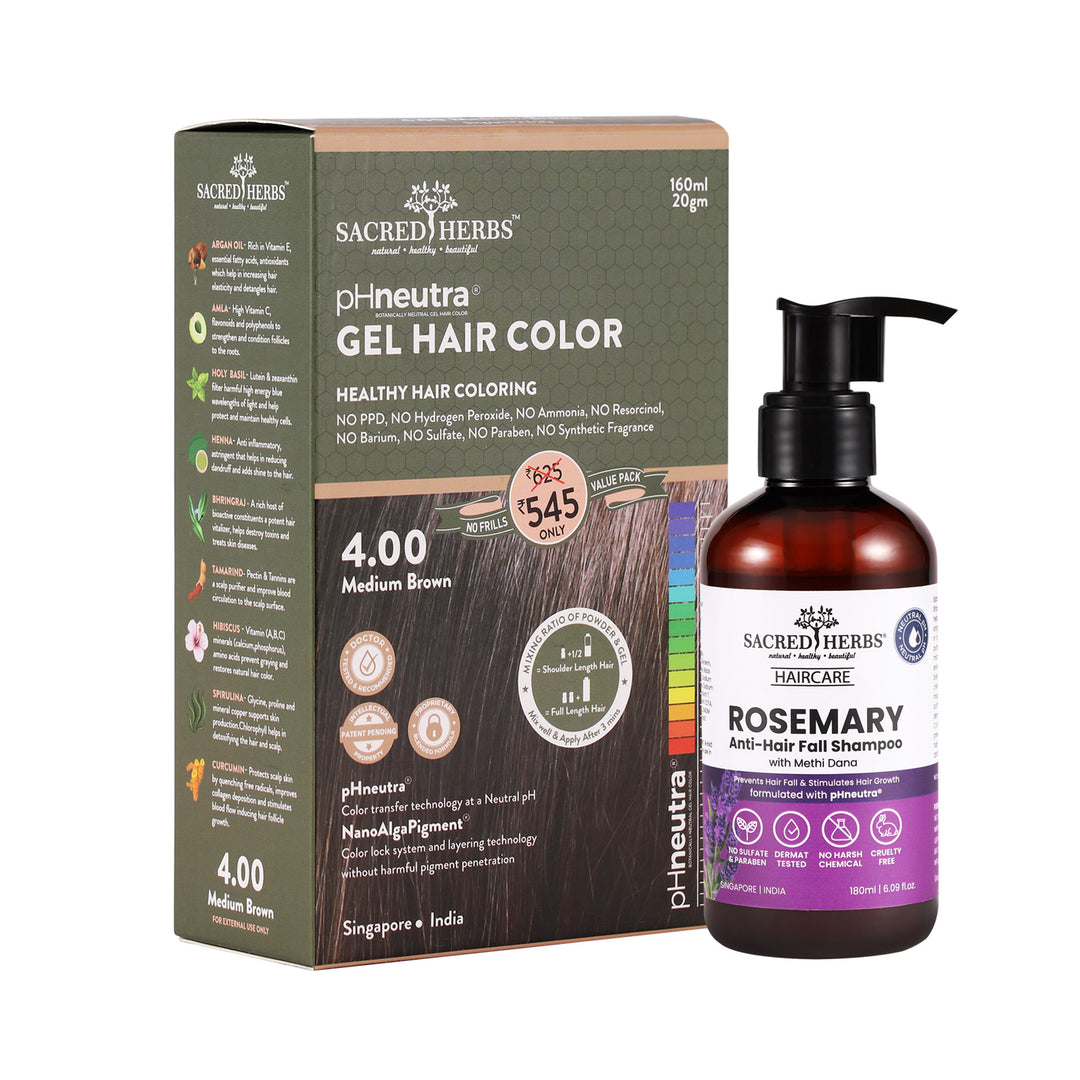
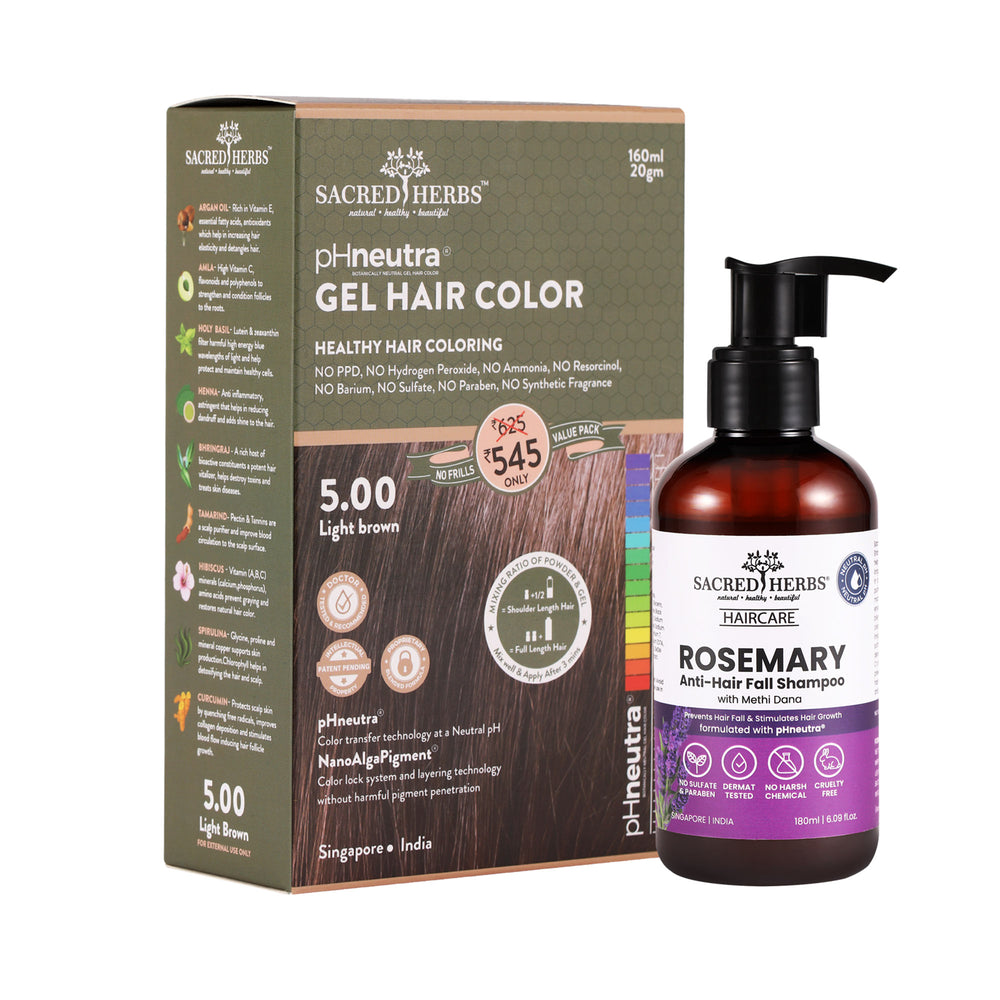
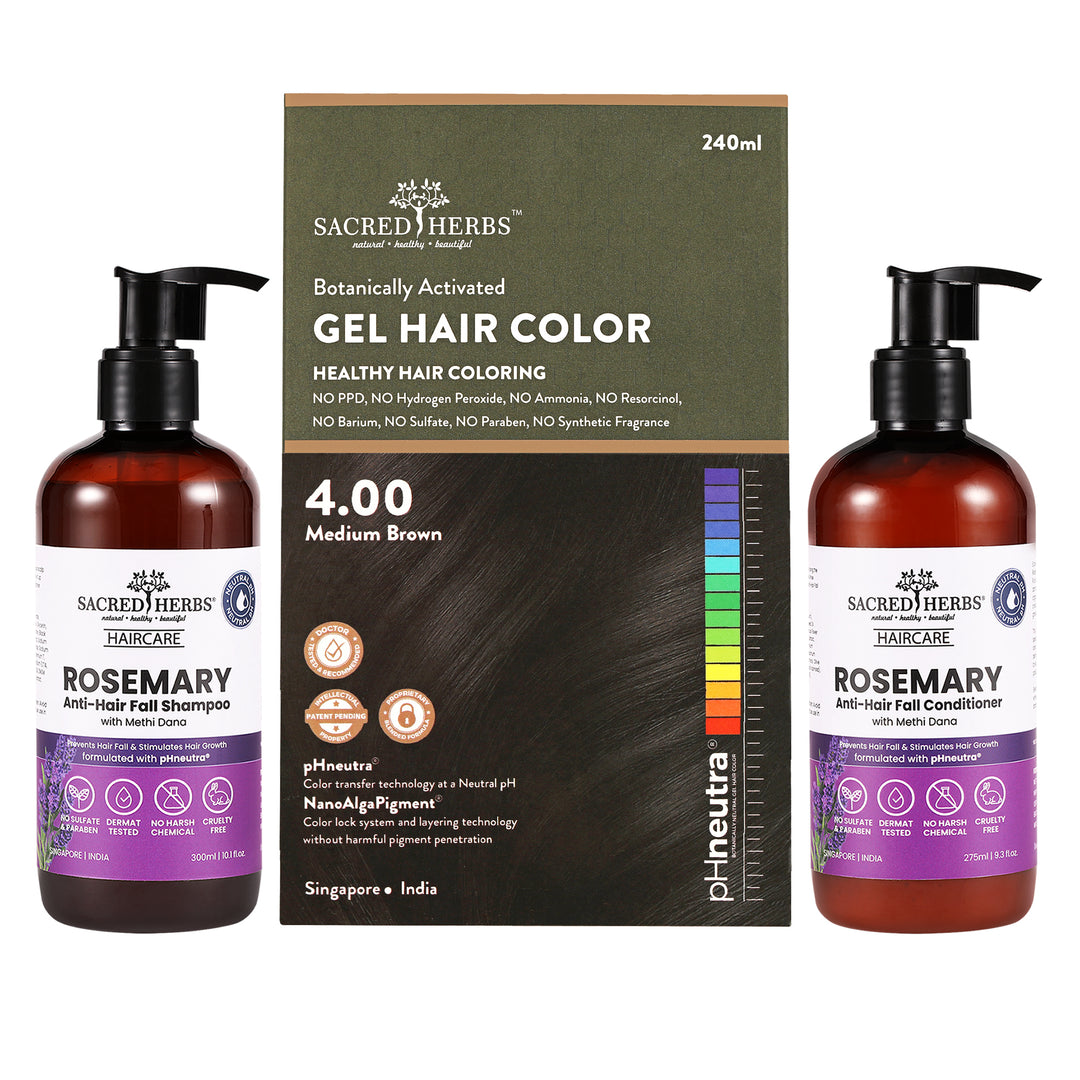
Explore the Rosemary Anti Hair Fall Series in the Hair Care Collection at Sacred Herbs — formulated around rosemary as the primary active alongside complementary botanical ingredients.
Methi Dana / Fenugreek (Trigonella foenum-graecum): The Hormonal Balancer
Fenugreek seeds have been used in Indian hair care for centuries. Their effectiveness for hair fall is supported by both traditional use and modern phytochemical research.
Active compounds:
-
Diosgenin: a steroidal saponin with documented DHT-blocking and oestrogen-modulating activity. Relevant for women experiencing hormonal hair fall.
-
Lecithin: a phospholipid that coats and strengthens the hair shaft, reducing mechanical breakage.
-
Nicotinic acid (Vitamin B3): improves scalp circulation and supports keratinocyte function.
-
4-hydroxyisoleucine: an amino acid that has been associated with improved insulin sensitivity, relevant for hair fall linked to polycystic ovary syndrome (PCOS).
What it does in a shampoo: Methi dana in a herbal shampoo for hair fall works on two levels simultaneously. The DHT-blocking activity of diosgenin protects the follicle from hormonal miniaturisation. Externally, the lecithin coats the hair shaft, adding strength and reducing breakage that contributes to visible hair fall.
Bhringraj (Eclipta prostrata): Ayurveda's Dedicated Hair Growth Herb
Bhringraj is often called the "king of herbs" for hair in Ayurvedic medicine. Unlike many traditional claims, its reputation is supported by meaningful research.
The research: A 2008 study published in the Journal of Ethnopharmacology compared bhringraj root extract to minoxidil 2% in rats. Bhringraj showed comparable hair growth-promoting activity to minoxidil, measured by the proportion of follicles in the anagen (growth) phase.
Mechanism: Bhringraj promotes proliferation of dermal papilla cells, which are the cells in the follicle responsible for initiating and sustaining hair growth. It also reduces scalp inflammation and has documented antifungal properties, which are relevant for hair fall caused by scalp infections like dandruff (seborrheic dermatitis).
Active compounds: Wedelolactone, ecliptine, and various alkaloids and flavonoids. Wedelolactone in particular has been identified as a key contributor to bhringraj's hair growth-promoting activity.
Amla (Phyllanthus emblica / Emblica officinalis): The Antioxidant Powerhouse
Amla, the Indian gooseberry, is one of the most nutrient-dense plants used in hair care. Its relevance for hair fall comes from multiple angles.
Vitamin C content: Amla has one of the highest vitamin C concentrations of any plant. Vitamin C is essential for collagen synthesis, and collagen forms the structural matrix of the scalp's dermis, which anchors the hair follicle. Vitamin C also significantly enhances iron absorption, which is relevant for women with iron-deficiency-related hair fall.
Gallic acid: A polyphenol with potent antioxidant activity. Oxidative stress accelerates follicle ageing and is a contributing factor in premature greying and hair fall. Gallic acid provides meaningful protection at the follicle level.
5-alpha reductase inhibition: Amla has demonstrated DHT-blocking activity in research. Combined with rosemary and saw palmetto, it contributes to a multi-pathway approach to DHT management.
Tannins: Amla's tannins have mild astringent properties that reduce scalp oiliness and help tighten enlarged follicle openings.
Brahmi (Bacopa monnieri): The Cortisol Antagonist
Brahmi is most well-known in the wellness world as a cognitive adaptogen, but its relevance for hair fall shampoo is through a different mechanism: stress management at the scalp level.
Cortisol, the primary stress hormone, disrupts the hair growth cycle by shortening the anagen phase and pushing follicles prematurely into telogen. This is the mechanism behind stress-related hair fall (telogen effluvium).
Applied topically to the scalp, brahmi's active compounds (bacosides) have demonstrated local anti-inflammatory and neuroprotective effects that may help buffer the follicle against stress-induced disruption. While the evidence for topical brahmi is less robust than for rosemary, it is a rational addition to a herbal hair fall shampoo, particularly for women whose hair fall is stress-related.
Tulsi / Holy Basil (Ocimum sanctum): The Anti-Inflammatory Synergist
Tulsi is one of the most powerful anti-inflammatory plants in the Ayurvedic pharmacopoeia. Its adaptogenic and anti-inflammatory properties are well-documented, and its relevance for hair fall shampoo is primarily as a scalp anti-inflammatory.
Scalp inflammation is a factor in several types of hair fall: seborrheic dermatitis, psoriasis-related hair fall, and the chronic low-grade inflammation that accompanies urban pollution exposure. Eugenol, the primary active compound in tulsi, has COX-2 inhibitory activity (similar mechanism to ibuprofen but plant-derived and topically applied) that reduces scalp inflammation effectively.
How These Herbs Work Together in a Formulated Shampoo
The power of a well-formulated herbal shampoo for hair fall is not in any single ingredient but in how these plants work in concert, addressing different aspects of the hair fall problem simultaneously:
-
Rosemary handles circulation, DHT inhibition, and anti-inflammation
-
Methi dana handles hormonal modulation and shaft strengthening
-
Bhringraj handles dermal papilla stimulation and anagen extension
-
Amla handles antioxidant protection and collagen support
-
Brahmi handles stress-related disruption buffering
-
Tulsi handles scalp inflammation reduction
No single pharmaceutical ingredient addresses all of these pathways simultaneously. This is the fundamental advantage of a well-formulated multi-botanical herbal shampoo for hair fall.
The Formulation Matters as Much as the Ingredients
Having the right botanical ingredients is necessary but not sufficient. How they are formulated into a shampoo determines how much of the active content actually reaches the follicle during a two-to-five-minute application.
Key formulation considerations:
Surfactant selection: The cleansing agents in a shampoo determine how the shampoo interacts with the scalp. Harsh sulphates (SLS, SLES) strip the scalp's protective lipid barrier and create an inflammatory environment that counteracts the anti-inflammatory botanicals. Gentler alternatives (sodium cocoyl isethionate, cocamidopropyl betaine, coco glucoside) cleanse effectively without this disruption.
pH: Shampoo pH affects both scalp health and how botanical actives behave. A slightly acidic pH (5-6) is closest to the scalp's natural pH and allows botanicals to function optimally.
Concentration of actives: Many shampoos include botanical ingredients at concentrations too low to have any meaningful effect. A shampoo that lists rosemary extract as the 25th ingredient provides essentially no therapeutic benefit from rosemary.
Preservative system: Harsh preservatives (particularly DMDM hydantoin, which releases formaldehyde) are common in shampoos and contribute to scalp irritation. Natural preservative systems (phenoxyethanol at low concentrations, plant-derived antimicrobials) are significantly more compatible with scalp health.
Application Protocol for Maximum Benefit
The most effective herbal shampoo for hair fall is one that is used correctly:
Apply to wet scalp first, then hair. Massage with fingertips using circular motions for two to three minutes, focusing on areas of greatest thinning. Leave on for a full five minutes. Rinse with lukewarm (not hot) water. Follow with a sulphate-free conditioner applied only to mid-lengths and ends.
Use consistently three to four times per week. Combine with a rosemary-based leave-in serum and a pre-wash herbal scalp oil for a complete system. Expect meaningful improvement at eight to twelve weeks.
Frequently Asked Questions
Is herbal shampoo for hair fall safe for colour-treated hair?
Yes, when the formula is sulphate-free. Sulphate-based shampoos strip colour significantly faster. A botanical herbal shampoo is colour-safe by default if sulphate-free.
Can herbal shampoo for hair fall cause any side effects?
Sensitivities to botanical ingredients are possible but uncommon. Patch testing the shampoo on a small area of skin before first use is prudent. Genuine allergic reactions to rosemary, amla, or bhringraj are rare.
How does herbal shampoo compare to pharmaceutical hair fall treatments?
Herbal shampoo is appropriate as a first-line intervention for mild to moderate hair fall, and as a supportive treatment alongside pharmaceutical options for more severe hair fall. It is not a replacement for minoxidil or finasteride in cases of significant androgenetic alopecia.
Should I use herbal shampoo daily?
Three to four times per week is optimal for most hair types. Daily use is not harmful but may not be necessary and can lead to over-cleansing of fine or dry scalps.
Does herbal shampoo for hair fall work for dandruff-related hair fall?
Yes. Several of the botanical ingredients (bhringraj, tulsi, rosemary) have antifungal and anti-inflammatory properties that address the Malassezia yeast overgrowth responsible for dandruff, reducing dandruff-related hair fall effectively.
Is herbal shampoo for hair fall suitable for men and women?
Yes. The primary mechanisms of hair fall (DHT sensitivity, scalp inflammation, follicle-cycle disruption) are the same regardless of gender, and the botanical actives work through these same mechanisms.