


Herbal Hair Color for Men






Herbal Hair Color for Men: How to Cover Grey Hair Naturally
Men and hair colour have a complicated relationship. There is the practical side:... Read More
Herbal Hair Color for Men: How to Cover Grey Hair Naturally
Men and hair colour have a complicated relationship. There is the practical side: grey hair that appears earlier than expected, at the temples, in the beard, across the crown, and the desire to address it without the result looking obviously coloured. And there is the less-discussed side: the scalp sensitivity, the burning during application, the hair that gets progressively drier and more brittle with each conventional dye treatment, and the growing awareness that the chemicals in standard men's hair colour products raise legitimate safety concerns.
Herbal hair color for men exists at the intersection of all of these concerns. It covers grey completely. It does so without ammonia, PPD, or the high-pH chemistry that creates scalp damage. It leaves hair stronger, not weaker. And when formulated correctly, the result looks natural, multidimensional, and entirely believable, which is exactly what most men colouring their hair are looking for.
This guide covers everything: why herbal colour works differently from conventional men's hair dye, which ingredients matter and what the science says about them, how to apply it for the most natural-looking result, what to do about beard colouring, and how to maintain the colour between applications.
Why Men's Hair Presents Specific Colouring Challenges
Before getting into ingredients and application, it helps to understand what makes men's hair colouring different from women's, because the differences are more significant than most guides acknowledge.
Hair texture and follicle density: Men's hair tends to be slightly coarser in shaft diameter and often has a higher follicle density in areas like the beard. Coarser hair has a more compact cuticle structure, which means colour penetration requires more attention to saturation and processing time.
Grey pattern: Male greying typically follows a predictable pattern, starting at the temples, spreading to the crown, and eventually throughout the scalp. The temple greying is particularly relevant because it is the most visible and socially noticed area, and it tends to be the most resistant grey because of its tight cuticle structure.
Beard hair: Men who also colour their beard face a specific challenge. Beard hair is typically coarser than scalp hair, grows at a different angle, and has a facial skin context (rather than scalp) that changes the sensitivity and absorption dynamics.
The "natural" requirement: Most men seeking hair colour, particularly those colouring for the first time, want a result that looks like their original hair colour, not like they have coloured their hair. This places a specific demand on the shade selection and the colour's dimensional quality. Flat, uniformly saturated colour looks obviously dyed. Botanical colour, with its natural variation and warmth, tends to look significantly more natural.
Infrequent conditioning habits: Women in India typically have more established hair conditioning routines. Men, on average, use fewer hair care products. This means men's hair often has higher porosity from wind, sun, and pollution exposure without the conditioning baseline that mitigates it. Herbal colour applied to unconditioned, porous hair may absorb more intensely and fade faster than expected.
What Conventional Men's Hair Dye Does to the Scalp and Hair
Most hair colour products marketed specifically at men, including the popular five-minute and seven-minute formulas, use the same basic chemistry as women's conventional dye: PPD as the colouring agent, hydrogen peroxide as the oxidising agent, and ammonia or monoethanolamine to open the cuticle.
The health concerns with this chemistry are the same regardless of gender. PPD is a strong sensitiser with well-documented links to contact dermatitis, escalating allergic reactions, and in epidemiological studies of hairdressers, elevated bladder cancer risk. Ammonia destroys the scalp's acid mantle and triggers scalp inflammation with each application.
For men, there is an additional structural concern. The fast-acting men's hair dye formulas (five minutes, seven minutes) achieve rapid colour penetration by using aggressive chemistry at high concentrations. The trade-off is disproportionate cuticle damage in a short time. Hair coloured repeatedly with these rapid formulas becomes brittle and dry faster than hair coloured with standard 30-minute formulas.
Herbal hair color for men avoids this chemistry entirely.
The Botanical Actives That Make Herbal Hair Color for Men Work
Henna (Lawsonia inermis)
Henna is the primary colouring agent in herbal hair color for men. Its active molecule, lawsone, has a specific chemical affinity for keratin, the protein that makes up the hair shaft. Lawsone migrates into the hair shaft through natural intercellular lipid channels without requiring the cuticle to be forced open and forms a stable covalent bond with the hair's keratin.
The result is permanent colour (it does not wash out; it only grows out) and strengthened hair (the lawsone-keratin bonds add cross-links to the protein structure that increase tensile strength and reduce porosity). For men whose hair is already on the coarser, drier end from outdoor exposure and infrequent conditioning, this strengthening effect is a meaningful bonus.
Indigo (Indigofera tinctoria)
Indigo is the companion botanical that extends the colour range from henna's warm red-brown to the dark brown and natural black shades that most men colouring grey hair want. The ratio of henna to indigo in the formula determines the shade: more henna produces warmer brown tones; more indigo produces cooler, deeper tones.
NanoAlgaPigment Technology
Advanced herbal hair color for men now incorporates algae-derived microbial pigments at the nano-particle scale. These nano-pigments penetrate the cuticle more efficiently than larger botanical molecules, producing deeper, more even colour saturation. This technology is particularly important for covering the resistant grey at men's temples and hairline.
Rosemary Extract
Rosemary in herbal hair color for men addresses the hair fall that frequently accompanies greying. As men age, DHT sensitivity (the primary cause of androgenetic alopecia) increases. Rosemary's 5-alpha reductase inhibitory activity provides mild DHT-blocking protection at the follicle level during application. Its circulation-improving properties also support the scalp health that colouring puts under stress.
Amla (Phyllanthus emblica)
Amla deepens the colour, adds cool tones that prevent herbal colour from looking too red or warm (a common concern among men choosing botanical dye), and provides exceptional antioxidant protection to the hair during the colouring process. On dark Indian hair, amla in the formula produces the natural-looking depth that makes herbal colour believable rather than obviously dyed.
Bhringraj (Eclipta prostrata)
For men experiencing concurrent hair fall and greying, bhringraj in the herbal colour formula provides follicle-level support by stimulating dermal papilla cell activity and extending the anagen phase. It also contributes to the darkening effect in the formula's colour profile.
Shade Selection for Men: The Natural-Looking Result
Most men colouring grey hair want one thing: to look like they have not coloured their hair. This places specific demands on shade selection.
The key principle for a natural result with herbal hair color for men: choose the shade that matches your original hair colour. Not one shade darker, not one shade lighter. The exact shade of your natural, pre-grey hair.
The most common mistake men make with shade selection is choosing too dark. If your original hair was dark brown and you choose natural black to cover your grey, the result looks flat and obviously coloured. Dark brown produces a result that varies with lighting, has natural warmth, and looks like your actual hair. Natural black on someone whose natural hair was dark brown looks like shoe polish.
The second most common mistake is choosing based on the shade name rather than the shade chart. "Dark brown" means different things across different brands. Always look at the actual shade swatch on hair that is similar in colour to your own.
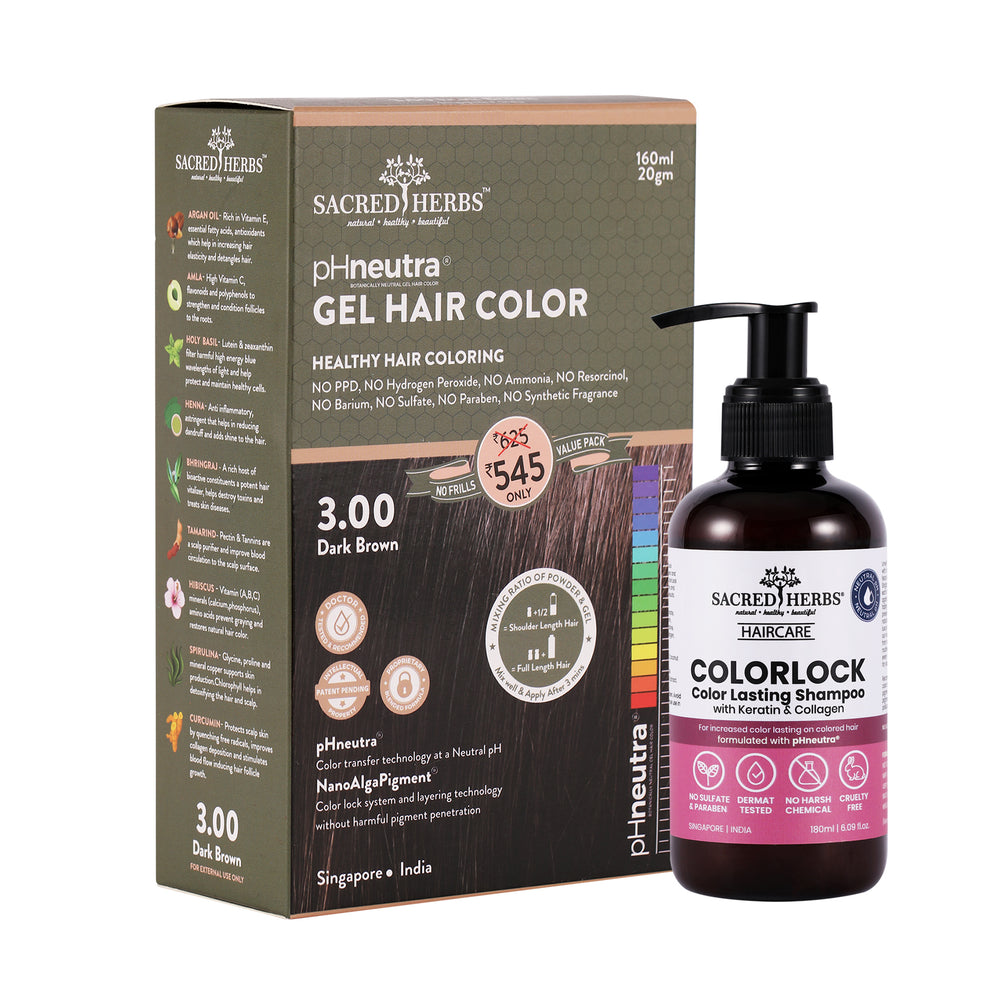
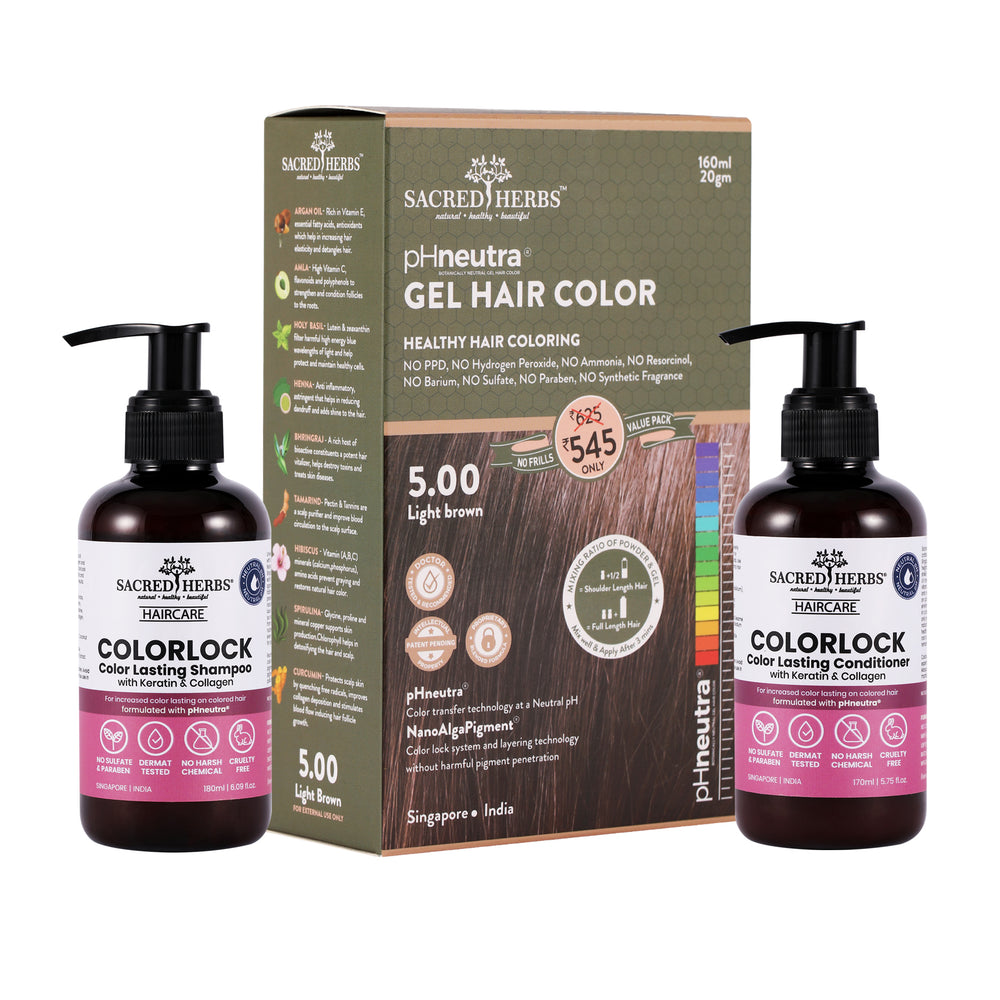
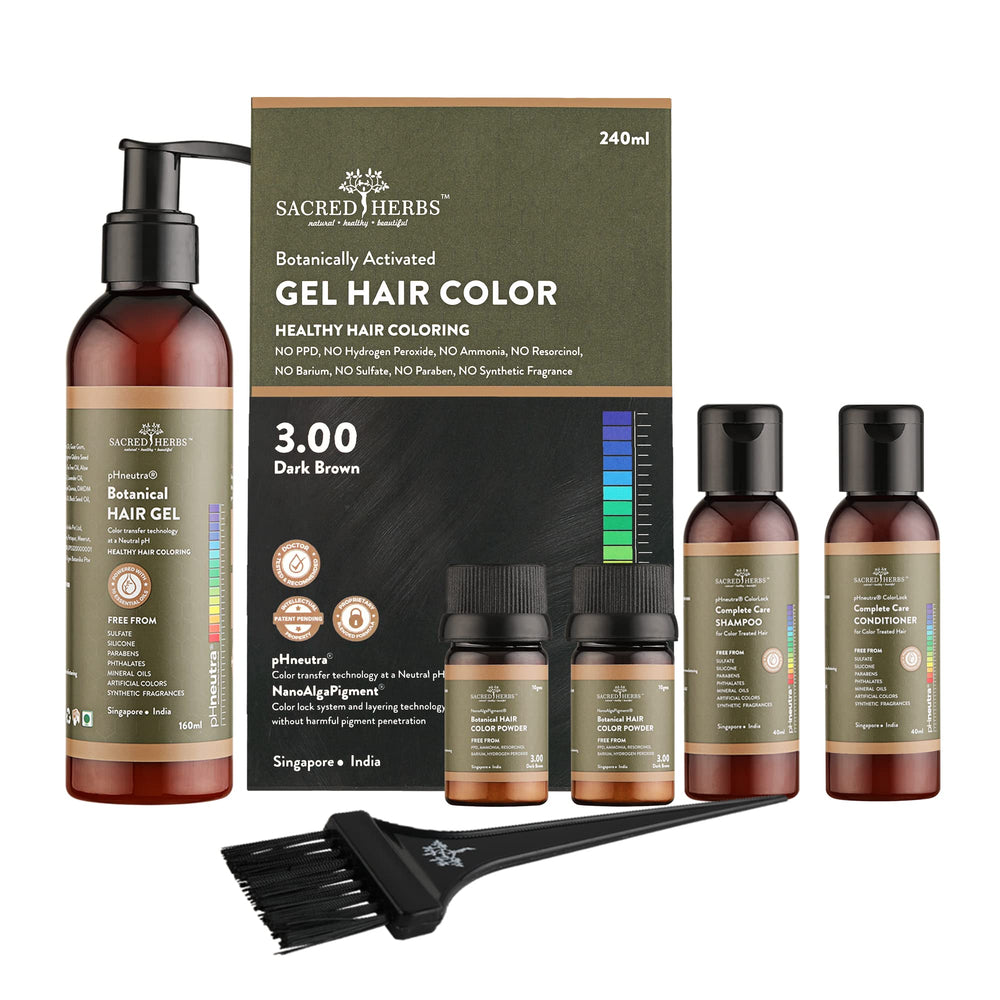
For most Indian men: dark brown (3.00) produces the most natural-looking result across the widest range of skin tones and base hair colours. Natural black (1.00) is appropriate only for men whose natural hair was genuinely black before greying.
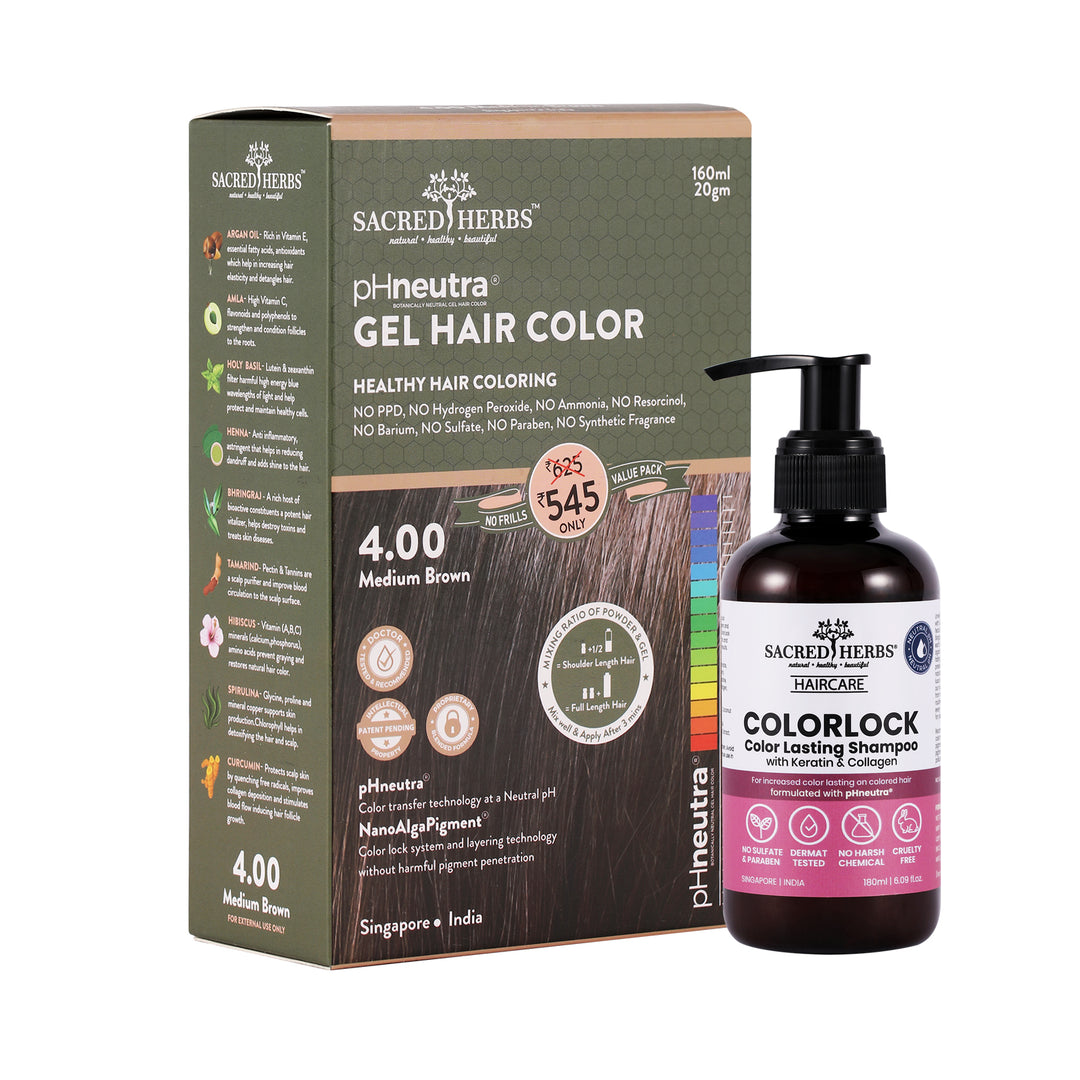
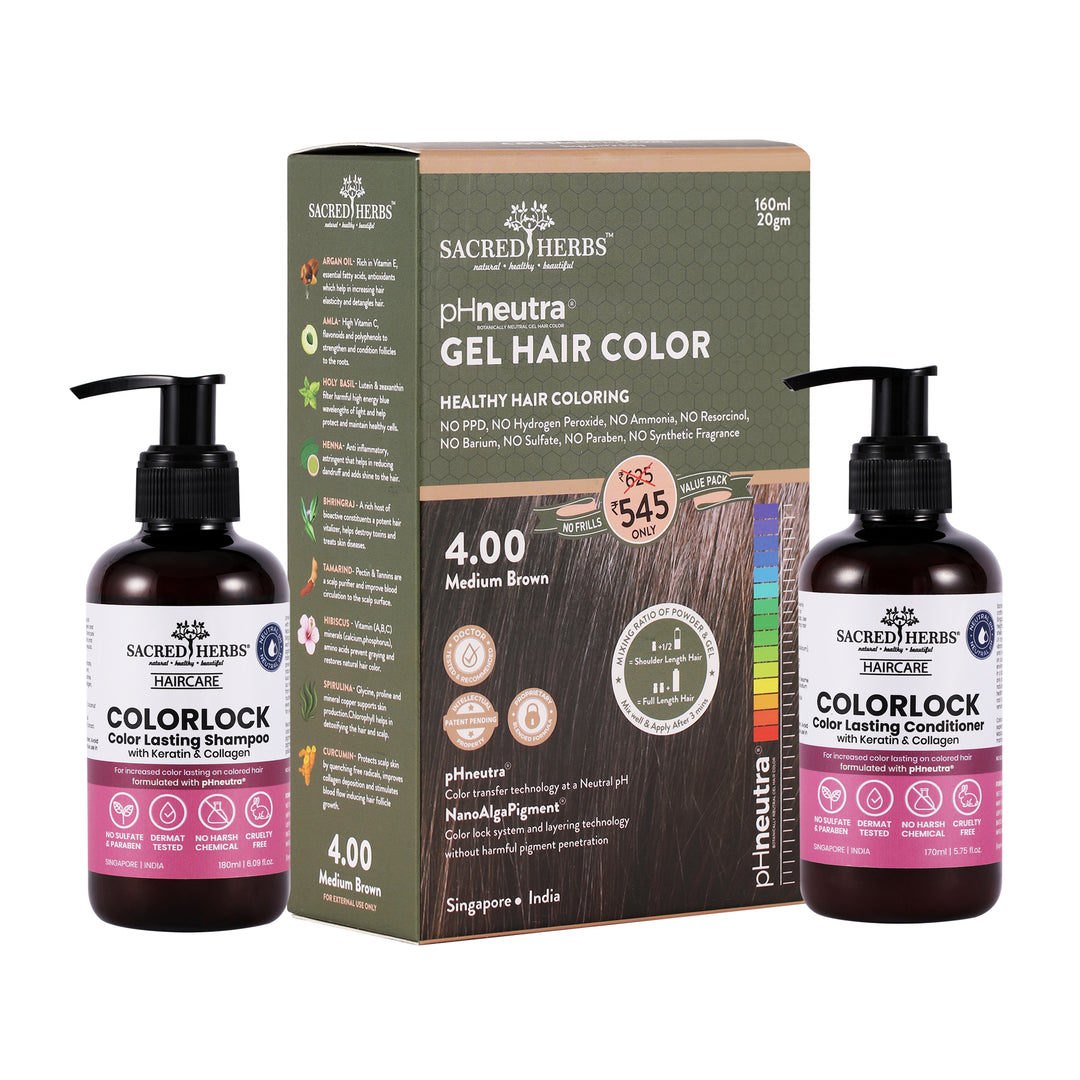
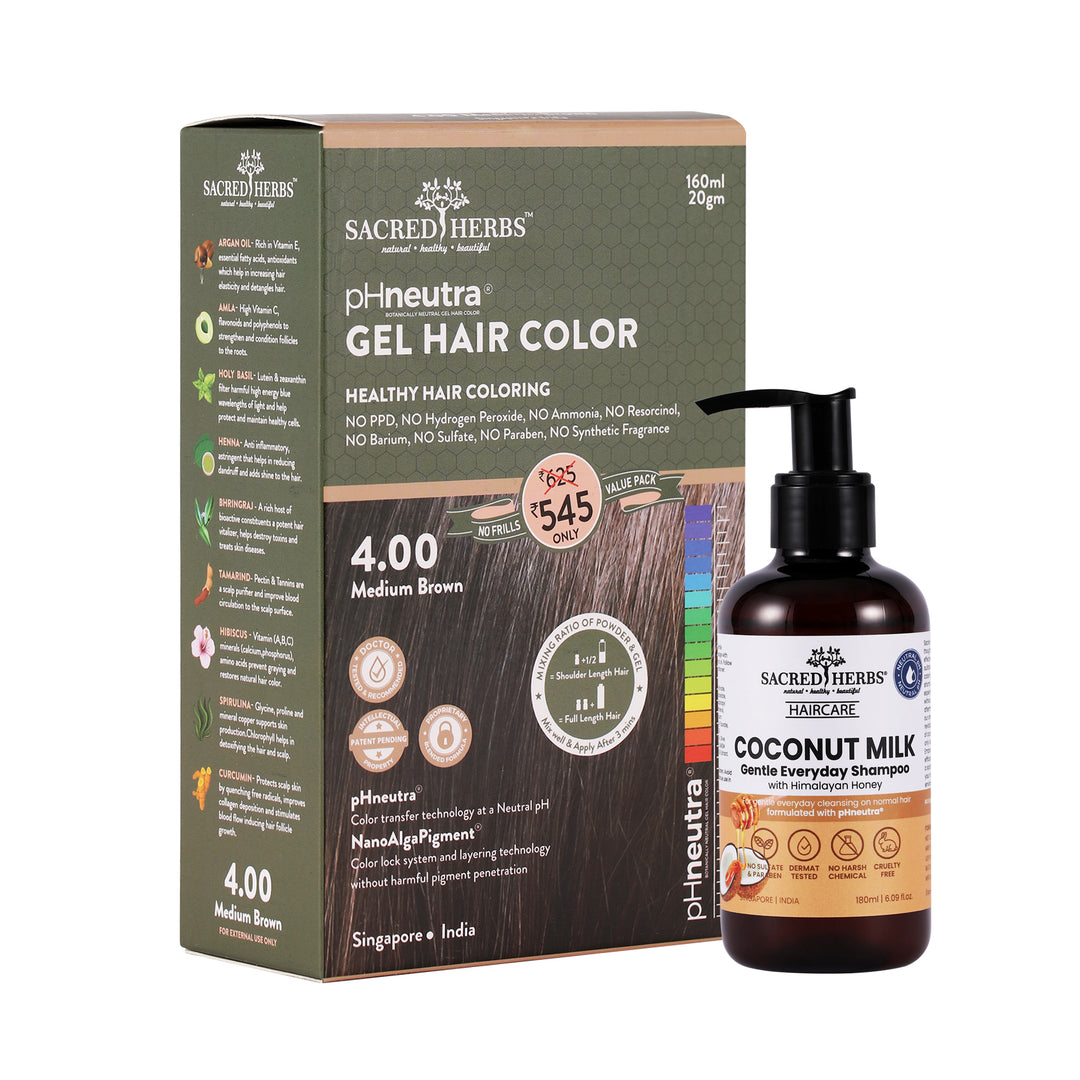
For men with salt-and-pepper greying who want to blend rather than fully cover: medium brown (4.00) on predominantly dark base hair will create a natural grey-blend effect rather than full coverage. This deliberate partial coverage approach looks very natural.
Explore the full shade range available in the Hair Color Collection at Sacred Herbs.
How to Apply Herbal Hair Color for Men: Scalp Hair
Application for men's scalp hair follows the same principles as for women, with a few additional considerations for common male greying patterns.
Preparation: Wash hair with a sulphate-free shampoo the day before or morning of colouring. No conditioner. Hair should be clean and damp.
Mixing: Combine the formula components immediately before application. Mix thoroughly.
Temple-first application: Start at the temples, which are typically the highest grey concentration and the most resistant. Apply generously with the brush, pressing the formula into the hair at the root. Work from the hairline inward.
Crown application: The crown parting is the second most visible area and the second most resistant. Apply carefully and check the parting lines.
Remaining areas: Work through the back and sides systematically.
Processing: Shower cap on. 35 minutes. Hairdryer on lowest heat setting over the cap for the final ten minutes. This heat step is critical for temple and hairline coverage.
Rinsing: Lukewarm water until clear. Use paraben and sulphate-free shampoo. Follow with conditioner on the mid-lengths and ends.
48-hour rule: No shampoo for 48 hours. The botanical pigments continue bonding during this window.
Herbal Hair Color for Men: The Beard
Colouring beard hair with herbal colour is possible and increasingly popular, but requires a different approach from scalp application.
Differences: Beard hair is typically coarser, curlier at the follicle level, and sits on facial skin rather than scalp. Facial skin is slightly less tolerant of extended product contact than the scalp.
Timing: Keep processing time on beard hair to 30 minutes rather than the 35 minutes for scalp hair. The shorter facial contact time is appropriate.
Shade: Always choose one shade lighter for the beard than for the scalp. Dark brown scalp colour with medium brown beard colour looks natural. Natural black on both scalp and beard tends to look uniform and obviously coloured.
Application: Work the formula into the beard with a brush, covering all parts of the beard including the skin below the hair. Skin contact is fine for botanical colour at neutral pH; it would be a scalp concern with high-pH conventional dye.
Rinsing: Rinse immediately and thoroughly. Use paraben and sulphate free shampo on the beard for 24 hours after colouring.
The Complete Hair Care Routine for Men Using Herbal Colour
Men who add herbal colour to their routine often find it is the gateway to thinking more carefully about the rest of their hair care products. The investment in protecting the colour creates an organic opportunity to upgrade the entire routine.
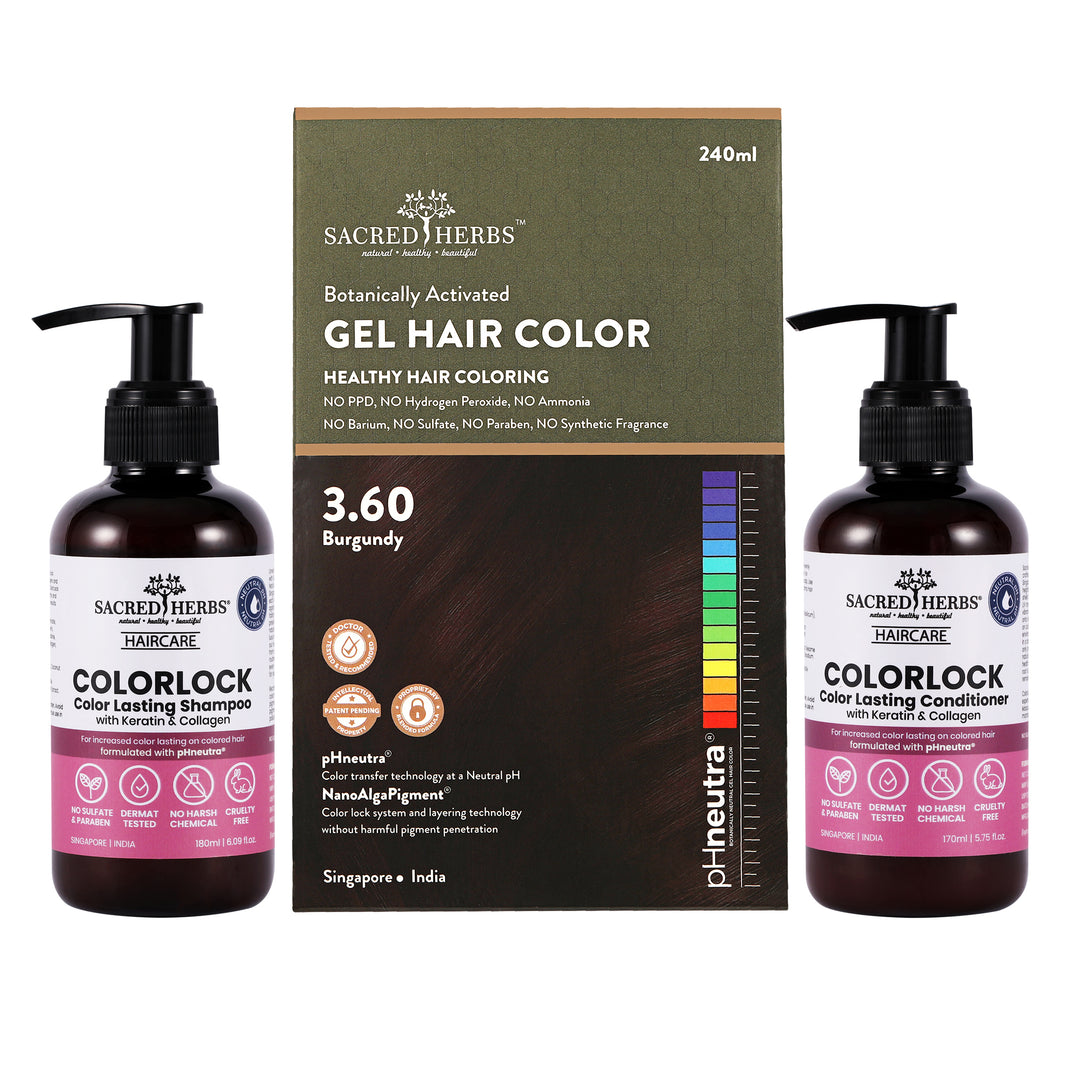
Explore the Hair Care Collection at Sacred Herbs, which includes shampoos, conditioners, and scalp treatments formulated to complement botanical hair colour and support scalp health. The ColorLock Series is specifically designed to extend the life of botanical colour between applications.
For men experiencing both greying and hair fall, the Rosemary Anti Hair Fall Series provides a complete system that addresses both simultaneously.
Maintaining Herbal Hair Color for Men: The Between-Application Routine
Herbal colour longevity depends significantly on what happens between applications. For men, who often have simpler wash routines, a few targeted adjustments make a meaningful difference.
Switch to a sulphate-free shampoo. This single change extends colour life by two to three weeks compared to conventional sulphate-containing shampoo.
Wash in lukewarm rather than hot water. Hot water opens the cuticle and releases colour with every wash.
Reduce washing frequency if possible. Men who work out daily often wash their hair daily as well. A dry shampoo or a scalp rinse with plain water on non-shampoo days maintains scalp cleanliness without stripping colour.
Avoid chlorinated swimming pools for at least a week after colouring. Chlorine degrades botanical pigments rapidly.
Frequently Asked Questions
Will herbal hair color for men look obviously dyed?
No, when the correct shade is chosen. Botanical colour produces multidimensional, warm results that tend to look more natural than synthetic colour. The most common cause of obviously dyed-looking colour is choosing too dark a shade.
How long does herbal hair color for men last?
Four to six weeks before regrowth becomes visible. The colour itself fades gradually rather than producing a harsh line, which is an advantage for men who want a low-maintenance, natural-looking result.
Can I use herbal hair color on a full beard?
Yes, following the beard-specific protocol above: slightly shorter processing time, one shade lighter than scalp colour, thorough rinsing.
Is herbal hair color safe for men with high blood pressure who are on medication?
Botanical hair colour at neutral pH does not interact with blood pressure medication. However, any new product should be discussed with a doctor if you have significant health concerns.
Does herbal hair color work for dark-skinned men?
Yes. Dark brown and natural black shades in botanical colour work beautifully on dark skin tones and produce a natural, rich result. For men with very dark skin tones, warm shades like dark brown and medium brown tend to be particularly flattering.
How is herbal hair color for men different from women's herbal hair colour products?
Most herbal colour formulas are unisex in composition. The differences in "men's" products are usually about packaging, shade range (darker, cooler shades), and marketing. The underlying botanical chemistry is the same.