




Hair Repair Products





Hair Repair Products: A Damage-First Guide to Choosing What Your Hair Actually Needs
Here is the uncomfortable truth about damaged hair: it can't heal. Hair beyond the scalp... Read More
Hair Repair Products: A Damage-First Guide to Choosing What Your Hair Actually Needs
Here is the uncomfortable truth about damaged hair: it can't heal. Hair beyond the scalp is made of keratin that is no longer alive. A cut on your skin repairs itself. A split end on your hair does not.
That doesn't make hair repair products useless. It just changes what "repair" means. Good repair products fill gaps in the hair structure, smooth the lifted cuticle, restore moisture and flexibility, and stop existing damage from spreading. Used well, they can make damaged hair look and feel far healthier while healthy new growth takes over.
The key is matching the product to the type and severity of damage. This guide shows you how.
First, Identify What Damaged Your Hair
Different causes leave different signs. Knowing which one applies to you narrows your product choice straight away.
Heat damage
Signs: Rough texture, frizz, a dry "crunchy" feel, and ends that won't hold a style.
Common cause: Frequent use of straighteners, curling tongs, or hot blow-drying without protection.
Chemical damage
Signs: Hair that feels gummy or stretchy when wet, breaks easily, and tangles constantly.
Common cause: Bleaching, ammonia-based coloring, straightening or smoothing treatments.
Mechanical damage
Signs: Breakage in specific spots, such as where you tie a ponytail, and short broken pieces around the crown.
Common cause: Rough brushing, tight hairstyles, harsh towel drying, cotton pillowcases.
Environmental damage
Signs: Dullness, dryness, and faded color, especially after holidays or summer.
Common cause: Sun exposure, chlorine, hard water, and pollution.
Many people have more than one type. Work out which one dominates, since that is where your repair effort should go first.
The Simple Stretch Test
To decide which repair products you need, try this:
-
Take a single shed strand of hair while it's wet.
-
Hold both ends and stretch it gently.
-
Watch how it behaves.
-
It stretches slightly and returns to shape: Healthy balance.
-
It barely stretches and snaps: Your hair needs moisture.
-
It stretches a lot and doesn't bounce back, or feels mushy: Your hair needs protein.
This tells you whether to reach for moisture-focused or protein-focused repair products, which is the most important choice you'll make.
The Repair Product Ladder: Matching Products to Severity
Level 1: Mild damage
Hair looks a little dull, has some frizz, and a few split ends.
-
Sulphate-free shampoo: Stops stripping the hair further.
-
Daily conditioner: Smooths the cuticle after every wash.
-
Leave-in conditioner: Adds ongoing moisture and protection.
-
Heat protectant: Essential before any hot styling.
Level 2: Moderate damage
Noticeable dryness, frequent tangling, breakage when brushing.
Everything in Level 1, plus:
-
Weekly repair mask: A richer treatment left on for 15 to 20 minutes.
-
Bond or protein treatment: For hair that feels weak and stretchy.
-
Lightweight hair serum: Applied to the ends to seal moisture and reduce friction.
Level 3: Severe damage
Hair breaks at the slightest tension, feels gummy when wet, and won't hold any style.
Everything in Levels 1 and 2, plus:
-
A proper trim: Severely damaged ends can't be rescued and will keep splitting upwards.
-
A pause on all chemical processing until hair condition improves.
-
Minimal heat for several weeks.
You can build these steps with products from the Sacred Herbs hair care collection, which is formulated to clean and condition without harsh stripping agents.
Ingredients That Do the Heavy Lifting
When comparing hair repair products, look for these ingredients:
-
Hydrolysed proteins (keratin, wheat, rice, silk): Small enough to fill gaps in damaged hair and temporarily strengthen it.
-
Ceramides: Help seal the gaps between cuticle cells.
-
Panthenol: Draws in moisture and improves flexibility.
-
Plant butters and oils: Shea butter, argan, and coconut soften and smooth.
-
Herbal extracts: Amla, hibiscus, and fenugreek have long been used to condition and strengthen hair.
-
Aloe vera: Hydrates and soothes both scalp and lengths.
Be cautious with products that rely mainly on heavy silicones. They give an instant smooth feel but can build up and hide the real condition of your hair.
Stop the Damage at the Source
Repair products work far better when you stop creating new damage. For many people, the biggest ongoing cause is hair color.
Conventional dyes use ammonia to force the cuticle open, and repeated sessions leave hair increasingly porous and fragile. If you color regularly, a gentler formula is one of the most effective repair decisions you can make.
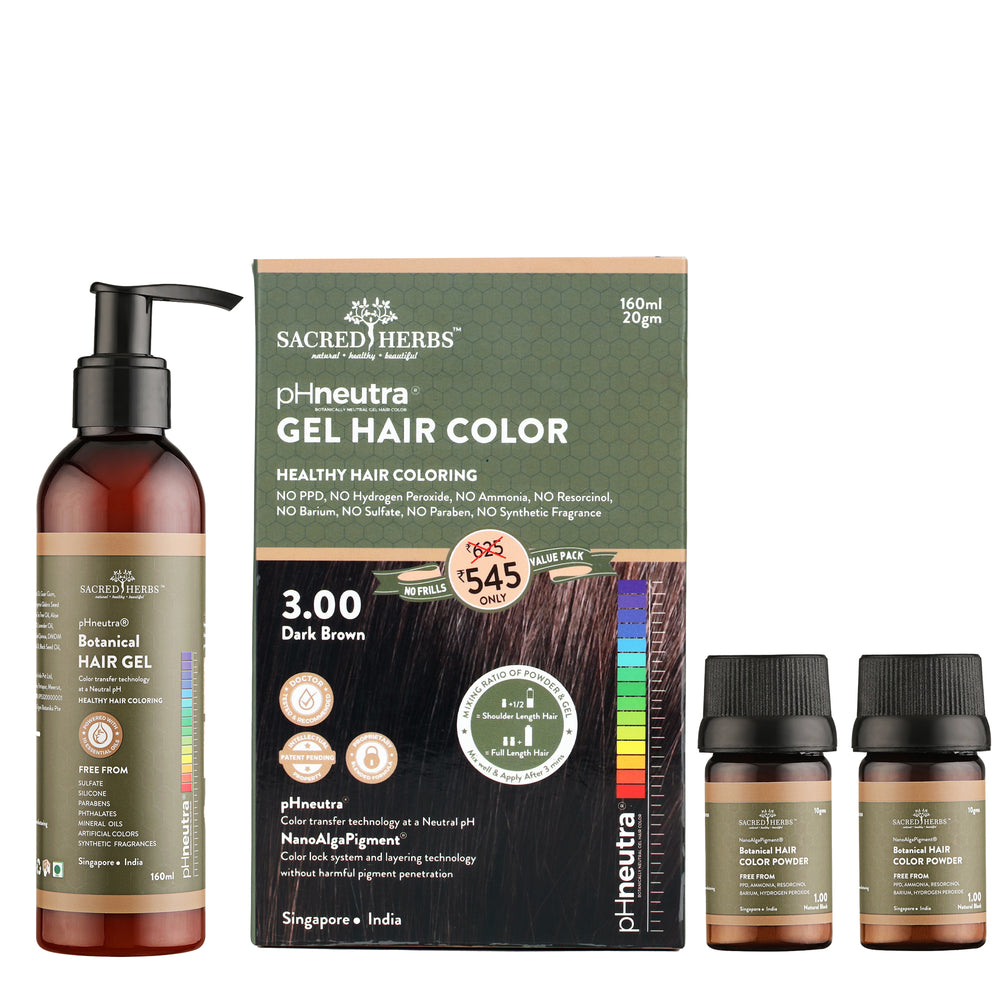
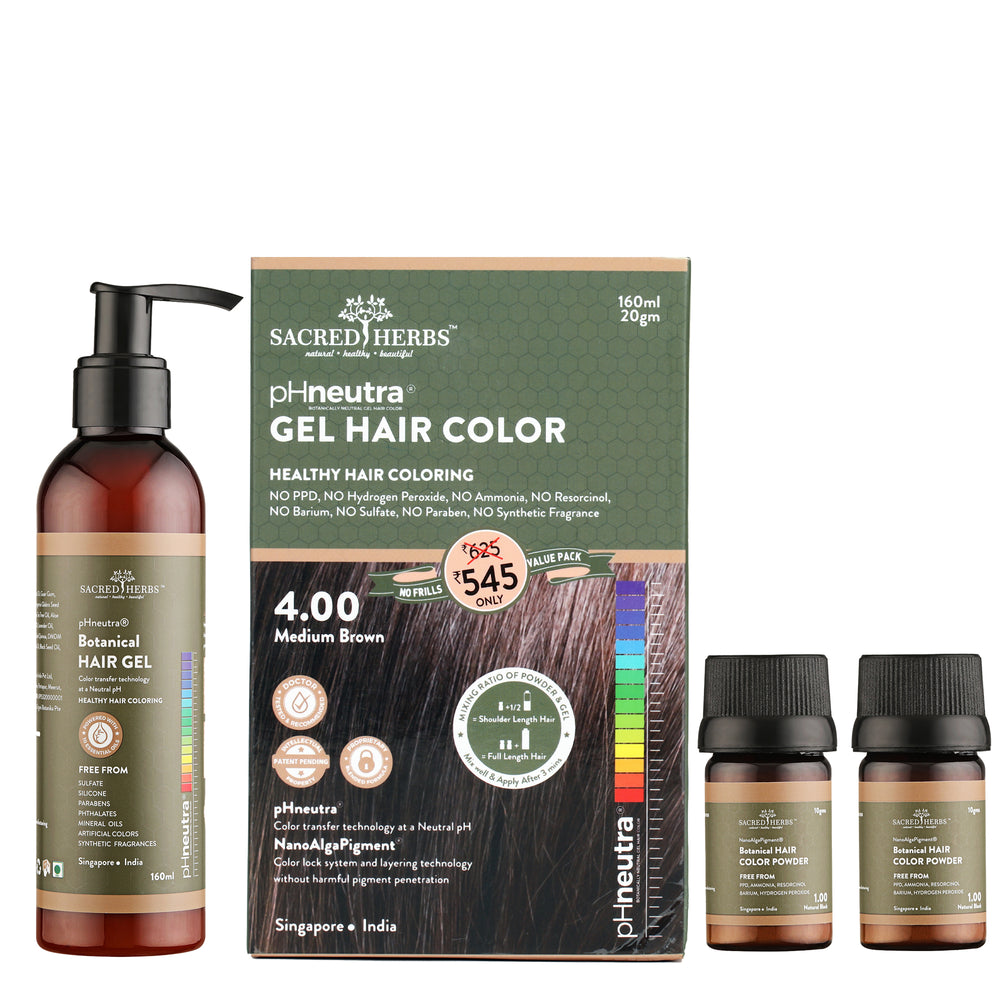
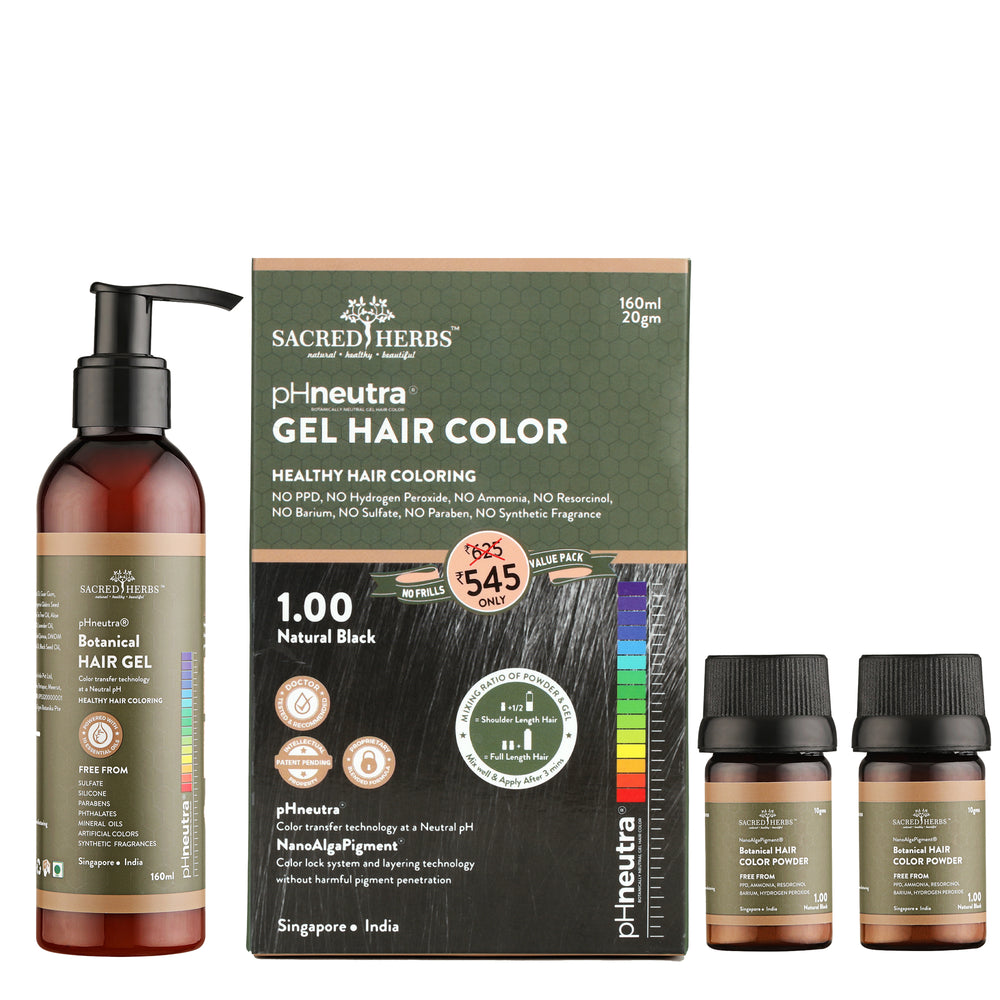
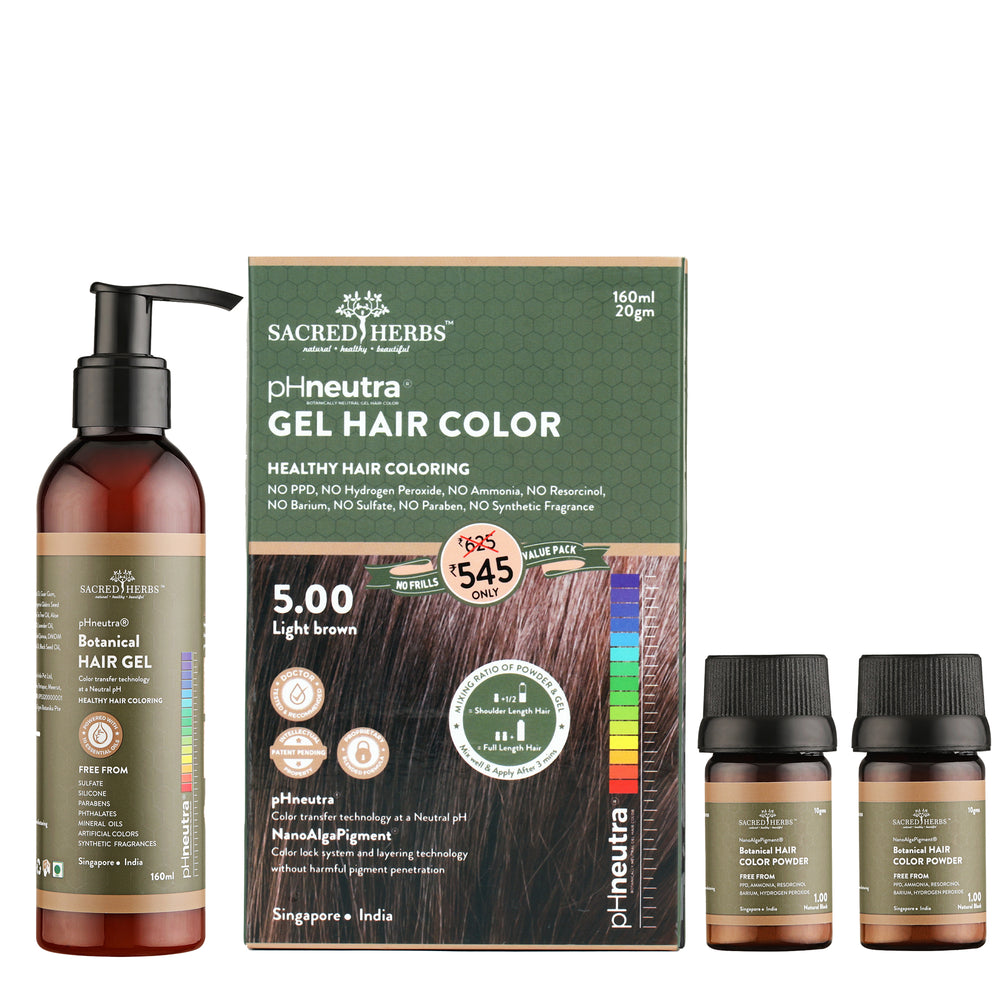
Sacred Herbs is India's first pH-neutral hair color, made with pHneutra technology and powered by 20+ herbal extracts. It contains no PPD, no ammonia, no bleach, and no resorcinol, and it is dermatologically tested. NanoAlgaPigment technology still delivers 100% grey coverage, with color that lasts up to 4 weeks. Explore the Sacred Herbs hair color range.
A few habits protect damaged hair around coloring:
-
Leave the color on for 35 minutes in summer and 45 minutes in winter, no longer.
-
Wash with a sulphate-free shampoo afterwards.
-
Avoid oil, including repair oils, for at least one week after coloring.
-
Use Sacred Herbs Root Sure Root Touch-up Powder between sessions so you aren't reapplying full color too often.
The Super Premium Pack includes a sulphate-free shampoo and conditioner, a good base for any repair routine.
Everyday Habits That Support Repair
-
Detangle with a wide-tooth comb, starting at the ends.
-
Swap rough towels for a microfibre towel or soft cotton T-shirt.
-
Sleep on a silk or satin pillowcase.
-
Use loose hair ties without metal joins.
-
Turn down the temperature on hot tools.
-
Rinse with cool or lukewarm water.
Conclusion
If you take away one thing, take the order. Identify the cause of the damage first. Then stop whatever is creating new damage, whether that's a hot styler, a rough brush, or a harsh dye. Next, use the stretch test to choose between moisture and protein. Finally, climb the product ladder only as far as your hair's severity needs. In that order, hair repair products stop being guesswork and start working.
Frequently Asked Questions
Can hair repair products fix split ends permanently?
No. Products can seal and smooth split ends temporarily, but only a trim removes them for good.
How do I know if my hair needs protein or moisture?
Try the stretch test on a wet strand. Hair that snaps needs moisture, while hair that over-stretches needs protein.
How often should I use a hair repair mask?
Once a week suits most damaged hair, and twice a week works for severe damage over short periods.
Can I use repair products on color-treated hair?
Yes. Choose sulphate-free formulas and avoid oil-based products for a week after coloring.
How long does it take to see results?
Hair often feels softer after the first use, while lasting improvement builds over four to eight weeks.
Does coloring always damage hair?
Ammonia-based dyes cause cumulative damage, but a pH-neutral formula avoids much of that strain.