Hair Fall Control Products: How to Choose the Right One
Losing somewhere between 50 and 100 hairs a day is considered normal. Most people never notice it because the loss is spread across brushing, washing, and the day itself. It is only when the hairbrush looks fuller, the shower drain clogs faster, or the ponytail feels thinner that hair fall becomes a real concern.
At that point, the instinct is to buy whatever product promises the fastest fix. The trouble is that hair fall is not one problem. It has several possible causes, and a product that addresses one of them may do nothing for another.
This guide takes a diagnosis-first approach. Work out what kind of hair fall you are dealing with, then choose hair fall control products that actually match it.
Hair Fall vs Hair Shedding vs Hair Breakage
Before choosing any product, it helps to separate three things that are often confused:
-
Shedding: Hair that falls out from the root, usually with a small white bulb at the end. Some shedding is normal every day.
-
Excessive hair fall: Shedding that rises noticeably above your usual level for weeks at a time.
-
Breakage: Hair that snaps along the length, leaving short, uneven pieces without a bulb.
Pick up a few fallen strands and look closely. A small white bulb at one end may indicate a naturally shed hair, while shorter strands without a bulb may suggest breakage. However, appearance alone cannot confirm the cause of hair loss. If they are short, broken pieces, your issue is breakage. This single check changes which products will help.
Step 1: What Causes Hair Fall? Identify Your Hair Fall Pattern
Sudden, all-over shedding
If shedding increases sharply across the whole scalp, think back two to three months. Illness, high fever, major stress, crash dieting, or giving birth can all push many hairs into the resting phase at once. This type usually settles on its own once the trigger has passed, and gentle care supports recovery.
Gradual thinning at the crown or parting
A widening part or thinning crown that develops slowly over years often has a hormonal or genetic component. Topical products can support the scalp, but this pattern benefits from a dermatologist's assessment.
Breakage-led loss
Short, snapped hairs point to damage along the shaft from heat styling, harsh chemicals, rough handling, or dryness. The fix here is protection and strengthening rather than follicle-focused treatment.
Scalp-led hair fall
Persistent itching, flaking, redness, or greasy dandruff can contribute to hair fall. Calming and cleaning the scalp is the priority.
Step 2: Choose Hair Fall Control Products by Cause
Once you know your pattern, the product choice becomes much clearer:
-
For sudden shedding: Focus on identifying possible triggers such as illness, stress, or nutritional changes. Gentle shampoo and conditioning can help maintain hair quality, but persistent or unexplained shedding should be assessed by a dermatologist.
-
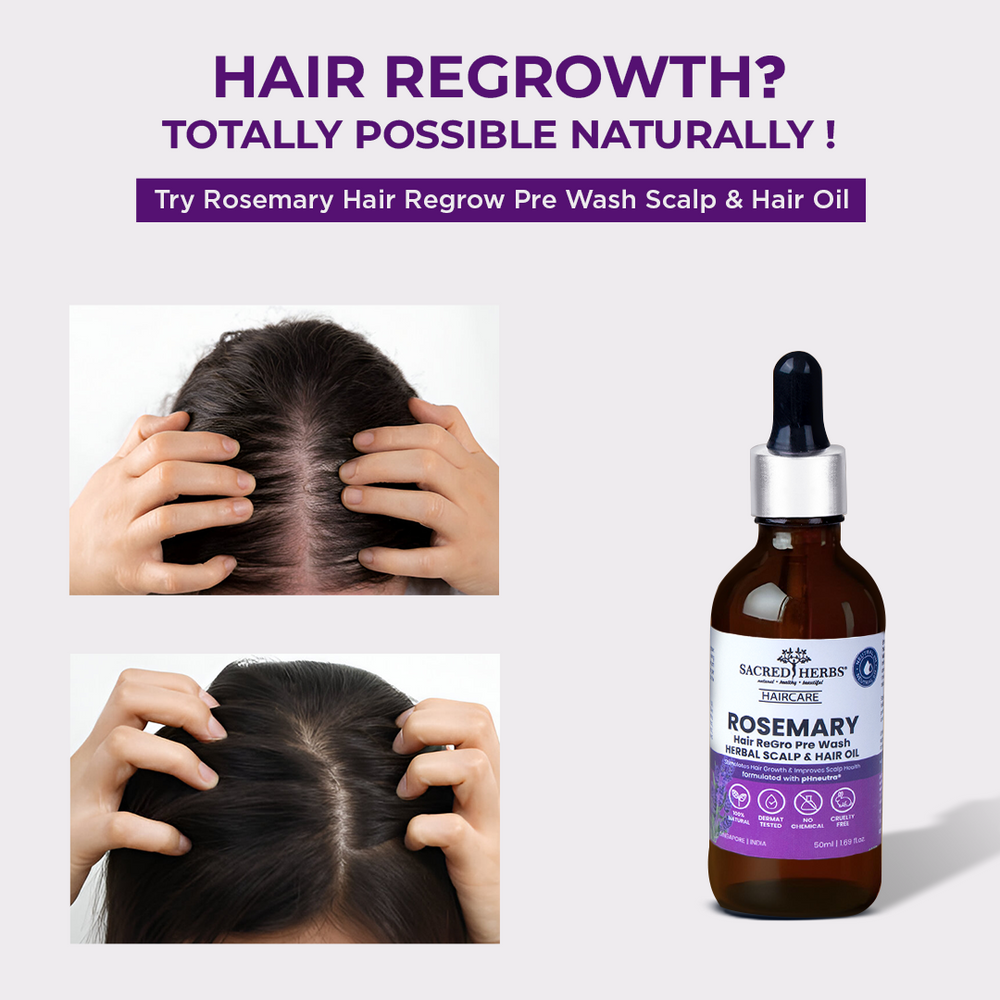
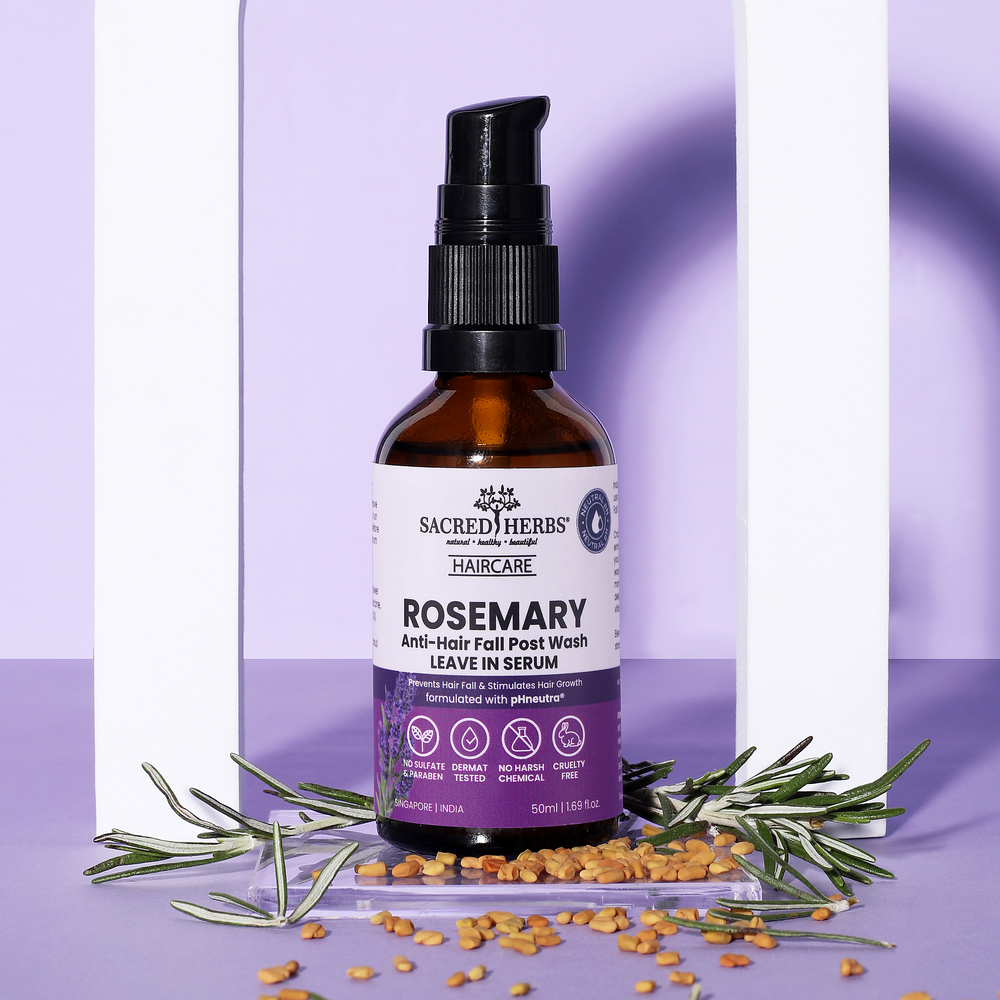
For gradual thinning: A scalp serum with ingredients like bhringraj, amla, or rosemary, used alongside any treatment your dermatologist recommends.
-
For breakage: A strengthening conditioner, a weekly protein or nourishing mask, and a leave-in product applied to the lengths.
-
For scalp-led loss: A cleansing shampoo with scalp-calming herbs like neem, used consistently, plus a light scalp tonic.
The Sacred Herbs hair care collection offers gentle, herb-led options that suit several of these needs without harsh stripping agents.
Step 3: How to Reduce Hair Fall by Changing Daily Habits
Products cannot outperform daily habits that keep damaging your hair. Common triggers include:
-
Tight hairstyles: Constant tension from tight ponytails or buns can pull hair out at the hairline over time.
-
Very hot water: It dries out the scalp and weakens the cuticle.
-
Rough towel drying: Rubbing wet hair causes friction breakage. Pat dry instead.
-
Frequent heat styling: High temperatures weaken the hair shaft.
-
Harsh hair color: Conventional dyes with ammonia, PPD, and resorcinol can irritate the scalp and weaken strands with each application.
That last trigger is easy to overlook. If you color regularly, switching to a gentler formula is one of the most effective changes you can make. Sacred Herbs is India's first pH-neutral hair color, using pHneutra technology and 20+ herbal extracts, with no PPD, no ammonia, no bleach, and no resorcinol. It is dermatologically tested and still delivers 100% grey coverage. See the full Sacred Herbs hair color range.
When coloring, leave the formula on for 35 minutes in summer and 45 minutes in winter, wash afterwards with sulphate-free shampoo, and avoid oil for at least a week. Between sessions, Sacred Herbs Root Sure Root Touch-up Powder handle regrowth so you are not reapplying full color more often than necessary.
Step 4: Build a Consistent Routine
A routine you follow every week beats a cupboard full of products used occasionally:
Wash days (two to three times a week)
-
Wet hair with lukewarm water.
-
Massage sulphate-free shampoo into the scalp with your fingertips.
-
Apply conditioner to mid-lengths and ends only.
-
Rinse and pat dry with a soft towel.
-
Apply scalp serum to the roots.
Daily
-
Detangle gently with a wide-tooth comb, starting from the ends.
-
Wear hair loosely, especially at night.
Weekly
If you color your hair, the Super Premium Pack includes sulphate-free shampoo and conditioner, covering your wash-day basics.
Step 5: Track Progress the Right Way
Hair fall improvements are slow and easy to misjudge. Track them properly:
-
Take a photo of your parting and hairline once a month in the same light.
-
Notice shedding during washing rather than counting individual hairs every day.
-
Give any new routine at least three months before deciding it does not work.
-
Note any changes in diet, stress, or health alongside your hair notes.
When Products Are Not Enough
Hair fall control products support a healthy scalp, but some causes need medical attention. See a dermatologist or doctor if you notice:
-
Sudden patches of complete hair loss
-
Rapid thinning over a few weeks
-
Hair loss alongside fatigue, weight changes, or irregular periods
-
Pain, severe itching, or sores on the scalp
Iron deficiency, thyroid imbalance, and hormonal conditions are common, treatable causes that no shampoo can fix on its own.
Conclusion
The most useful thing you can do for hair fall costs nothing: look closely at the hairs you are losing. Root or breakage, sudden or gradual, scalp-led or habit-led, the answer points you to the right products and away from the wrong ones. Match the product to the cause, remove the triggers you control, and stay consistent for three months. If your hair still does not respond, that is a signal to see a professional, not to buy another bottle.
Frequently Asked Questions
How do I know if my hair fall is normal?
Losing 50 to 100 hairs a day is normal. If shedding rises noticeably for several weeks, review recent triggers and consider seeing a doctor.
Which hair fall control product should I start with?
Start with a gentle sulphate-free shampoo. A calm, clean scalp is the foundation every other product depends on.
Can hair color cause hair fall?
Harsh chemical dyes can irritate the scalp and weaken strands. Switching to a pH-neutral, PPD-free formula reduces this risk.
How long do hair fall control products take to show results?
Expect reduced shedding in six to eight weeks and clearer results after about three months of consistent use.
Does oiling help control hair fall?
Pre-wash oiling softens the scalp and reduces breakage during washing. Avoid oil for a week after coloring your hair.
Can stress really cause hair fall?
Yes. Major stress can trigger increased shedding two to three months later, which usually settles once the stress reduces.