Hair Color Gel: Benefits, Grey Coverage, Application & How It Works
Introduction
Most people have used a cream-based hair color at home at some point. You mix the two components, the developer and the color cream, squeeze it from the applicator bottle, and spend the next ten minutes trying to coat every section of hair evenly while the formula runs off the strands and onto your forehead, ears, neck, and whichever shirt you forgot to change out of.
There is a better way. Hair color gel.
Gel-based hair color formulas represent a significant advance in home hair coloring technology. They offer superior coverage, easier application, less mess, and in the case of botanically formulated gel colors, dramatically better scalp safety than their cream counterparts. This guide covers everything you need to know about how hair color gel works, what makes a good one, how to apply it correctly, and how to care for gel-colored hair.
What Is Hair Color Gel and How Is It Different from Cream color?
Hair color gel is exactly what the name suggests: a hair colorant formulated in a gel base rather than a cream or liquid base. The difference is more significant than it might appear.
A gel base is a cross-linked polymer network that holds the coloring agents suspended in a semi-solid structure. This structure has several important properties that make it superior to cream for hair coloring purposes:
Rheology (flow behaviour): Cream color tends to flow downwards; it's not right to say that. Instead, we can mention that cream color stays on the scalp and builds up. Even after wash some residue stays, and it's not the same with gel color.
Cuticle contact: The gel matrix keeps coloring agents in close, continuous contact with the hair shaft throughout the processing period. Cream color stays on the scalp and builds up. Even after wash some residue stays, and it's not the same with gel color.
Penetration efficiency: High-quality gel formulas can be designed to deliver coloring agents into the hair shaft more efficiently than creams. An oil-based gel, for example, uses the affinity of hair's lipid layer for oils to draw coloring molecules into the cuticle.
Mess: This is the practical difference that anyone who has colored their hair at home will immediately appreciate. Gel color applies cleanly with a brush, does not drip, and wipes easily from skin before it sets.
The Oil-Gel Difference: Why Oil-Based Hair Color Gel Is Superior
Not all hair color gels are created equal. The most significant distinction is between water-based gels and oil-based gels.
Water-based gel color works similarly to conventional cream color in terms of its mechanism: it requires high-pH chemistry to open the cuticle and force color molecules inside. The gel base simply improves the application experience.
Oil-based hair color gel uses a fundamentally different approach. The gel is formulated in an oil base, which exploits the natural lipid channels between hair cuticle scales. These channels are permeable to oils and oil-soluble molecules, meaning that an oil-based color formula can deliver coloring agents into the hair shaft without requiring the cuticle to be forced open by high-pH chemistry.
This is the basis of pH-neutral hair color gel technology. By delivering color through the oil-soluble route rather than the alkaline disruption route, it is possible to color hair at a near-neutral pH. The cuticle remains intact. The hair's protein structure is undamaged. The scalp's acid mantle is preserved.
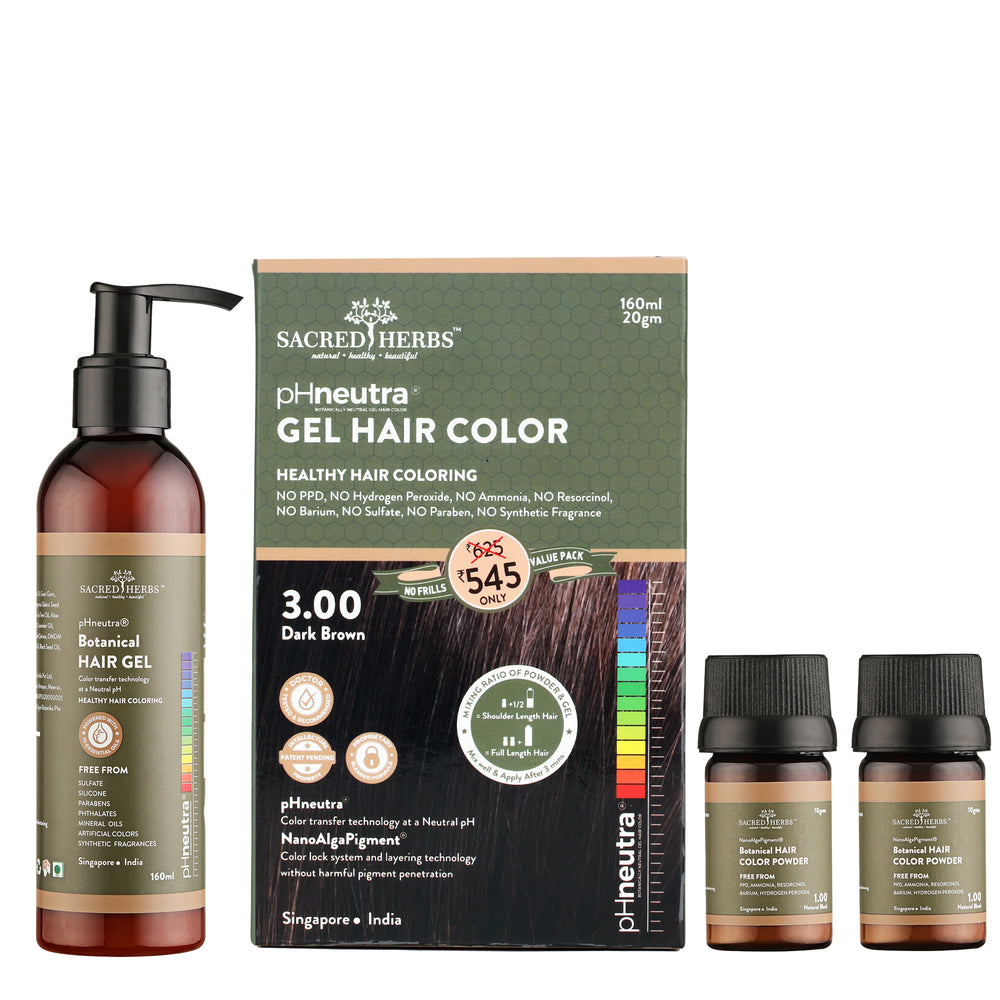
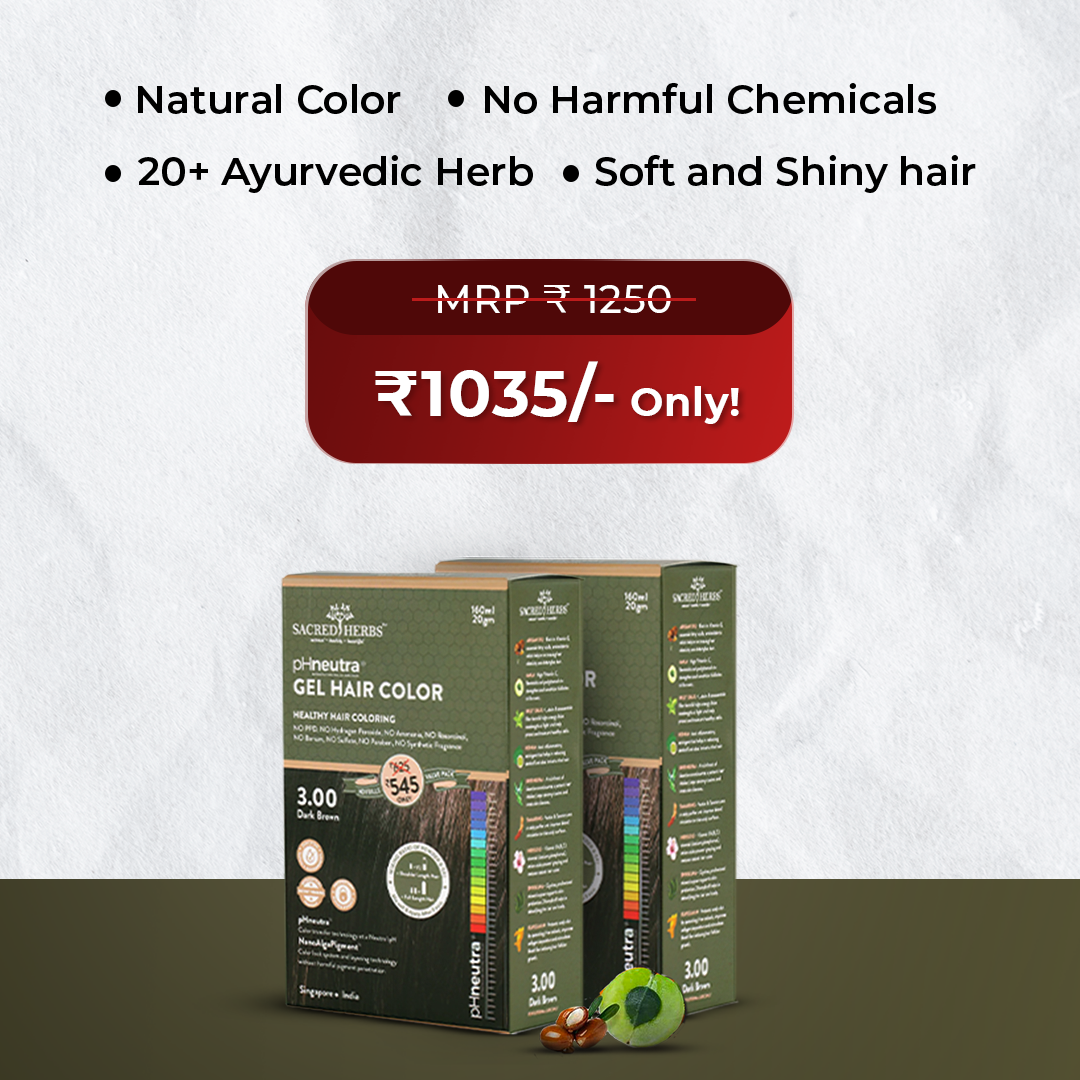
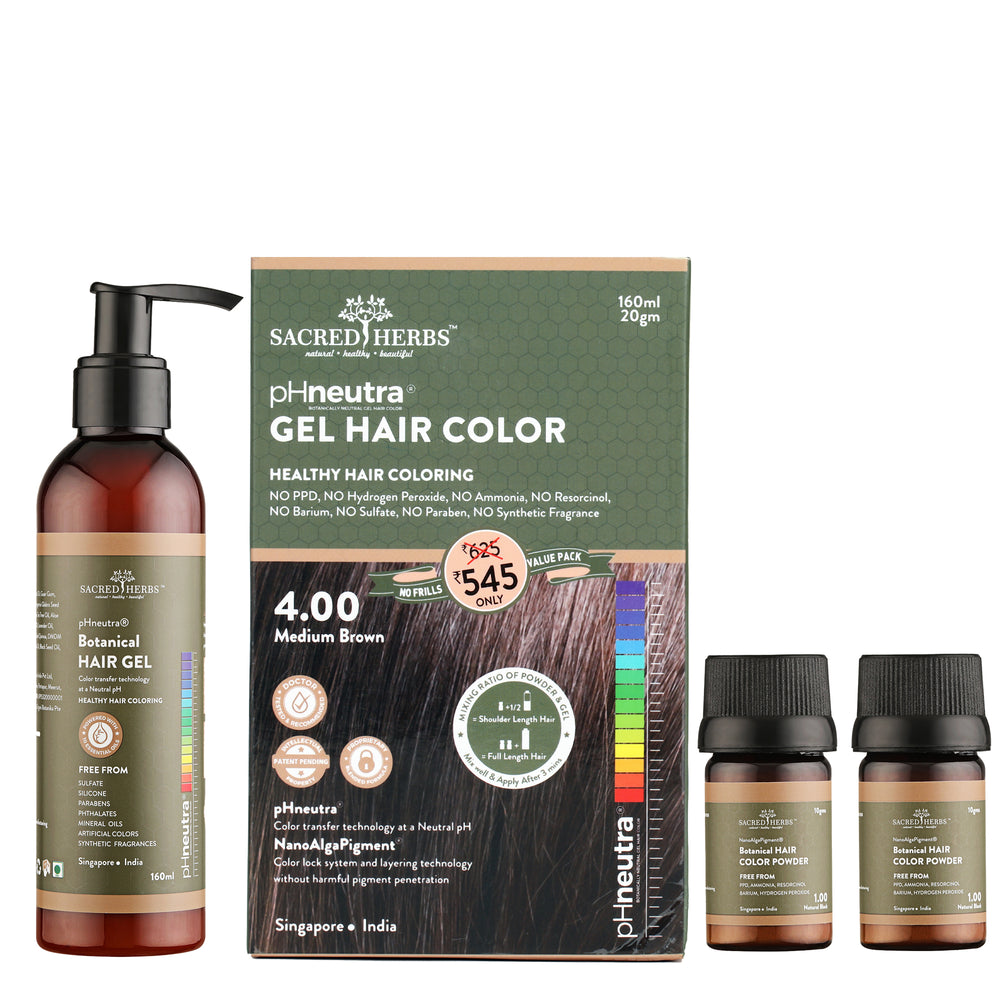
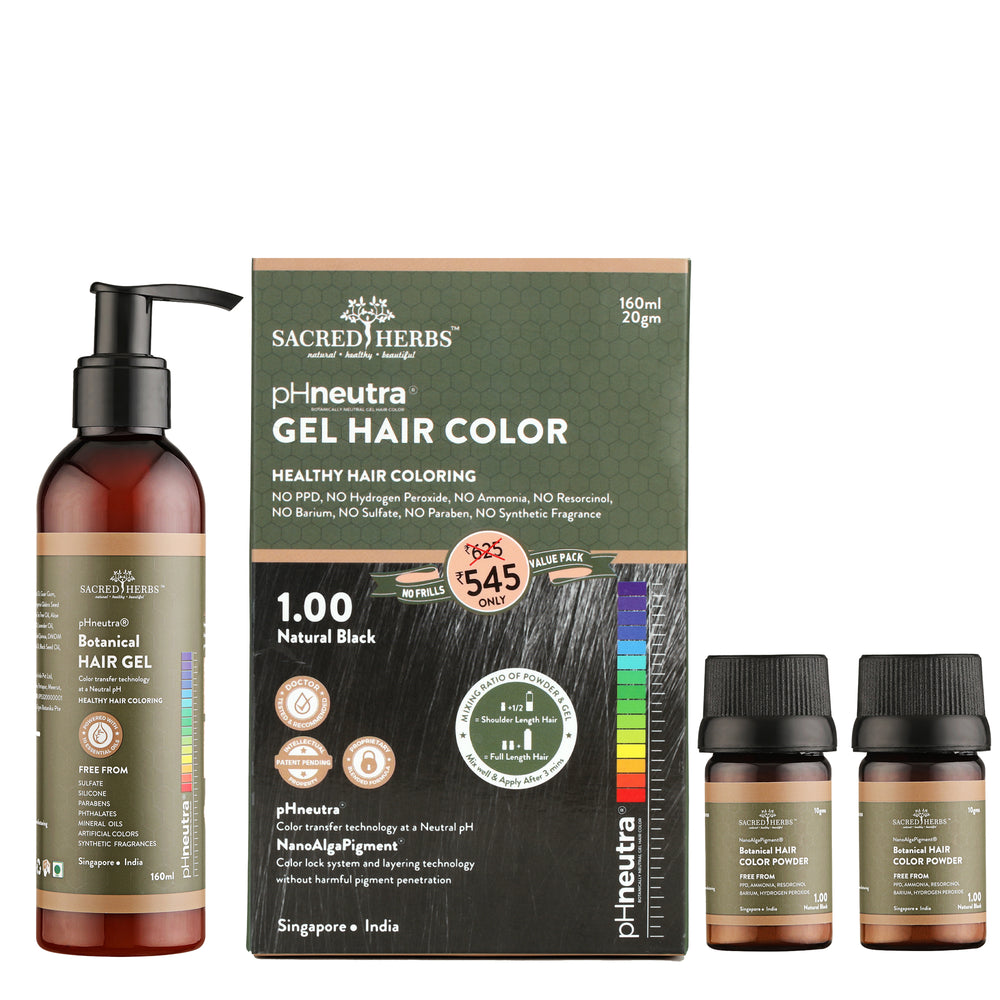
Sacred Herbs' pHneutra gel technology does exactly this. The coloring gel is oil-based, allowing NanoAlgaPigment and botanical colorants to travel through the hair's natural lipid channels and deposit color without the structural disruption that conventional dye creates. The Hair Color Collection showcases this technology across five carefully formulated shades.
Shade Options in Hair Color Gel: What the Range Looks Like
Modern botanical hair color gel covers a wider shade range than many people expect. The five core shades in a well-developed botanical gel color range typically include:
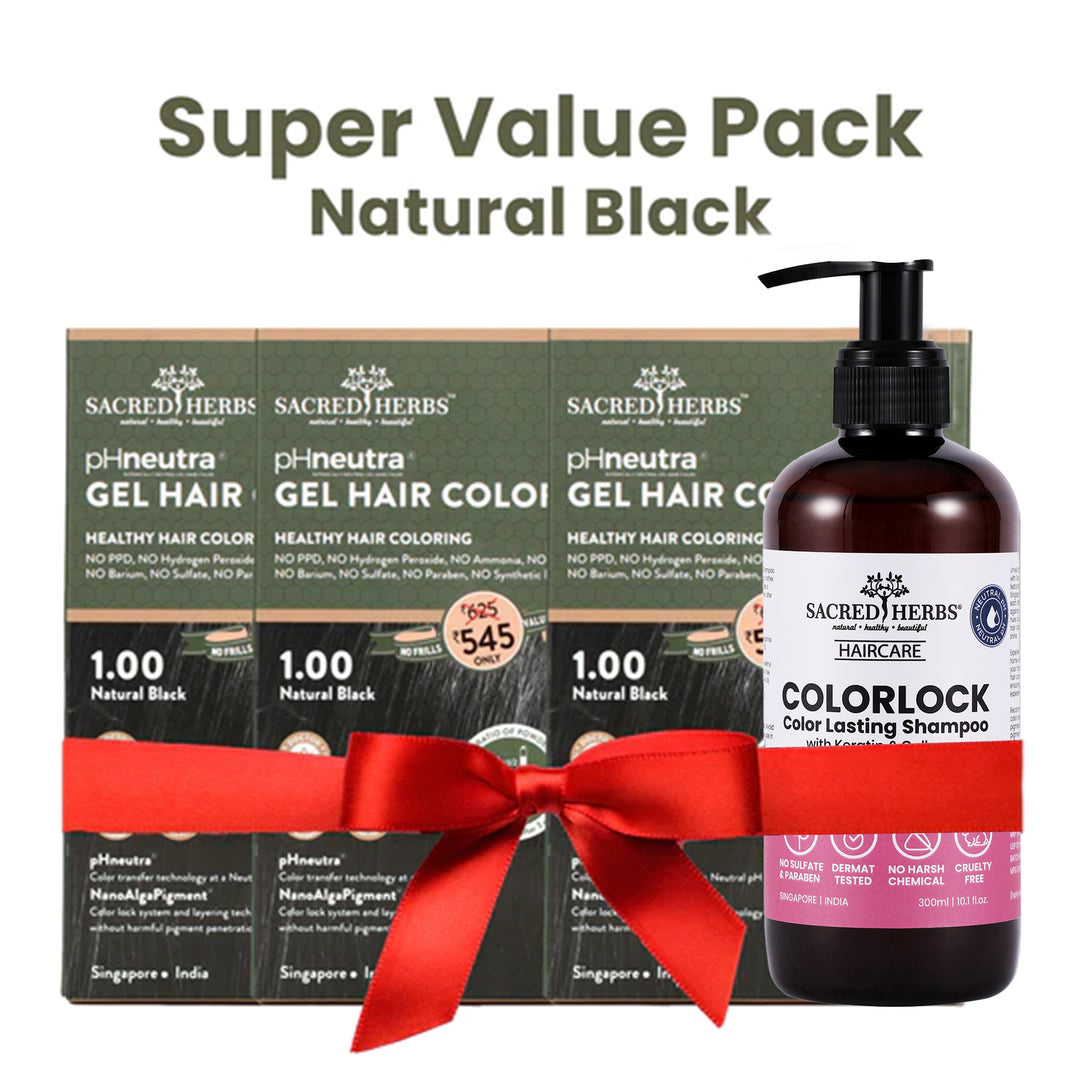
Natural Black (1.00) The deepest shade. Rich, cool-toned black with genuine shine. Provides complete grey coverage. Works beautifully on all Indian skin tones, adding depth and lustre to the hair.
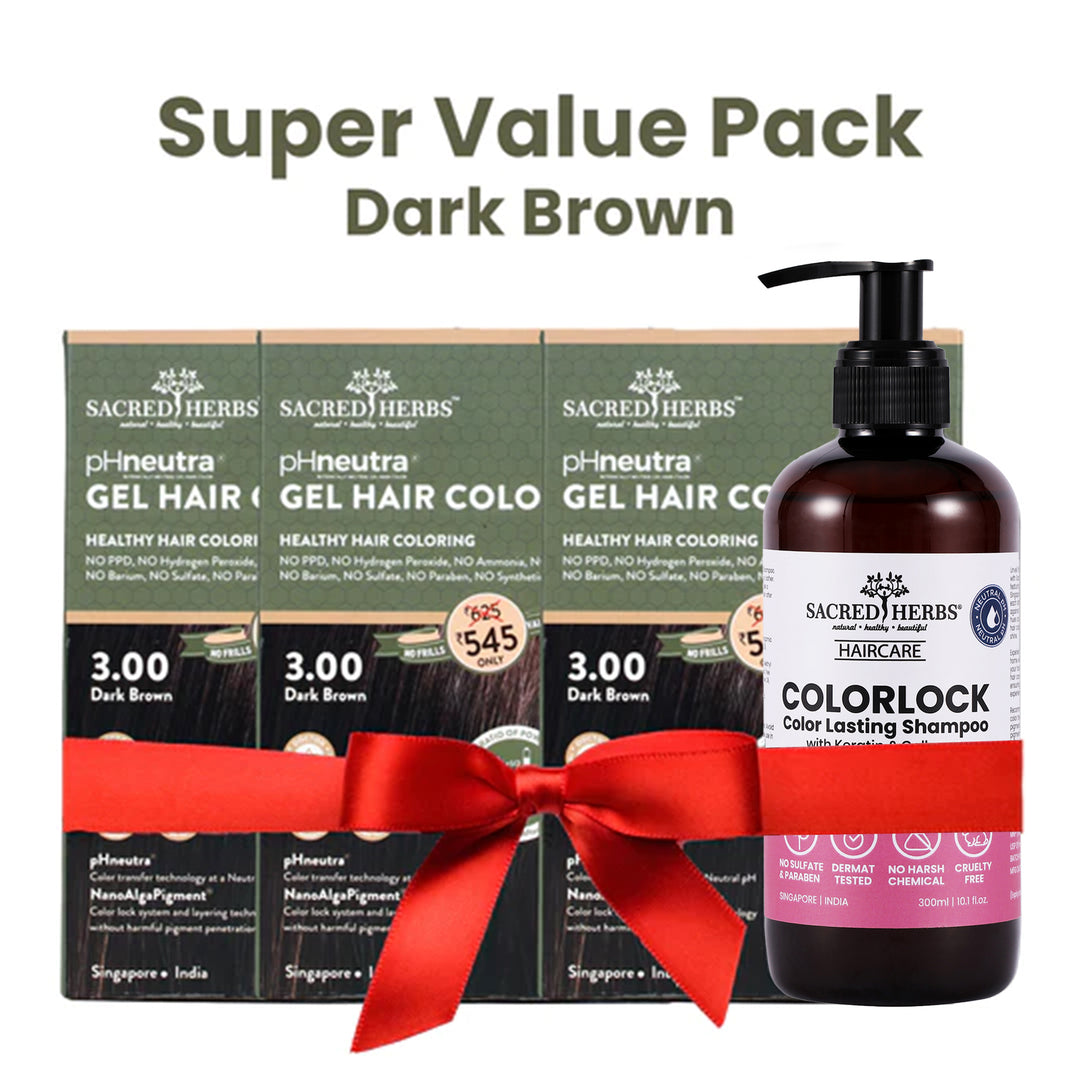
Dark Brown (3.00) A deep chocolate brown with warm undertones. One of the most popular shades for Indian hair because it complements the dominant warm undertones of Indian skin while adding visible color interest beyond natural black.
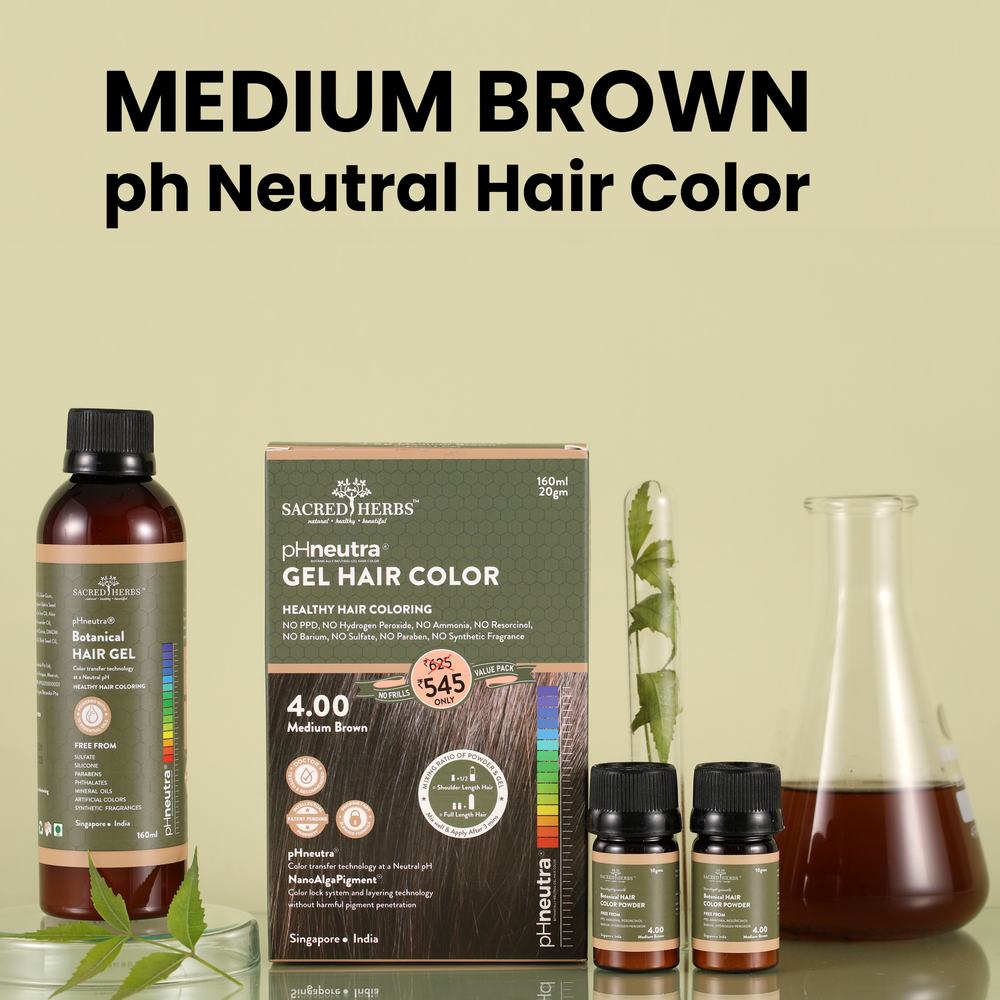
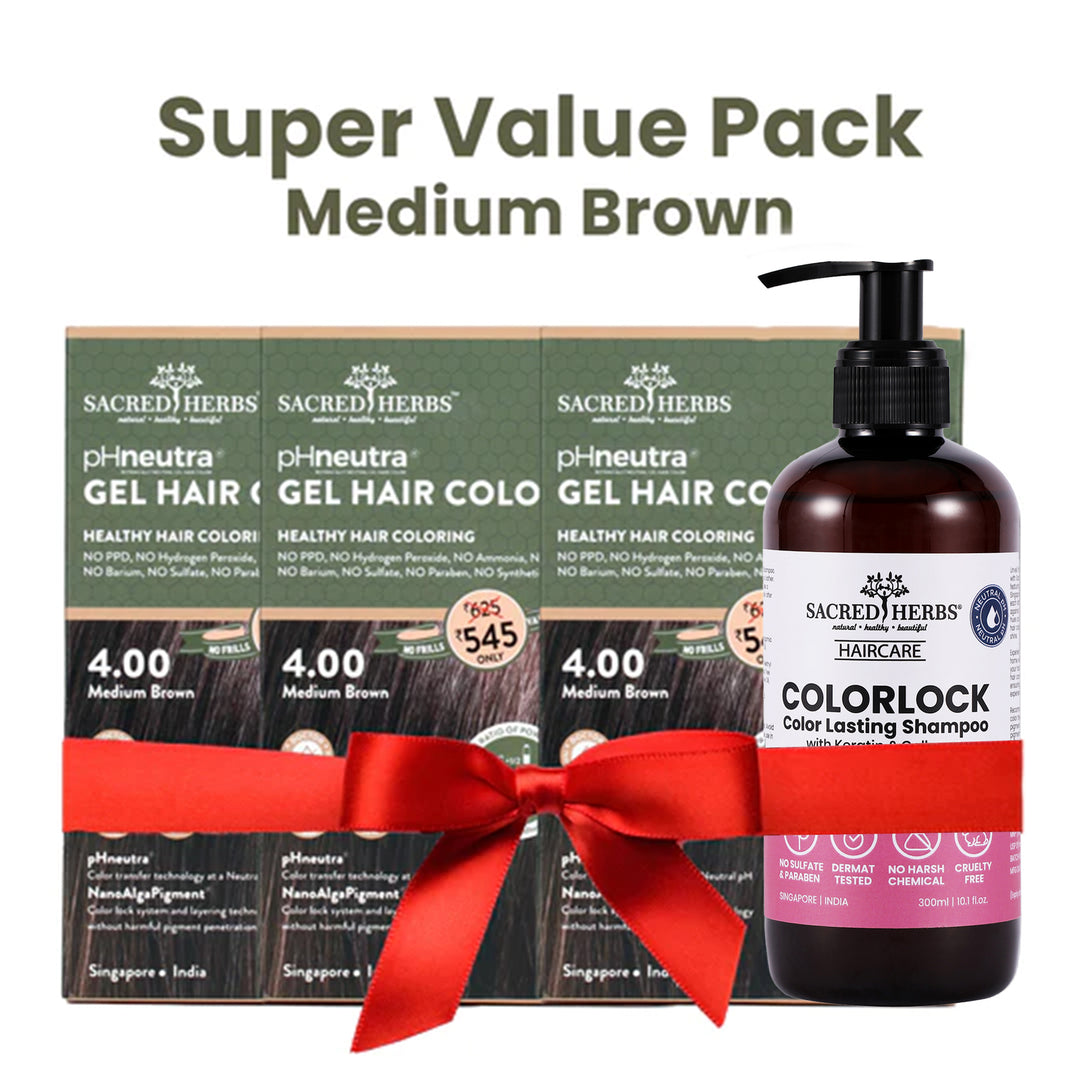
Medium Brown (4.00) A true chestnut shade. Warm and multidimensional in direct light. Sits beautifully between dark brown and light brown and works for people looking to lighten slightly without bleaching.
Light Brown (5.00) A softer, warm brown that photographs particularly well. Not as striking as dark brown in low light but luminous in natural daylight. Popular for its natural-looking warmth.
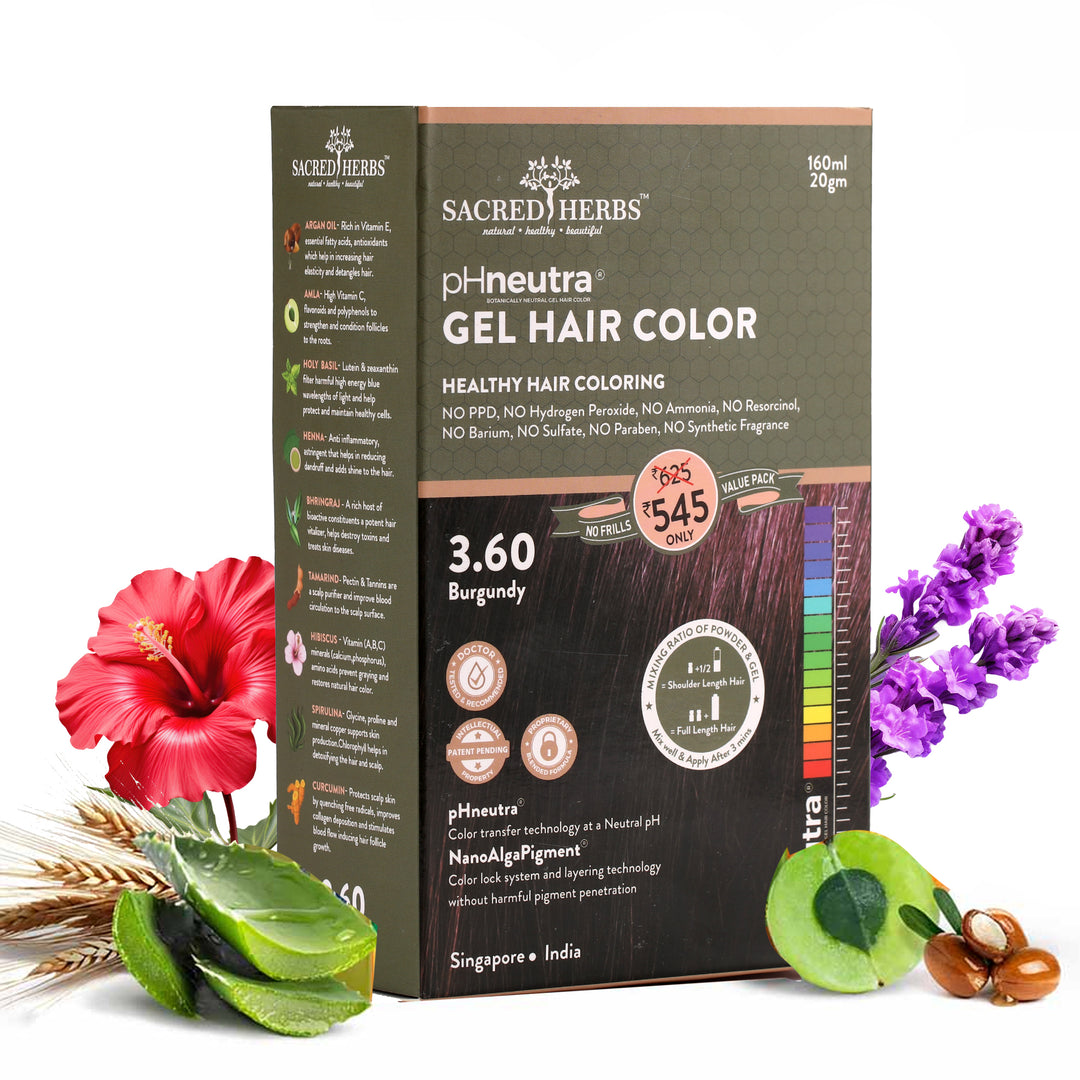
Burgundy (3.60) A deep wine-red with red and purple undertones. Creates dimension and drama on dark hair without requiring bleach. The most fashion-forward shade in the botanical gel color range.
Each of these shades delivers full grey coverage and works on natural or previously colored hair.
How to Apply Hair Color Gel: A Step-by-Step Guide
The application process for hair color gel is simpler and more enjoyable than cream color once you understand the technique. The key difference is that gel's controlled flow means you can work more slowly and precisely.
What you need:
Step 1: Prepare the hair: Wash hair the day before, or on the day of coloring, with a sulphate-free shampoo. Do not condition. Hair should be clean but not stripped. Towel-dry until damp (not dripping).
Step 2: Mix the formula: If using a two-component system, mix developer and color gel in the specified ratio. Stir thoroughly until the color is completely uniform. Work quickly once mixed, as the activation begins immediately.
Step 3: Section the hair: Divide hair into four sections: two at the front and two at the back. Use clips to keep sections separate. This is more important with gel than with cream because the controlled flow of gel rewards a methodical approach.
Step 4: Apply to grey areas first: Start with the sections that have the highest concentration of grey: typically the temples and hairline. Apply generously with the tinting brush, working from root to end. Apply the mixture thoroughly rather than simply brushing it over the surface, ensuring each strand is evenly coated
Step 5: Work through remaining sections: Apply to each section methodically, ensuring every strand is coated. Check partings and the crown area carefully, as these spots are easy to miss.
Step 6: Process: Cover with a shower cap. Leave for 35 minutes. For the final 10-15 minutes, apply low heat with a hairdryer over the cap. This warmth step is particularly effective with gel formulas because it reduces the viscosity of the gel slightly, allowing deeper penetration.
Step 7: Rinse: Rinse with lukewarm water, working from the scalp out. Continue rinsing until the water runs completely clear. This may take several minutes with a thick gel formula. Use sulfate-free shampoo.
Step 8: Condition: Apply a conditioning treatment or color-protective conditioner from mid-length to ends. Leave for three to five minutes. Rinse with cool water.
Post-Application Care for Gel-colored Hair
The 48 hours after gel color application are critical for color longevity. During this period, the botanical pigments in the gel continue to bond fully to the hair's keratin. Avoid shampooing, heat styling, and swimming.
After 48 hours, maintain your color with the right products. The Hair Care Collection at Sacred Herbs includes products specifically designed for color-treated hair, including the ColorLock Series with color-protecting shampoo and conditioner, and the Ultra Hydrating Series for moisture maintenance.
General care guidelines for gel-colored hair:
-
Shampoo with a sulphate-free color-safe formula
-
Wash in cool to lukewarm water (hot water opens the cuticle and accelerates color fading)
-
Deep condition every two weeks
-
Use UV-protective hair products if regularly outdoors
-
Minimise heat styling, or use a heat protectant when styling
Common Mistakes When Using Hair Color Gel
Not saturating enough. Gel's thick consistency can create a false sense that the hair is fully coated when actually only the surface is covered. Press the gel into each strand with the brush; do not just paint the top layer.
Rushing the processing time. Gel color needs adequate contact time, especially for grey coverage. Set a timer. Do not rinse early.
Skipping the heat step. The warm processing step makes a measurable difference in grey coverage completeness. It takes three minutes with a hairdryer and significantly improves the result.
Washing too soon after application. This is the single most common cause of premature color fading. The 48-hour window is not a guideline; it is the period during which color bonds fully to the hair.
Using a sulphate shampoo immediately after. Sulphates strip color more aggressively than any other factor. If you must shampoo before 48 hours have passed, use a sulphate-free formula at minimum.
Frequently Asked Questions
How long does hair color gel last compared to cream color?
In general, botanical gel color lasts fou weeks before fading becomes significant. Conventional cream color lasts slightly longer (six to eight weeks) because its chemistry alters the cortex more deeply. However, botanical gel color can be applied more frequently without damage, so the practical difference in maintenance frequency is small.
Can I use hair color gel on very short hair?
Yes. Gel is particularly well-suited to short hair because its controlled flow makes precise application to short lengths and close-cropped areas much easier than cream.
Does hair color gel work on thick or coarse hair?
Yes, though it may need a slightly longer processing time. Coarse hair has more densely packed cuticle scales that take longer to penetrate. Adding the heat step is particularly recommended for coarse hair.
Is hair color gel safe for sensitive skin?
Botanical hair color gel that is PPD-free and ammonia-free is significantly safer for sensitive skin than conventional dye. Patch testing is always recommended before use.
Can I apply hair color gel over a previous chemical color?
Yes. Previously chemically colored hair is more porous and will absorb botanical gel color readily. The result may differ slightly from the shade chart because the pre-existing color base affects the outcome.