


Gentle Hair Color




Gentle Hair Color: What It Really Means, Why Most Products Claiming It Are Not, and How to Find the Real Thing
The word "gentle"... Read More
Gentle Hair Color: What It Really Means, Why Most Products Claiming It Are Not, and How to Find the Real Thing
The word "gentle" is one of the most overworked adjectives in the hair colour market. Brands apply it to products that still contain ammonia, PPD, and hydrogen peroxide at concentrations high enough to produce significant scalp reactions in sensitive individuals. They justify this by reducing one ingredient slightly, adding a soothing oil to the formula, or simply deciding that "gentle" is a marketing position rather than a technical specification.
This article pushes past the marketing. It defines what gentle hair color actually means in technical terms, explains the specific ways conventional hair colour is anything but gentle, identifies the genuine ingredients and formulation approaches that create genuinely gentle hair colour, and gives you the tools to distinguish real from claimed gentleness when you are evaluating a product.
The Technical Definition of Gentle Hair Color
Gentle hair color, in meaningful terms, is a hair colouring product that:
Maintains or does not significantly disrupt the scalp's natural pH (4.5-5.5). Every unit of pH above 5.5 increases the alkalinity of the environment applied to the scalp, with corresponding increases in barrier disruption, inflammatory response, and cuticle damage.
Avoids strong sensitising agents: specifically PPD (para-phenylenediamine), resorcinol, and aromatic amine compounds that are documented contact allergens with dose-independent sensitisation potential.
Uses surfactants and cleansing agents (if any are present in the formula base) that do not strip the scalp's protective lipid layer.
Delivers colour through mechanisms that do not require the mechanical disruption of the hair's protein structure.
Includes conditioning and protective agents that support rather than compromise the hair's structural integrity during the colouring process.
Produces no burning, stinging, or prolonged scalp irritation during or after application in normally sensitive individuals.
By this definition, the majority of products marketed as "gentle hair colour" do not qualify. The presence of ammonia alone disqualifies a product from this category, regardless of what else is in the formula.
Why Conventional Hair Color Is the Opposite of Gentle: A System-Level View
To appreciate what genuine gentle hair color requires, it helps to understand the full sequence of what happens to the scalp and hair during conventional dye application.
Pre-application state: The hair and scalp are at their natural equilibrium. pH of the scalp surface is 4.5-5.5. The cuticle scales are flat and closed. The acid mantle is intact. The scalp microbiome is balanced.
Ammonia application (first 30 seconds to 2 minutes): As ammonia contacts the scalp, pH rises rapidly to 9-10. The acid mantle is destroyed. The cuticle begins to swell and separate. Scalp keratinocytes (skin cells) experience alkaline stress and begin releasing inflammatory cytokines. In sensitive individuals, this begins producing the characteristic burning sensation within the first two minutes.
Processing phase (20-45 minutes): Hydrogen peroxide penetrates the cortex and oxidises melanin molecules, bleaching natural colour. PPD and other dye molecules enter the cortex through the opened cuticle. The elevated-pH environment continues to stress scalp cells. The follicle opening (infundibulum) is exposed to the alkaline, oxidising environment. In individuals with pre-existing sensitisation, this phase can produce escalating allergic responses.
Rinsing phase: The formula is removed. pH begins to drop back toward normal. The cuticle partially closes but does not return to its pre-application state. Structural protein damage from the high-pH oxidation phase is irreversible.
Post-rinse recovery (24-72 hours): The acid mantle gradually recovers over 24-72 hours. Scalp inflammation subsides. Any PPD molecules that entered systemic circulation via scalp absorption continue to circulate. In sensitised individuals, systemic symptoms may occur.
Cumulative effect (over years of regular colouring): Progressive cuticle damage with each application. Increasing scalp sensitivity. Higher baseline inflammation. Greater reactivity to other products. Hair that becomes progressively more porous, more prone to breakage, and more dependent on intensive conditioning to maintain manageability.
Nothing in this sequence deserves to be called gentle.
What Gentle Hair Color Uses Instead
pH-Neutral Delivery
The most fundamental requirement of gentle hair color is neutral pH delivery. By maintaining the formula's pH close to the hair and scalp's natural 4.5-5.5, there is no alkaline shock to the acid mantle, no cuticle swelling, and no forced opening of the follicle environment.
pH-neutral colour delivery is not possible with conventional oxidative chemistry because ammonia's function is specifically to raise pH. It requires a completely different approach: using botanical colourants delivered in an oil-based carrier that exploits the hair's natural lipid channels for penetration. This is what pHneutra technology achieves, delivering botanical pigments into the hair shaft at near-neutral pH through an oil-gel vehicle that uses the hair's own lipid pathways rather than chemical force.
PPD-Free Colouring Agents
The elimination of PPD is the second non-negotiable requirement of genuine gentle hair color. Replacing PPD with botanical colourants, primarily henna's lawsone and indigo's indigotin, removes the most common cause of hair dye allergic reactions from the formula entirely.
Lawsone and indigotin have a centuries-long safety record. Sensitisation reactions to these botanical pigments are significantly less common than PPD reactions, and when they do occur, they tend to be milder.
Gentle Surfactant Base
If the formula base includes any cleansing agents, they must be plant-derived and low-irritation. Sodium cocoyl isethionate, coco glucoside, and decyl glucoside are appropriate. SLS and SLES are not.
Conditioning Actives
Genuine gentle hair color includes conditioning agents that protect the hair's protein structure during the colouring process. Cold-pressed oils (argan, coconut, castor, jojoba) in the carrier base coat the cuticle and reduce friction. Amino acid complexes and hydrolysed proteins reinforce damaged cuticle sites. The result is hair that is in equal or better condition after colouring than before.
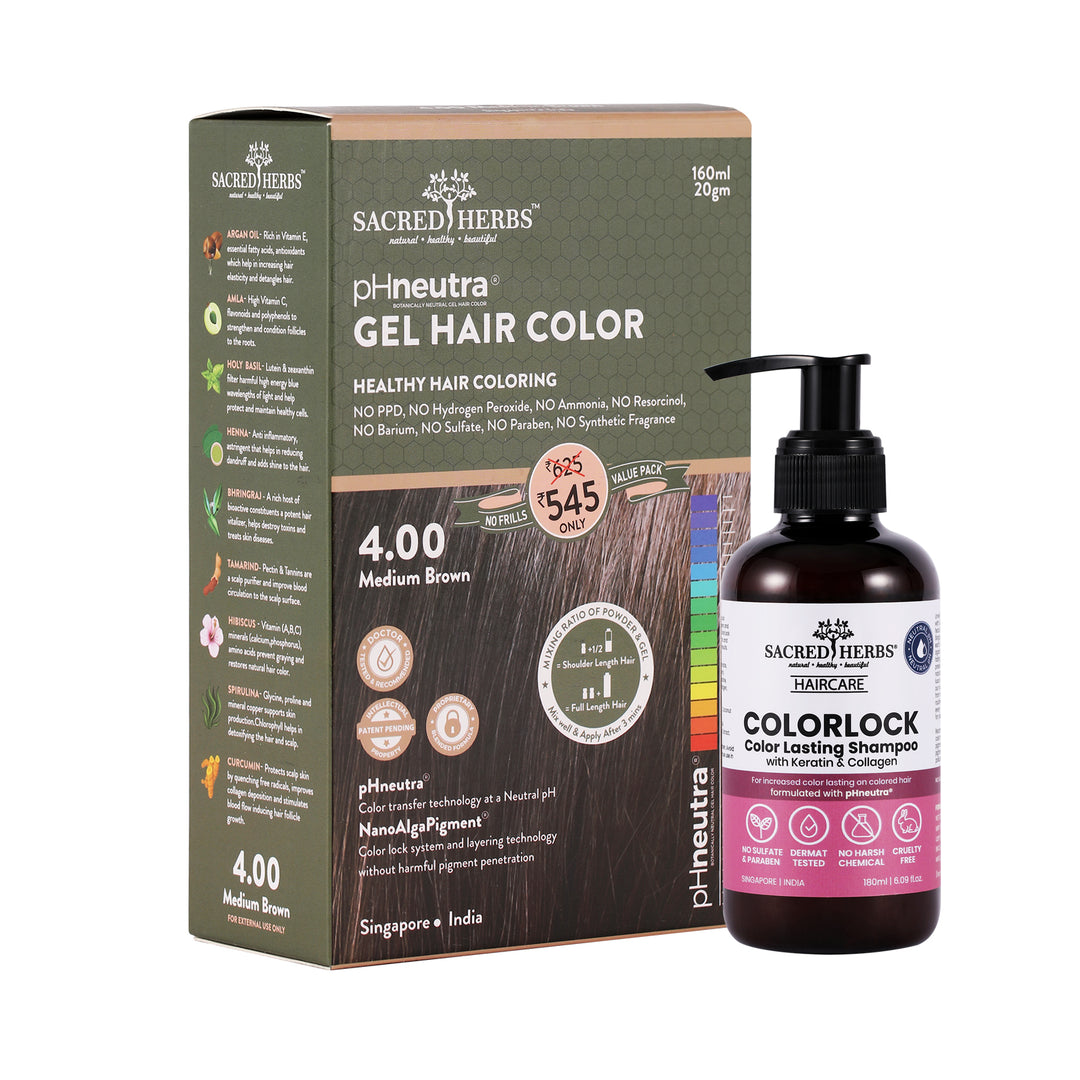
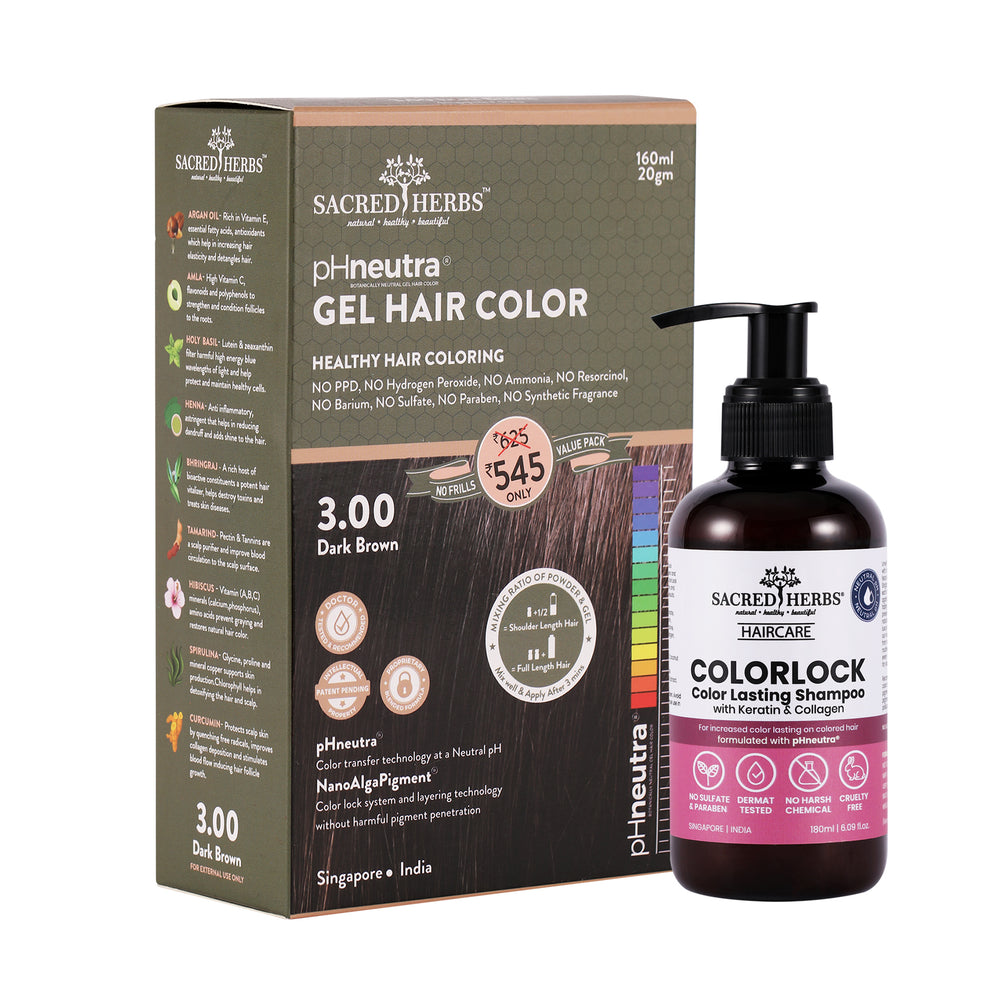
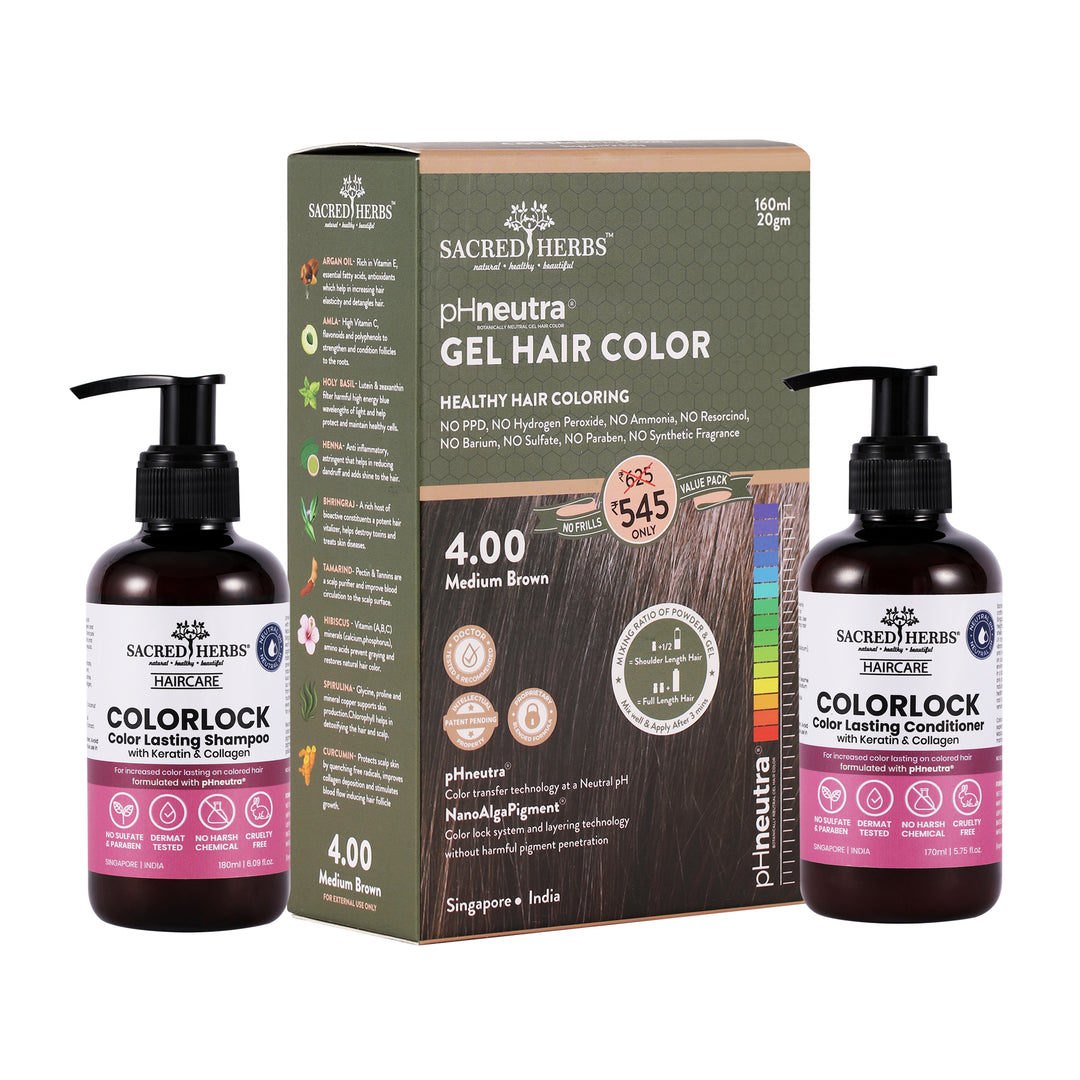
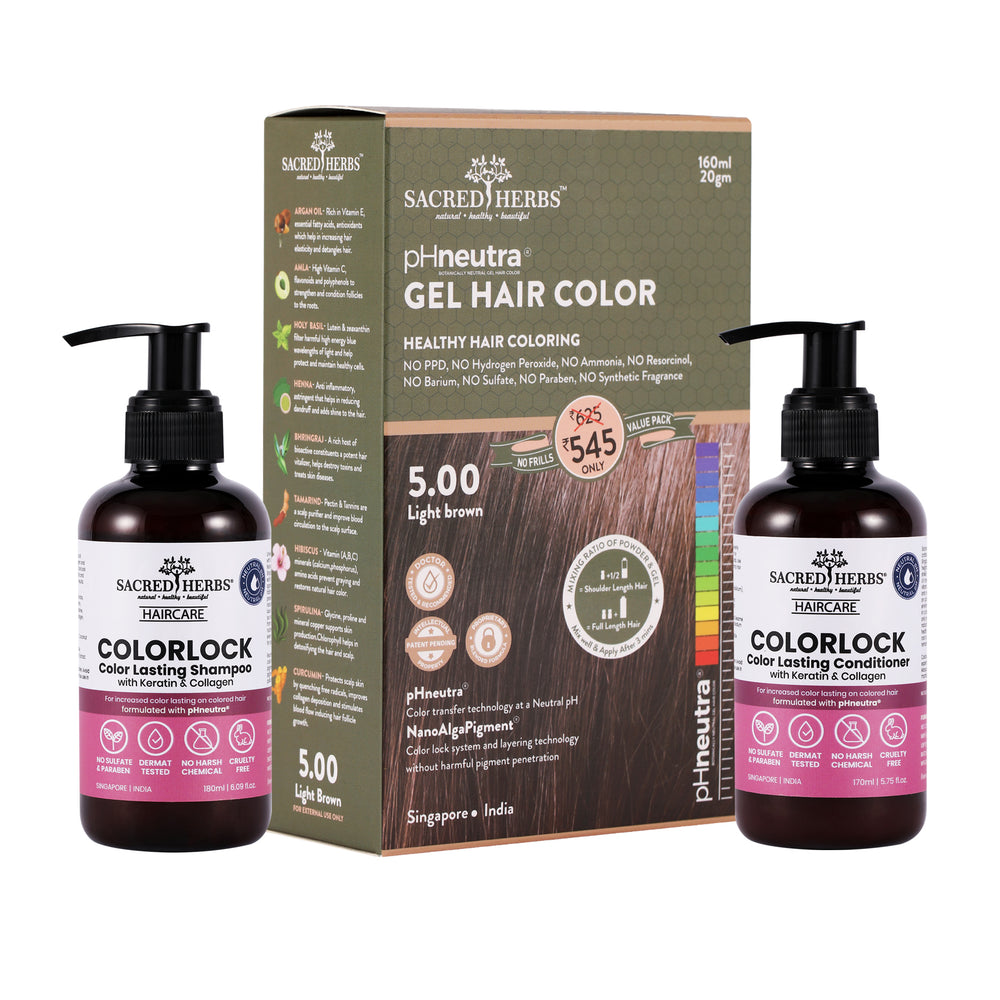
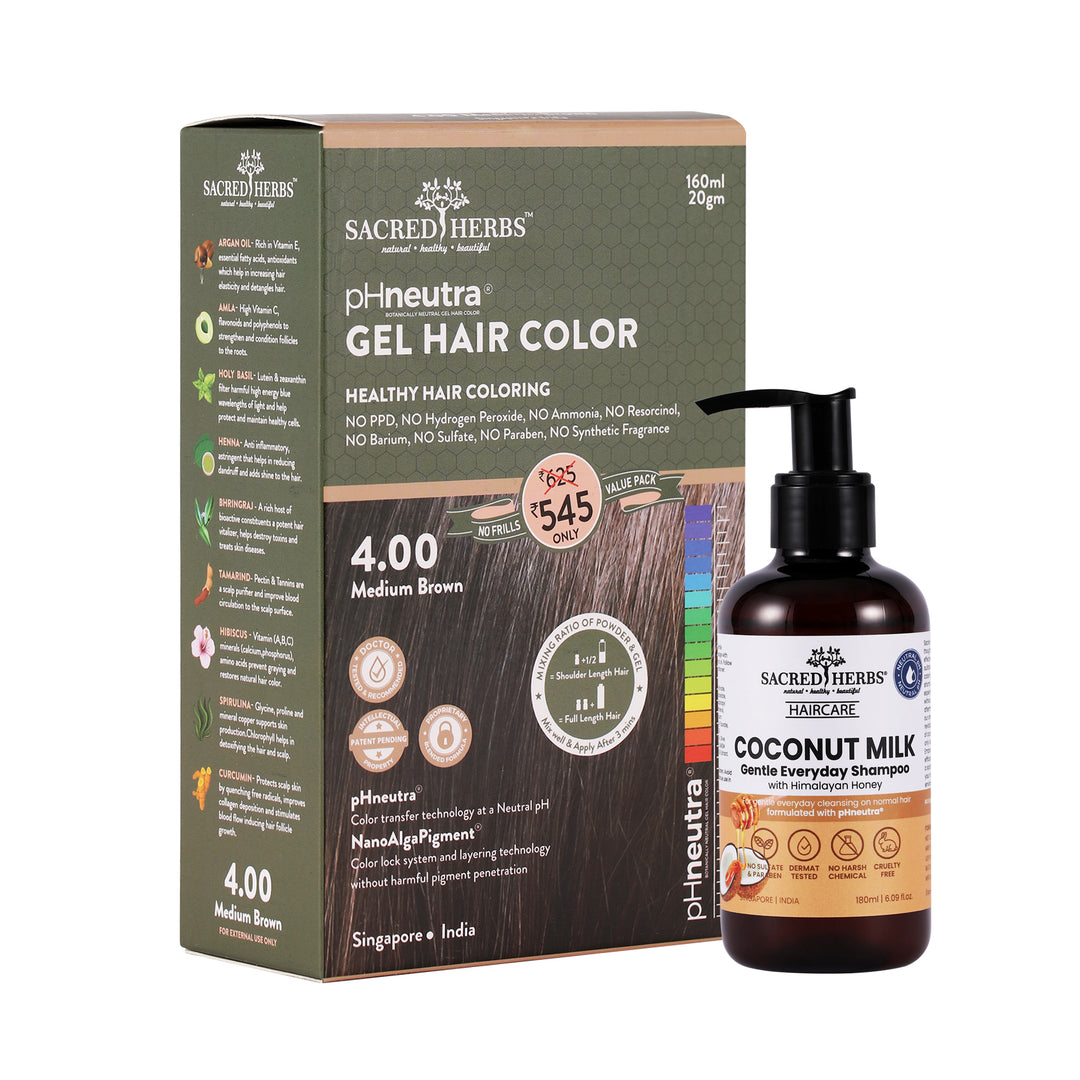
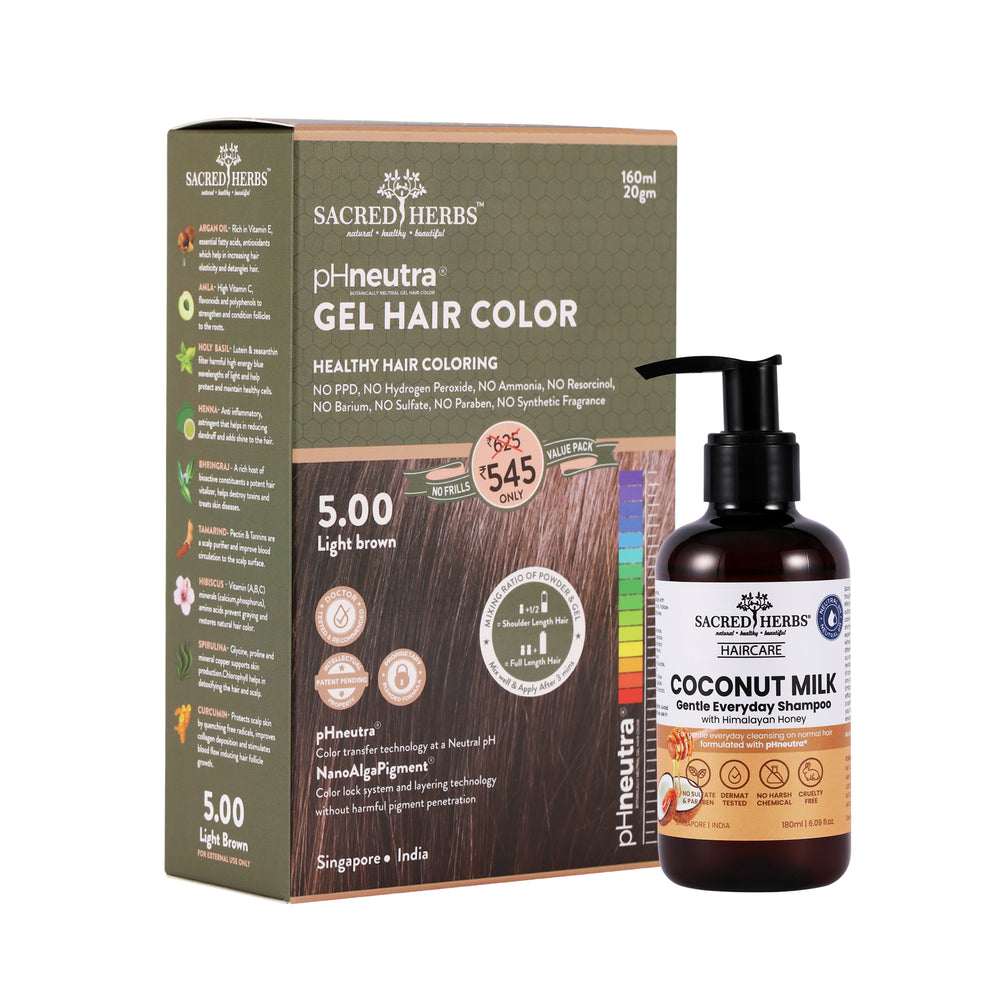
Explore the Hair Color Collection at Sacred Herbs, formulated with pHneutra technology and botanical actives across five shades, as a reference point for what genuinely gentle hair color looks like in practice.
How to Identify Genuine Gentle Hair Color: A Reading Guide
Since "gentle" is used freely and without regulatory definition, the only reliable way to identify genuinely gentle hair color is to read the full ingredient list critically.
Immediate disqualifiers (present in the formula = not gentle):
-
Ammonia or ammonium hydroxide
-
Monoethanolamine (MEA) - the "ammonia-free" alternative that produces similar high-pH effects
-
p-Phenylenediamine, m-Phenylenediamine, or any compound with "diamine" in the name
-
Resorcinol
-
Hydrogen peroxide in concentrations above trace
Positive indicators of genuinely gentle formulation:
-
Lawsonia inermis (henna) and/or Indigofera tinctoria (indigo) as named primary colouring agents
-
pH stated as neutral or slightly acidic (4.5-6.0)
-
Cold-pressed or plant-derived oils in the carrier base (argan oil, coconut oil, castor oil)
-
Gentle surfactants if present: coco glucoside, sodium cocoyl isethionate, decyl glucoside
-
Natural preservative system rather than parabens or formaldehyde-releasing preservatives
-
Named botanical actives at positioned concentrations (not buried at the end of the list)
Who Needs Genuinely Gentle Hair Color
While gentle hair color is beneficial for everyone who colours their hair regularly, there are specific groups for whom it moves from preferable to necessary.
People who experience burning, itching, or scalp reactions with conventional dye: These symptoms indicate that the conventional dye's chemistry is disrupting the scalp's barrier and triggering inflammatory responses. Switching to neutral-pH, PPD-free colour eliminates the cause.
People with scalp conditions: Psoriasis, seborrheic dermatitis, contact dermatitis, and eczema of the scalp are all exacerbated by the alkaline, inflammatory environment of conventional dye. Gentle hair color at neutral pH does not trigger this exacerbation.
People with fine or thinning hair: The structural damage from conventional dye is more visible on fine hair because there is less shaft volume to absorb it. Fine hair coloured repeatedly with conventional dye loses strength and volume progressively. Gentle botanical colour that strengthens rather than damages the shaft is particularly important for fine hair.
Frequent colourers: People covering grey every four to five weeks accumulate structural damage from conventional dye significantly faster than occasional colourers. Switching to gentle colour eliminates this accumulation.
People who are pregnant or breastfeeding: Botanical gentle hair color presents a significantly lower risk profile than conventional dye during pregnancy. As always, discuss with your healthcare provider before any colouring during pregnancy.
People with a history of PPD sensitisation: Once sensitised to PPD, continuing to use PPD-containing products risks escalating reactions. PPD-free gentle hair color allows continued colouring without this risk.
The Application Experience: What Genuinely Gentle Hair Color Feels Like
One of the most consistent reports from people who switch from conventional to genuine gentle hair color is the difference in the application experience itself.
No ammonia smell. The characteristic sharp, acrid smell of conventional hair dye is absent. Botanical colour has a mild earthy or herbal scent during application that dissipates completely after rinsing.
No scalp burning. The first few minutes of conventional dye application produce a tingling-to-burning sensation in sensitive individuals. With neutral-pH botanical colour, this sensation is absent. The scalp feels no different from before application.
No eye or nose irritation. Ammonia vapour during conventional dye processing irritates the respiratory mucous membranes and can cause tearing. No ammonia means no vapour and no irritation.
Hair feels better immediately after rinsing. Rather than the dry, slightly rough feel of hair after conventional dye (before conditioner), hair coloured with genuine gentle hair color typically feels softer and more manageable immediately after rinsing.
No post-application scalp discomfort. Many people experience scalp tenderness, sensitivity, or mild inflammation for 24-48 hours after conventional dye. With gentle botanical colour, this post-application period is typically uneventful.
Gentle Hair Color and Hair Fall: The Connection
Hair fall and conventional hair colour have a well-established antagonistic relationship. The high-pH alkaline environment created by ammonia disrupts the follicle opening, the acid mantle, and the follicle's microenvironment. Repeated disruption accelerates the follicle ageing process and shortens the anagen phase.
For people already experiencing hair fall, conventional dye is particularly counterproductive. It worsens the follicle environment that the hair fall treatment is trying to improve.
Gentle hair color at neutral pH does not create this antagonism. The follicle environment is undisturbed during colouring. People using herbal gentle colour alongside hair fall treatments (rosemary serums, anti-hair-fall shampoos, scalp oils) find that the two work synergistically rather than against each other.
The Hair Care Collection at Sacred Herbs includes both colour-care products (ColorLock Series) and hair fall treatments (Rosemary Anti Hair Fall Series), designed to work together rather than in conflict.
Frequently Asked Questions
Is gentle hair color always less effective than conventional dye?
No. Modern gentle hair color with NanoAlgaPigment technology produces grey coverage that is comparable in completeness to conventional dye when applied correctly. The trade-off is processing time (35 minutes versus 25-35 minutes), not coverage quality.
Can gentle hair color be used on chemically treated hair?
Yes. Chemically treated hair is more porous and absorbs botanical pigments readily. Be aware that the result may be more intense or faster-absorbing than on virgin hair.
Does gentle hair color smell as strong as conventional dye?
No. The ammonia smell of conventional dye is absent. Botanical gentle hair color has a mild herbal scent that dissipates completely after rinsing.
Is gentle hair color suitable for children or teenagers?
Gentle botanical hair color is significantly safer than conventional dye for younger users. However, no hair colour product is generally recommended for children under 16 without dermatologist guidance.
How do I transition from conventional dye to gentle hair color?
Simply switch at your next application. The transition is immediate. The first application on previously chemically coloured hair may absorb differently due to the hair's increased porosity, producing a slightly different result than the shade chart suggests. By the second or third application, the result becomes consistent and predictable.