


Anti-Hair Fall Conditioner




Anti-Hair Fall Conditioner: Benefits, Ingredients & How to Use
Everyone talks about shampoo when they talk about hair fall. Shampoo is the active step,... Read More
Anti-Hair Fall Conditioner: Benefits, Ingredients & How to Use
Everyone talks about shampoo when they talk about hair fall. Shampoo is the active step, the treatment, the product with the clinical ingredients and the targeted claims. Conditioner, by contrast, is thought of as maintenance: something you apply after to make your hair feel soft and manageable.
This framing misses something important.
An anti-hair-fall conditioner, when genuinely formulated, does things that shampoo cannot. It works on a different part of the hair fall problem, through a different mechanism, at a different phase of the wash routine. Understanding what a conditioner actually does, how it interacts with the follicle and the hair shaft, and what ingredients make it genuinely anti-hair-fall rather than just softening, changes how you think about the second step of your wash routine entirely.
What a Conditioner Does: The Chemistry of the Second Step
To understand why conditioner matters for hair fall, start with what it physically does to the hair.
Hair has a natural negative charge on the cuticle surface. This charge creates friction between strands, which is partly responsible for tangling, frizz, and the roughness you feel when you run your hand up a wet strand against the grain. Washing with shampoo, even a gentle natural shampoo, intensifies this negative charge by removing the natural oils that partially neutralise it.
Conditioner works primarily through positive-charge chemistry. Cationic (positively charged) conditioning agents in the formula are attracted to the negatively charged cuticle, depositing a thin layer that neutralises the surface charge, reduces friction, and smooths the cuticle scales flat. This is why hair feels softer, more manageable, and less prone to tangling after conditioning.
For anti-hair-fall purposes, this mechanism is relevant for a specific and underappreciated reason: breakage.
A significant proportion of what most people perceive as hair fall is not shedding from the root. It is breakage: hair snapping along the shaft from friction, dryness, mechanical handling, and heat damage. When a hair breaks at mid-length or at the ends, it enters the same visual category as a shed hair in terms of what appears on your brush, in the shower drain, and on your pillow. But the intervention is completely different.
Shedding from the root requires scalp-level intervention: circulation improvement, DHT inhibition, anti-inflammatory actives. Breakage requires shaft-level intervention: cuticle smoothing, porosity reduction, moisture retention, and protein reinforcement. This is where a genuinely formulated anti-hair fall conditioner earns its place.
Structure: How This Article Is Organised
Rather than moving through the usual sections of a hair care guide, this article is built around a central question that most hair fall content ignores: where is your hair fall actually happening? Depending on the answer, the role of an anti-hair fall conditioner in your routine shifts significantly.
Part 1: When Breakage Is the Primary Problem
If your hair is falling in short pieces, or if you see a lot of short broken hairs rather than full-length strands with a white bulb at the root, breakage is the dominant issue. This type of hair fall is entirely within the domain of a well-formulated conditioner.
The cuticle condition connection
Breakage occurs most readily where the cuticle is damaged. The cuticle is the outermost layer of the hair, made of overlapping scales. When these scales are intact and flat, the hair shaft is strong and flexible. When they are lifted, chipped, or missing, the underlying cortex is exposed and vulnerable to breakage.
Cuticle damage accumulates from heat styling, chemical treatments (colour, bleach, perms, relaxers), aggressive brushing, hard water mineral deposits, UV exposure, and the mechanical friction of daily handling. An anti-hair-fall conditioner addresses this damage by:
Smoothing lifted cuticle scales through cationic conditioning agents (like cetrimonium chloride or behentrimonium methiodide), which electrostatically adhere to damaged sites and flatten the cuticle.
Providing protein actives (hydrolysed keratin, hydrolysed wheat protein, amino acid complexes) that bond to gaps in the cuticle's protein structure, temporarily repairing damage and restoring strength.
Delivering humectants (glycerin, panthenol, aloe vera) that attract and retain moisture inside the hair shaft, restoring flexibility and reducing the brittleness that leads to breakage.
Sealing with conditioning oils (argan, jojoba, marula, cold-pressed coconut) that lock moisture in and create a protective barrier against friction and environmental damage.
The porosity factor
High-porosity hair, which has abundant microscopic gaps in the cuticle, absorbs moisture easily but loses it just as rapidly. This rapid moisture loss leaves hair dry and brittle between washes, significantly increasing breakage risk.
An anti hair fall conditioner for high-porosity hair should prioritise protein treatments (to fill cuticle gaps structurally) and heavy humectants (to draw in and hold moisture). Oils and butters seal the cuticle after moisture is delivered.
Low-porosity hair has very tight cuticle scales that resist moisture entry. An anti-hair-fall conditioner for low-porosity hair should use lighter molecular-weight humectants and avoid heavy protein treatments (which can sit on the cuticle rather than penetrate, creating stiffness and build-up).
Part 2: When Root Shedding Is the Primary Problem
If your hair is falling in full-length strands with a visible white bulb at the root end, the shedding is happening at the follicle, not from shaft breakage. This is the domain of scalp-active ingredients, primarily addressed by shampoo and leave-in treatments.
However, even in cases of root shedding, an anti-hair fall conditioner plays a supporting role:
Scalp stimulation during application. The massaging motion of applying conditioner to the scalp (when relevant) improves local microcirculation, complementing the scalp-active ingredients delivered during the shampoo step.
Preventing traction shedding. High-friction hair that tangles severely and requires aggressive detangling produces traction on the follicle during combing. This mechanical traction, sustained repeatedly, contributes to both breakage and root shedding. A conditioner that significantly reduces detangling friction reduces this traction load on follicles.
Maintaining overall hair health. Healthy hair is easier to manage, requires less aggressive handling, and creates less scalp stress from daily manipulation.
Part 3: The Ingredients That Make an Anti-Hair Fall Conditioner Genuinely Work
For breakage prevention:
Hydrolysed Keratin: the same protein that makes up the hair shaft. Hydrolysed (broken into smaller fragments) so it can penetrate the cuticle rather than sitting on the surface. Bonds to damaged sites in the hair's protein structure, restoring strength and reducing porosity.
Hydrolysed Silk Protein: smaller molecular weight than keratin, so it penetrates even more deeply. Adds elasticity and shine alongside strength.
Panthenol (Vitamin B5): a humectant and moisture binder that penetrates the hair shaft and binds water molecules, restoring flexibility. Reduces brittleness and breakage in dry hair.
Collagen: provides structural reinforcement to the hair shaft at the micro level. Supports cuticle integrity and reduces porosity.
For scalp health (in conditioners applied to the scalp or used as scalp treatments):
Rosemary Extract: carries the same microcirculation-improving and DHT-inhibiting properties in a conditioner that it provides in shampoo. In leave-on formulas, contact time is longer, and absorption is higher.
Methi Dana Extract: DHT-blocking diosgenin and scalp-conditioning lecithin.
Bhringraj Extract: dermal papilla cell support and anagen extension.
For moisture retention:
Glycerin: draws moisture from the environment into the hair shaft. Most effective in high-humidity conditions.
Aloe vera: lightweight humectant with anti-inflammatory properties. Particularly beneficial for sensitive scalps.
Ceramides: lipid molecules that form part of the natural cement between cuticle scales. Replenishing ceramides in damaged hair restores cuticle integrity and reduces moisture loss.
Part 4: What Anti Hair Fall Conditioner Should Not Contain
An anti-hair fall conditioner undercuts its own purpose if it includes the following:
Heavy silicones (dimethicone, cyclomethicone): Silicones create immediate smoothness through a coating mechanism but accumulate on the hair and scalp over time. Build-up creates a physical barrier that blocks active ingredient absorption in subsequent applications, clogs follicles, and reduces long-term hair and scalp health. A single-wash silicone benefit is not worth months of cumulative build-up.
Parabens: Common preservatives with documented endocrine-disrupting activity. Unnecessary when plant-derived preservative systems are available.
Sulphates in conditioner: Some conditioners include sulphates for lather or as emulsifying agents. Any sulphate in a product that contacts the scalp continues the cycle of barrier disruption.
Formaldehyde-releasing preservatives (DMDM hydantoin, quaternium-15): These release formaldehyde gradually, a potent sensitiser and carcinogen at high concentrations. They have been found in numerous hair care products and are unnecessary given the availability of safer alternatives.
Part 5: How to Use Anti Hair Fall Conditioner Correctly
Where to apply: From mid-length to ends for most uses. The roots produce natural sebum that conditions the scalp; the ends need the most intervention. If using as a scalp treatment for additional anti-hair-fall benefit, massage into the scalp separately with fingertips.
How long to leave it on: Standard conditioner: three to five minutes. Deep conditioning treatment: 15-30 minutes under a shower cap. Overnight hair mask: maximum benefit but requires a formula specifically designed for overnight use.
Temperature: Apply to hair after rinsing out shampoo. Cool or lukewarm water for rinsing out conditioner closes the cuticle and seals in the conditioning agents. Hot water rinsing opens the cuticle and significantly reduces the conditioning benefit.
Frequency: Standard conditioner after every shampoo. Deep conditioning once per week for damaged or high-porosity hair. Protein treatment once per fortnight (excessive protein can cause stiffness; balance with moisture treatments).
Part 6: The Complete System
An anti-hair-fall conditioner works best within a complete system. The shampoo addresses scalp-level hair fall mechanisms. The conditioner addresses shaft-level breakage and provides supportive scalp stimulation. Leave-in treatments extend active contact time. Pre-wash oil treatments prepare the hair and scalp.
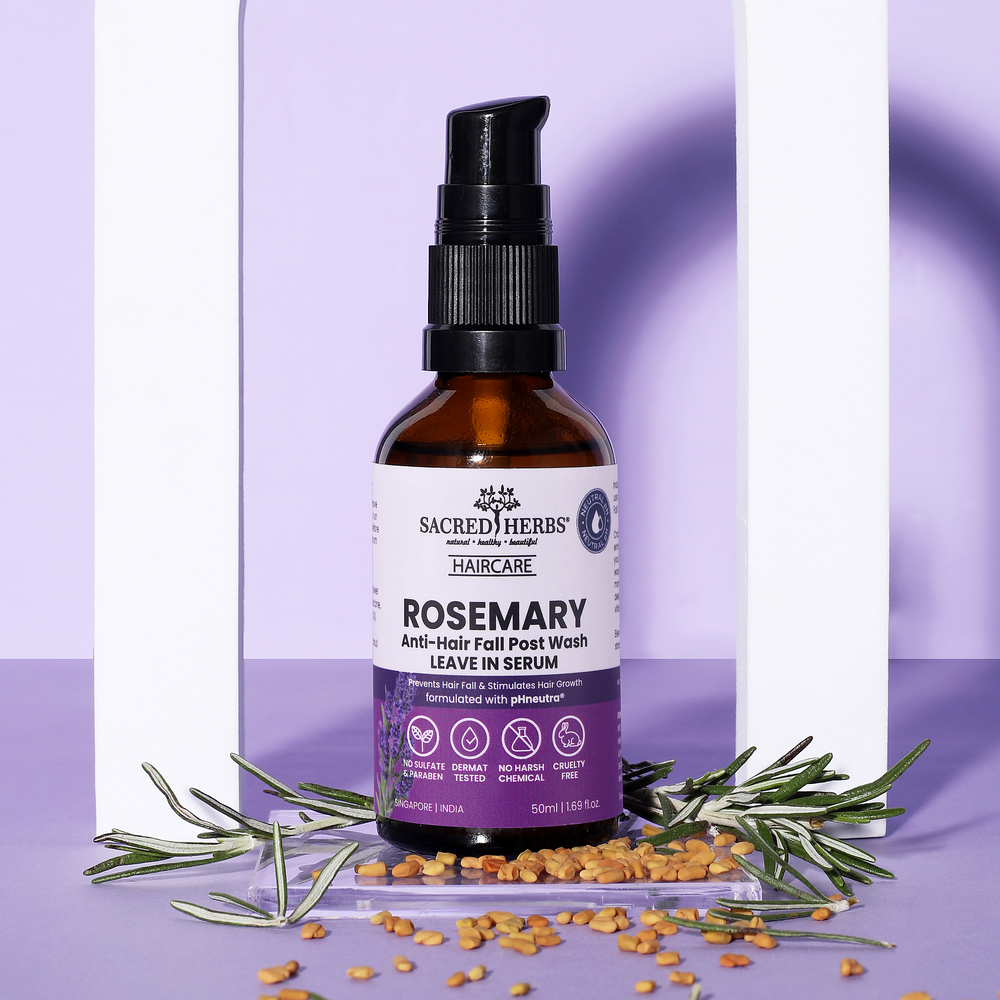
Explore the complete Hair Care Collection at Sacred Herbs, which includes the Rosemary Anti Hair Fall Series with shampoo, conditioner, scalp oil, and leave-in serum formulated as a complete system.
Frequently Asked Questions
Is anti-hair-fall conditioner the same as regular conditioner?
No. A genuinely formulated anti-hair-fall conditioner includes specific botanical actives for scalp and follicle health alongside the standard conditioning agents for shaft smoothing and moisture. Standard conditioner focuses only on shaft-level conditioning with no active anti-hair-fall component.
Can I use anti-hair-fall conditioner every day?
If you wash daily, yes. Otherwise, use it every time you shampoo. Daily application of conditioner without shampooing (co-washing) can cause scalp build-up in people with oily scalps.
Does conditioner cause hair fall?
Conditioner itself does not cause hair fall. However, conditioner applied to the scalp can contribute to follicle-clogging build-up, which can create an inflammatory environment over time. Apply from mid-length to ends and rinse thoroughly.
Should I use a separate deep conditioner or hair mask in addition to regular conditioner?
Yes, particularly for damaged, colour-treated, or high-porosity hair. A weekly deep conditioning treatment with higher concentrations of proteins and humectants provides benefit beyond what a rinse-off conditioner can deliver in three to five minutes.
Can anti-hair fall conditioner help with postpartum hair fall?
It addresses the breakage component of postpartum hair loss but not the hormonal shedding component. The hormonal shedding resolves naturally as oestrogen stabilises; the conditioner prevents additional breakage from the mechanical stress of managing hair that is already fragile from shedding.
Is it safe to use anti-hair fall conditioner on colour-treated hair?
Yes. In fact, colour-treated hair benefits significantly from anti-hair fall conditioner because chemical colour processing increases porosity and breakage risk. Look for conditioners with keratin and ceramides for colour-treated hair. If you are exploring natural colour options, the Hair Color Collection at Sacred Herbs offers pH-neutral botanical gel colour that is significantly gentler on the hair shaft than conventional dye, reducing the porosity and breakage that make anti-hair-fall conditioning so critical. For a complete care and colour system, the Super Premium Pack brings everything together, and the Body Collection extends the same botanical care philosophy to skin.